“Sigiriya is a royal palace built on top of a 200-metre granite rock - reached through the paws of a giant carved lion, by a king who seized the throne by walling his own father alive.”
About Sigiriya
In the late fifth century, King Kasyapa took the throne of Anuradhapura by murdering his father and, fearing the rightful heir's revenge, moved his capital to the defensible summit of Sigiriya, building an extraordinary palace-fortress with water gardens, frescoes and the lion gateway that gave the rock its name. He was eventually defeated in battle and the capital abandoned. After Kasyapa's fall the site reverted to a Buddhist monastery, which it had been before, and remained one into medieval times. Rediscovered and studied by colonial-era archaeologists, Sigiriya is now a UNESCO World Heritage Site and the most famous single monument in Sri Lanka.
Sigiriya in short
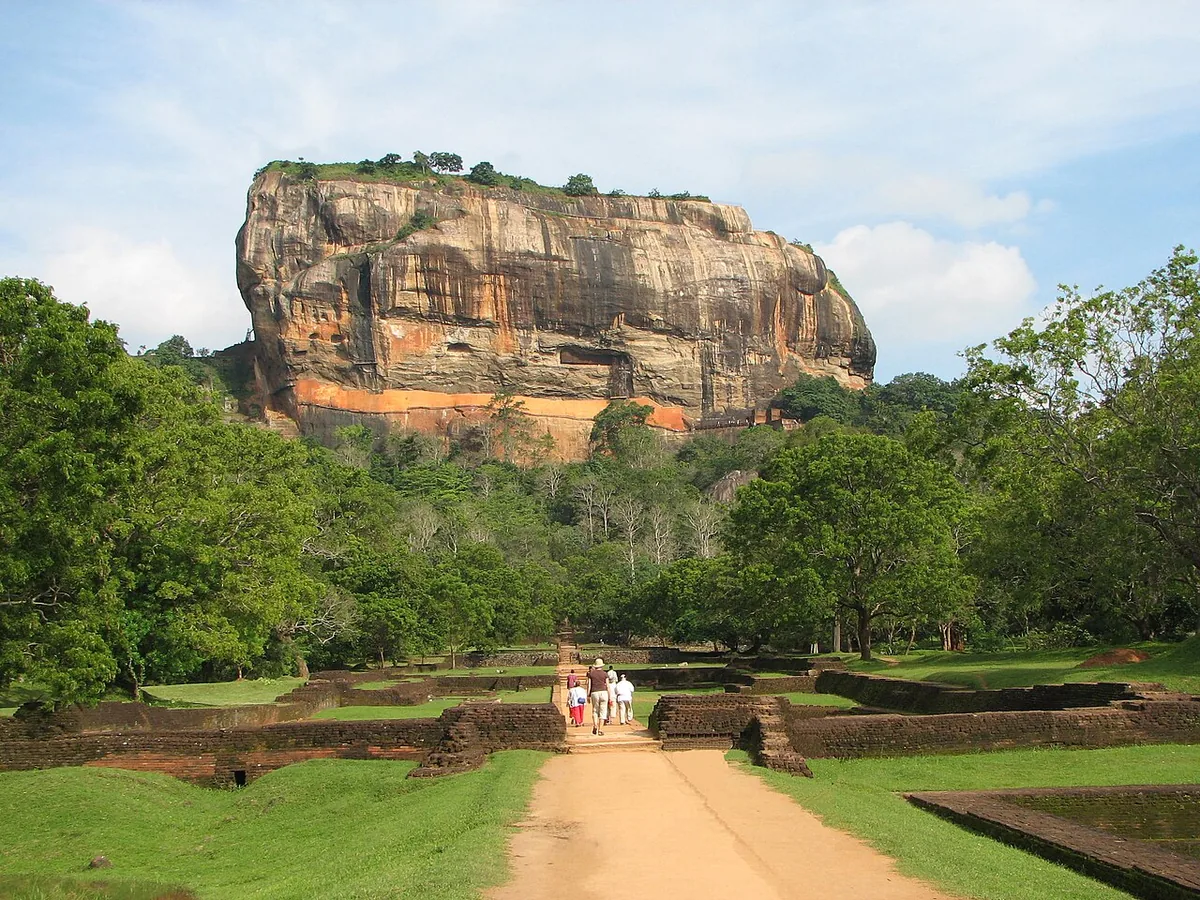
Sigiriya, the Lion Rock, is a sheer column of granite rising two hundred metres straight out of the central Sri Lankan plain, with the ruins of a royal palace on its flat summit. In the fifth century the king Kasyapa built his capital here, turning the rock into a fortress-palace approached through landscaped water gardens and a gateway shaped like an enormous lion, of which only the giant carved paws now remain.
Sigiriya, the Lion Rock, is a sheer column of granite rising two hundred metres straight out of the central Sri Lankan plain, with the ruins of a royal palace on its flat summit.
The Frescoes and the Mirror Wall
Halfway up, a sheltered pocket of the rock face still holds vivid frescoes of bare-breasted women, the so-called cloud maidens, painted some fifteen centuries ago. Beside them runs the Mirror Wall, once polished to a sheen and now covered in centuries of visitors' graffiti, some of the oldest written Sinhalese verse.
The Climb
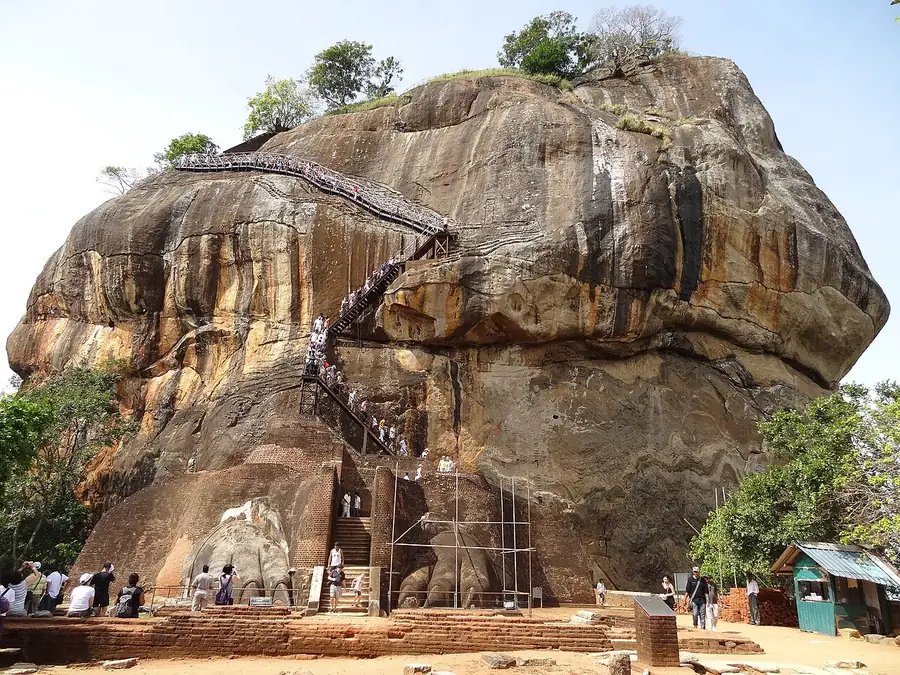
The ascent rises through the gardens, past the frescoes, between the lion's paws and up a final exposed staircase bolted to the rock to the summit, where the foundations of the palace, cisterns and gardens spread out with a vast view over the jungle.
A Brief, Bloody Capital
Kasyapa had seized the throne by walling up his father alive and ruled in fear of his brother's return. After his defeat the rock became a Buddhist monastery, and the short-lived capital passed into legend.
Kasyapa had seized the throne by walling up his father alive and ruled in fear of his brother's return.
The Experience
The climb is the experience: through the symmetrical water gardens, up to the gallery of glowing frescoes, past the Mirror Wall, and then the dramatic final stair between the lion's paws to the windswept summit. From the top, the geometric gardens far below and the jungle stretching to the horizon make the king's choice of site obvious. Going early avoids both the heat and the crowds on the narrow staircases, and the low light is kinder to the frescoes and the long views.
Why It Matters
Sigiriya is Sri Lanka's most celebrated ancient monument and a UNESCO World Heritage Site, remarkable as a fifth-century royal capital with some of Asia's oldest surviving landscape gardens, frescoes and urban planning, all atop a single dramatic rock.
Why Visit
It combines a thrilling climb, ancient frescoes and one of the great views in Sri Lanka with an extraordinary royal murder story. Start at opening to beat the heat and queues on the stairs, look closely at the frescoes and Mirror Wall, and pair it with Pidurangala opposite.
✦ Insider Tips
- 1
Climb early in the morning to avoid the heat and the bottlenecks on the narrow summit stairs.
- 2
Take time at the fresco gallery and the Mirror Wall rather than rushing for the top.
- 3
Carry water and sun protection; the rock face is fully exposed with no shade.
- 4
Those uneasy with heights should know the final ascent is on exposed metal staircases.
- 5
Climb neighbouring Pidurangala for the classic side-on view of Sigiriya itself.