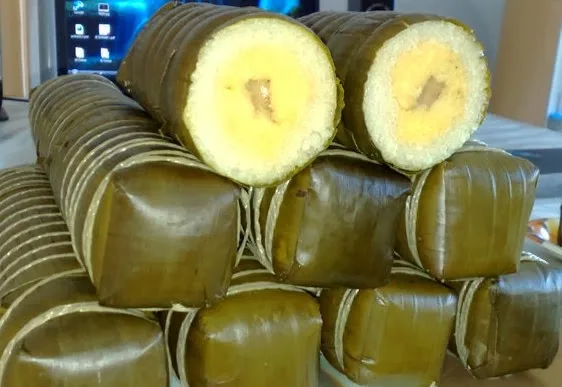
"Num Ansom Chek is a tightly wrapped banana-leaf parcel of glutinous rice and ripe baby banana that turns a striking wine-red after hours of boiling."
About Num Ansom Chek
The 'Festival' cylinder: a tightly wrapped banana leaf parcel containing glutinous rice and a 'ripe' baby banana (or pork fat for savory versions); the 'ritual' requires hours of boiling to ensure the rice becomes gelatinous and the banana turns a deep, wine-red hue; a cornerstone of 'Pchum Ben' and Khmer New Year, it represents the ancestral offerings of the Buddhist calendar and the technical skill of the 'leaf-wrapping' art.
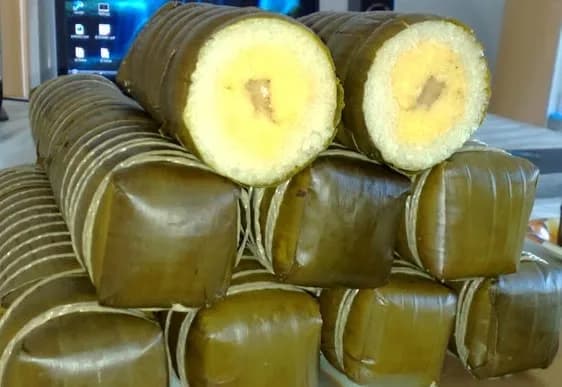
Num Ansom Chek, a staple of Cambodia's cuisine
The Dish Defined
Num Ansom Chek is a cylindrical parcel made from glutinous rice, a whole ripe baby banana, and sometimes pork fat for savory variants. The ingredients are sealed inside a fresh banana leaf, then boiled for several hours until the rice becomes gelatinous and the banana deepens to a wine-red colour.
Cultural Roots
The parcel is a cornerstone of the Pchum Ben ceremony, a multi-day festival when Cambodians honor ancestors. During this time families prepare Num Ansom Chek as an offering, believing the steamed rice and sweet banana carry respect to the departed.
Preparation and Flavor
The preparation begins with washing the glutinous rice, then layering it with the banana inside the leaf. After sealing, the bundle is submerged in water and simmered for a long period; the heat transforms the rice into a sticky, tender mass while the banana softens and releases a caramel-like sweetness. Savory versions replace the banana with pork fat, giving a richer, oily mouthfeel.
When and How It Is Served
Num Ansom Chek is typically served hot, sliced into thick rounds that reveal the bright interior. It appears on communal tables during Pchum Ben, but street vendors also sell it year-round, especially in markets near temples. Diners eat it with their hands, often accompanied by a cup of sweet tea or a light broth.
What to Expect
A bite reveals a firm yet yielding rice that clings to the palate, while the banana core offers a sweet, slightly caramelised contrast. The wine-red hue of the fruit is visible through the translucent leaf, adding visual intrigue. The steam-infused leaf imparts a subtle grassy aroma that lingers after each mouthful.
Why Try It
Num Ansom Chek embodies the ritual link between food and ancestor reverence in Cambodia, illustrating how everyday ingredients become symbols of communal memory. Its preparation showcases the skill of wrapping and long-slow boiling that defines many Khmer culinary traditions.
Insider Tips
Seek stalls near temples during Pchum Ben or ask locals for the market stall that sells freshly boiled banana-leaf parcels.
Pair the sweet version with a glass of iced coconut water; the savory version balances well with a light fish broth.
The leaf wrapper can be eaten after the rice is finished, offering a faint vegetal note that complements the rice.