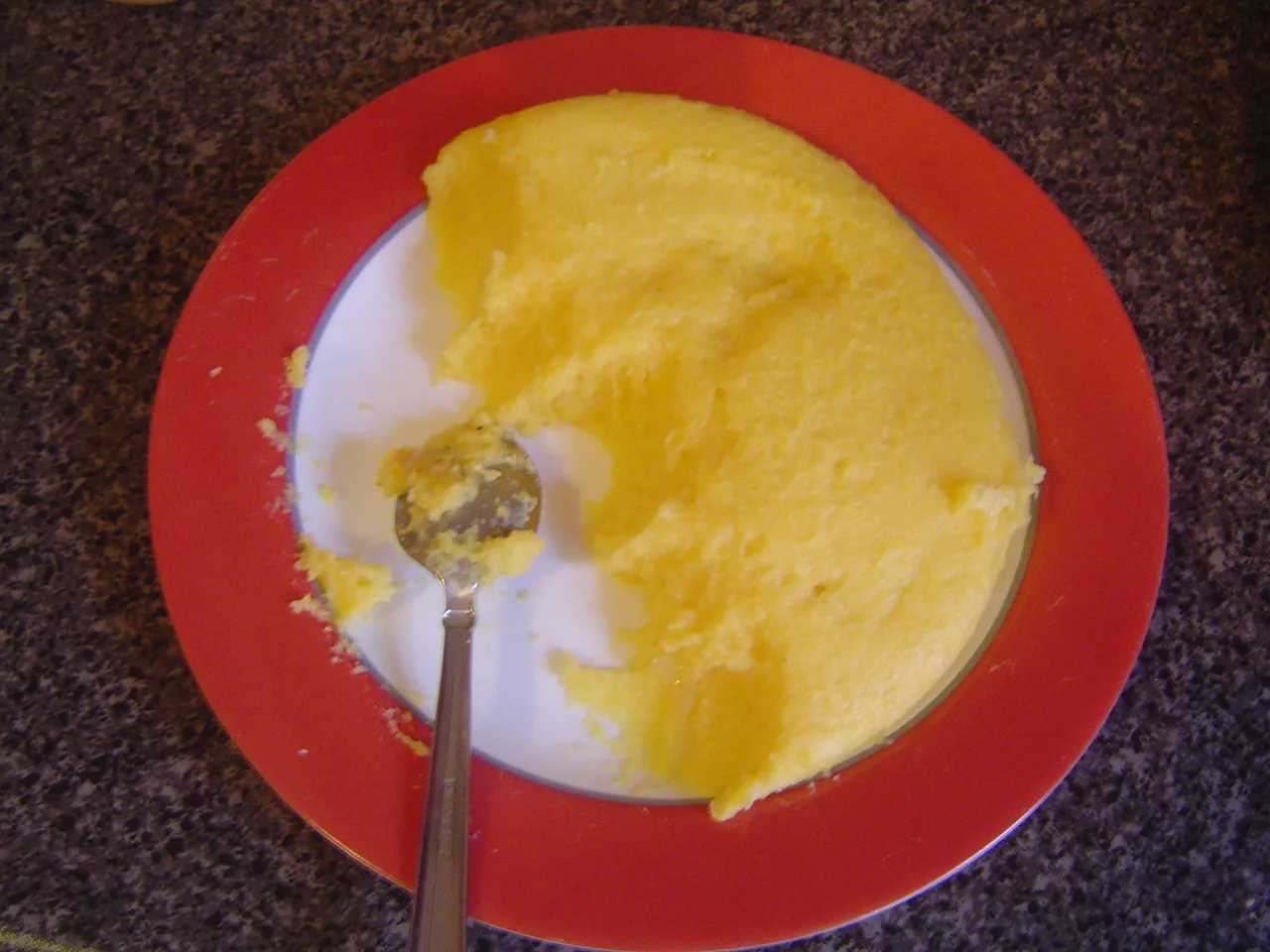
"Moldova's daily bread: dense cornmeal polenta cut with thread on a wooden board, eaten with sheep's cheese and sour cream. Firmer than any Italian polenta."
About Mămăligă
Moldova's daily bread and its most enduring staple: cornmeal (maize flour) slow-stirred in salted water until it thickens to a dense, golden polenta; turned onto a wooden board and cut with thread rather than a knife; served with brânză (sheep's milk cheese), smântână (sour cream) and a fried egg; the Moldovan mămăligă is denser and drier than Romanian versions.
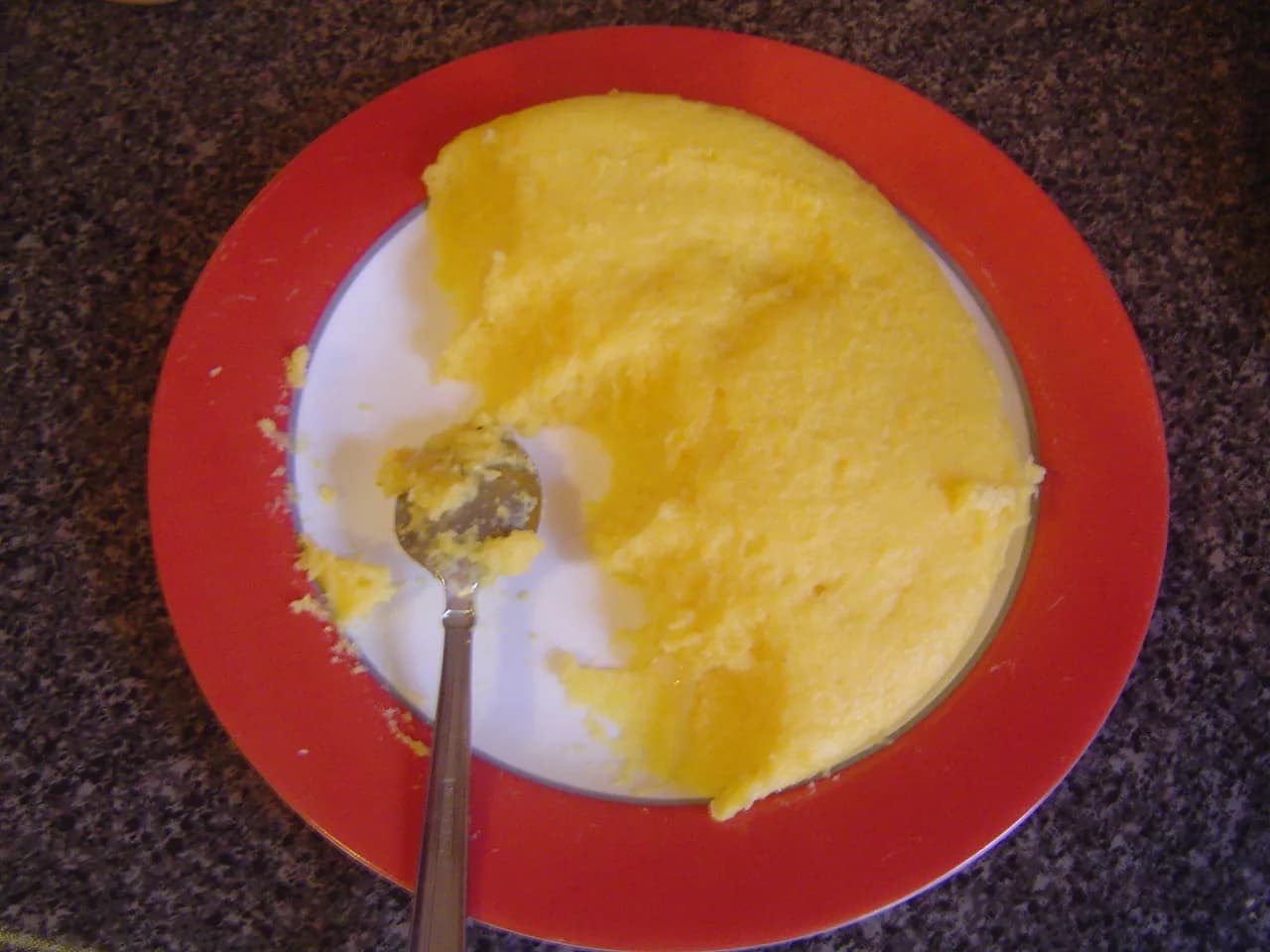
Mămăligă, a staple of Moldova's cuisine
Moldova's Bread
Mamaliga is Moldova's daily cornmeal staple, maize flour stirred slowly in salted water until it thickens into a dense, firm polenta. Stiffer and drier than the Italian kind, it is turned out onto a wooden board and cut into wedges. For centuries it was the bread of the Moldovan table, and it remains a fixture of home cooking.
Cut With Thread
A small but telling detail is that mamaliga is cut not with a knife but with a length of thread drawn through it. The thread slices cleanly through the stiff, sticky maize where a blade would drag. It is the traditional method, still used at family tables.
The Accompaniments
Mamaliga is rarely eaten alone. It is served with branza, a salty sheep's-milk cheese crumbled over the top, smantana, the local sour cream, and often a fried egg. The salty cheese and cool, sharp cream against the plain warm maize are what make the dish. A version topped with a fried egg is a classic breakfast.
A Peasant Staple
For generations mamaliga was the everyday bread of Moldovan peasants, cheap, filling and made from a single ingredient. It still appears on family tables and in traditional restaurants, a direct link to the country's rural past. Firm enough to hold its shape when cut, it is humble food done simply and well.
What to Expect
The mămăligă arrives on a wooden board, already cut into wedges. It is eaten with brânză crumbled on top and smântână alongside. The cheese is slightly salty, the sour cream cool and sharp.
Why Try It
Mămăligă was the daily bread of Moldovan peasants for 300 years and remains on every family table.
✦ Photo Gallery
Insider Tips
The firmness should be solid enough to hold its shape when cut, if it spreads, it's under-cooked.
Brânză (sheep's milk cheese) is the correct accompaniment, not regular feta.
Order it with fried egg on top (mămăligă cu ou) for the complete breakfast version.