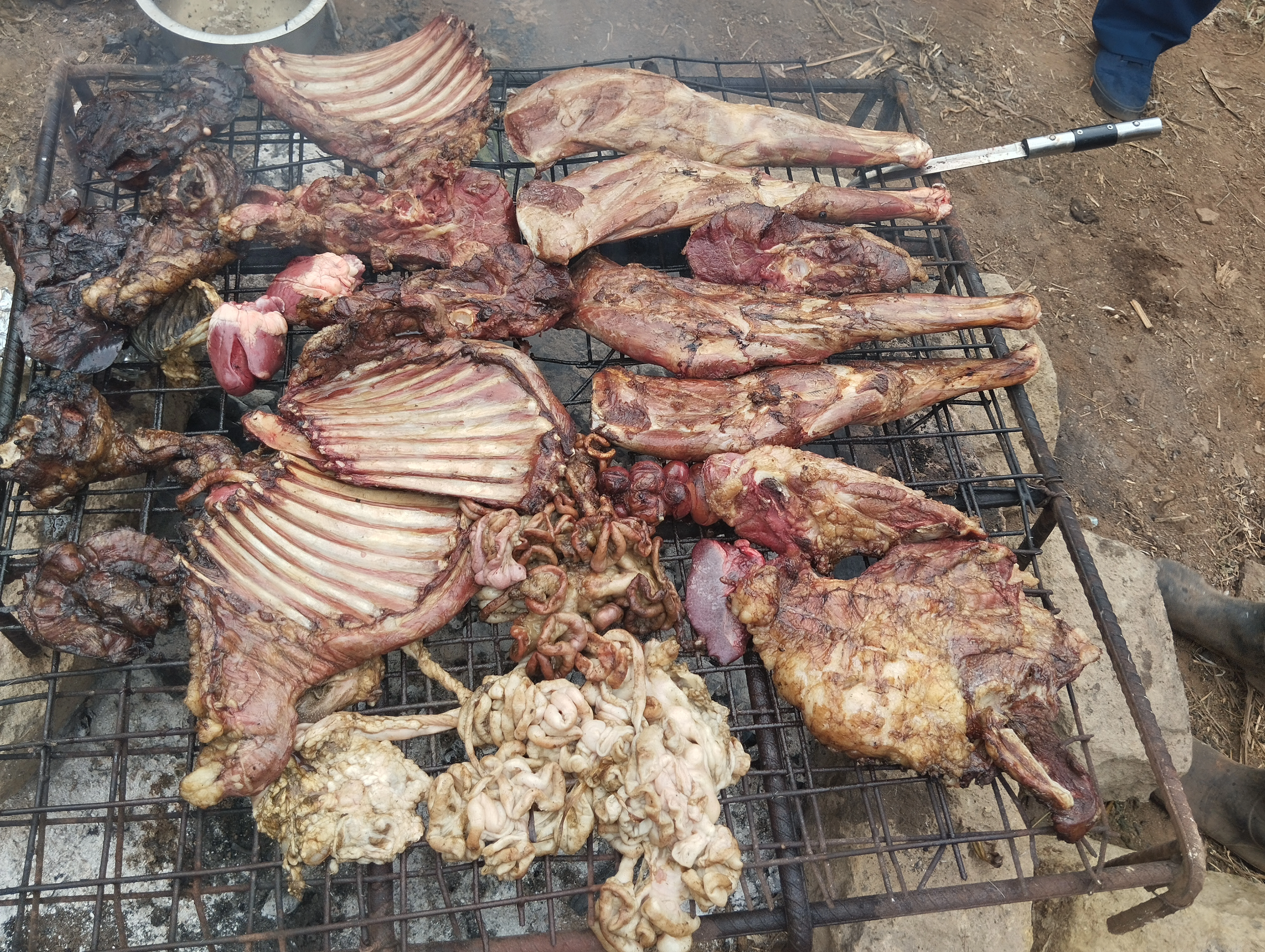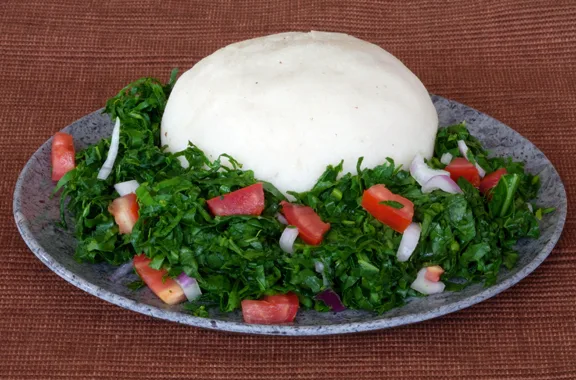
"Ugali is East Africa's edible utensil: a stiff maize porridge pinched, rolled and dimpled with fingers to scoop up stews, greens and grilled meat."
About Ugali
Ugali is one of Tanzania's most beloved dishes, representing the rich culinary tradition of the region.
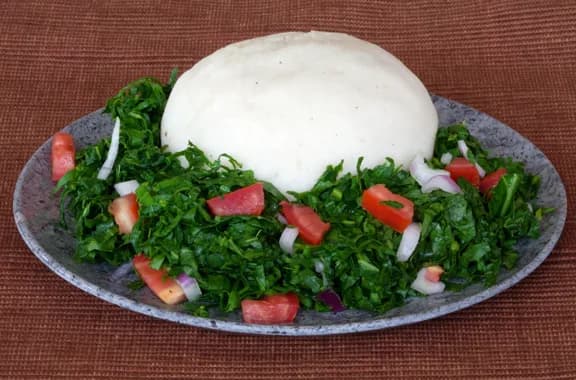
Ugali, a staple of Tanzania's cuisine
The Daily Staple
Ugali is the staple that fills Tanzanian plates more than any other: a stiff porridge of maize flour cooked with water and stirred hard until it forms a smooth, firm mass that can be cut and shaped by hand. Bland by design, it is the neutral base that carries the flavours of everything served with it. It is less a dish than the foundation of the meal.
The Method
Making ugali is simple but takes strength: maize flour is added gradually to boiling water and beaten vigorously with a wooden spoon until it thickens and pulls away from the pot into a firm, dough-like block. The texture, smooth and stiff rather than loose, is what makes it scoopable. It is cooked fresh for each meal.
How It Is Eaten
A diner pinches off a piece, rolls it into a ball with the fingers, presses a dimple with the thumb and uses it to scoop up stew, sauce, greens or grilled meat. Eaten with the right hand, it doubles as both food and utensil. The neutral maize is the perfect vehicle for stronger flavours.
The Foundation
Ugali is central to daily life across much of East Africa, cheap, filling and the base that everything else is built around. It pairs classically with nyama choma and greens, its blandness setting off the smoky meat and the sauces. More than any single dish, it is the everyday foundation of the Tanzanian table.
What to Expect
A block of ugali rests at the centre of the plate, a piece torn off, shaped into a scoop with the hand, and employed to gather the stew or nyama choma beside it. Plain and filling, it serves as the everyday base of Tanzanian eating.
Why Try It
It is the foundation of the Tanzanian meal, the maize staple that everything else is built around and eaten with by hand.
Insider Tips
Eat it with the right hand, pinching off pieces to scoop up stews and sauces.
It is deliberately bland, since the flavour comes from the stews and sauces alongside.
Pair it with nyama choma and greens for the classic combination.