“A 1960 tsunami threw these fifteen moai 90 metres inland; a 1992 restoration project spent four years putting them back exactly where they had stood.”
About Ahu Tongariki
Ahu Tongariki's fifteen moai were standing monuments of the Hotu Iti clan's ancestral power until the inter-clan conflicts of the late eighteenth century resulted in their systematic toppling. The fallen statues lay face-down on the coastal plain for roughly two hundred years, partially buried by soil accumulation and coastal vegetation. On May 22, 1960, the largest earthquake ever recorded, magnitude 9.5, centred on Valdivia in southern Chile, generated a Pacific-wide tsunami that reached Easter Island and swept the already-fallen Tongariki moai nearly 100 metres inland. The displacement made the restoration problem significantly more complex, as the original platform positions had to be reconstructed from fragmentary evidence. The Japanese crane donation and Cristino's archaeological direction produced one of the most ambitious stone monument restorations in the Pacific. The fifteen moai returned to the platform between 1992 and 1996 are in their original positions, confirmed by the socket marks in the platform surface and the archaeological record of the toppling and scatter pattern.
Ahu Tongariki on Easter Island's southeastern coast
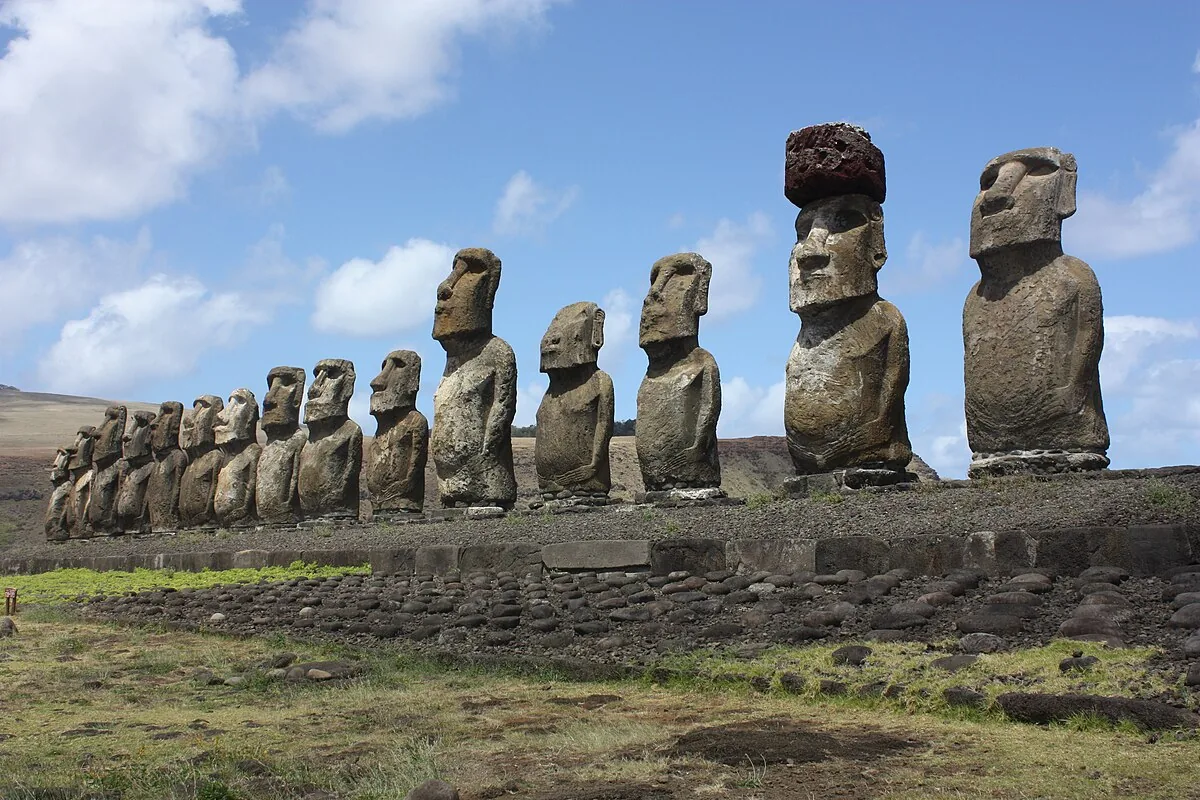
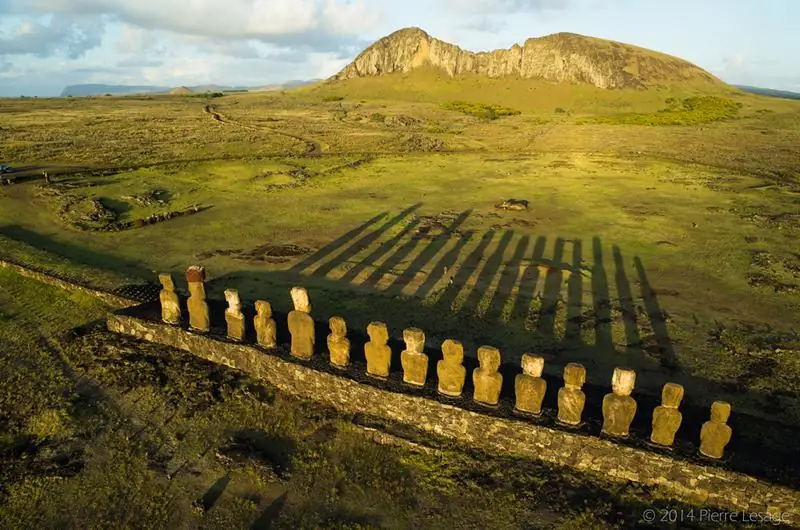
Ahu Tongariki on Easter Island's southeastern coast is the largest ceremonial platform in Polynesia, carrying fifteen moai restored to their standing positions after a 1960 tsunami swept them inland and the subsequent decades of archaeological work brought them back. The fifteen statues, averaging five metres in height and between 30 and 86 tonnes in weight, stand on a platform 200 metres long facing west, with the Pacific behind them and the volcanic slopes of Rano Raraku visible to the northwest. In the early morning, when the sun rises directly behind the moai from the Pacific and their faces are in deep shadow against the brightening sky, the scale and the silence of the site produce a quality of attention that no other moai platform delivers.
Ahu Tongariki was the largest ahu
Ahu Tongariki was the largest ahu on Easter Island at its height, the ceremonial centre of the Hotu Iti clan whose territory covered the island's eastern coast. The fifteen moai it supported were toppled during the inter-clan wars of the eighteenth century and lay face-down on the ground for approximately two hundred years before the 1960 Chilean tsunami, triggered by the same earthquake that struck Valdivia at magnitude 9.5, swept the fallen statues 90 metres inland. Japanese company Tadano donated a large crane to the restoration project in 1992, and Chilean archaeologist Claudio Cristino led the restoration effort from 1992 to 1996, returning all fifteen moai to their original platform positions. The work required the development of new techniques for moving and re-erecting multi-tonne stone figures without further damage, techniques informed by the evidence at Rano Raraku about original Rapa Nui transport methods.
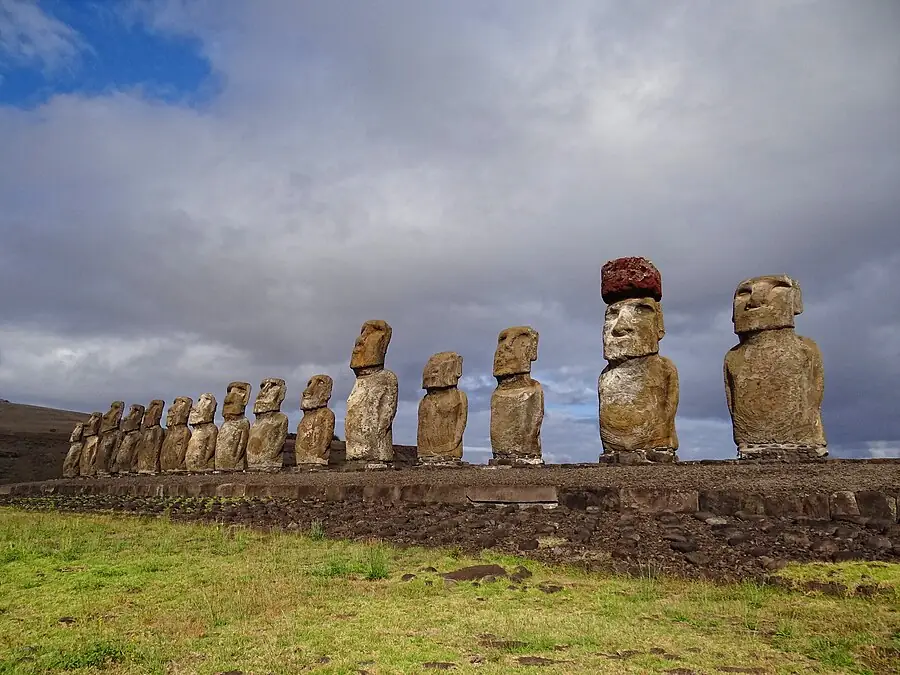
The sunrise visit is the standard approach
The sunrise visit is the standard approach for good reason. Arriving before dawn, the platform is a dark horizontal silhouette against the lightening sky; as the sun rises from the Pacific behind the moai, the figures go from black shapes to progressively detailed stone faces, the individual differences between the fifteen becoming legible as the light strengthens. Tour groups arrive for this moment and then depart; by 9am the platform is often quiet again. The late afternoon visit offers a different quality, the sun in the west illuminates the faces directly, and the volcanic landscape behind the platform is fully visible. The moai's topknots, red scoria cylinders separate from the main figures, sit on several of the heads; the restoration team matched each topknot to its original moai using archaeological records. Ahu Tongariki is 18 kilometres east of Hanga Roa, the island's only town, on a paved coastal road. Rental cars, scooters, and bicycles are available from operators in Hanga Roa. Organised sunrise tours depart before dawn and include transport. The Rapa Nui National Park entry ticket is required.
The Experience
The sunrise moment at Tongariki has become one of the most reproduced images in Pacific travel, the fifteen silhouettes against the brightening sky, the photographer's foreground in the grey pre-dawn light. The image is accurate; the experience exceeds it. The scale of the platform and the height of the tallest moai are both larger than photographs suggest. What the sunrise images do not show is the back of the platform, where the waves break directly against the ahu's stone base at high tide. The moai face inland; turn around and the Pacific is immediately below you, the horizon a straight line of blue water with no land between Easter Island and the Chilean coast 3,700 kilometres to the east.
The scale of the platform and the height of the tallest moai are both larger than photographs suggest.
Why It Matters
Ahu Tongariki is the monument that most completely demonstrates the scale of Rapa Nui ceremonial ambition, fifteen major moai on a single 200-metre platform represents the largest concentration of monumental stone work in Polynesia. The restoration project that returned them to standing is itself significant as a model for major stone monument conservation using archaeological evidence.
Why Visit
Of Easter Island's many moai sites, Tongariki is the one where the full ceremonial logic of the platform and statue system is most legible: the scale of the platform, the number and variety of the figures, the orientation inland from the ocean, the relationship to the Rano Raraku quarry visible to the northwest. If time allows only one moai site beyond the quarry, this is the one.
✦ Insider Tips
- 1
Arrive at least 30 minutes before sunrise to claim a position before the organised tour groups arrive, independent visitors who arrive first get the unobstructed foreground.
- 2
The moai with the topknot restored, the red scoria cylinder sitting on the head, is the third from the left; it is the most complete figure on the platform.
- 3
Walking the full length of the platform base gives the best sense of the ahu's scale, the 200-metre structure is wider than it photographs.
- 4
A visit to Rano Raraku quarry in the same morning as Tongariki makes the production-to-platform relationship physically clear; the quarry is 3 kilometres to the northwest.