Wave action has been carving the same volcanic tuff arch for millions of years, the same process that created it is still working at its base today.
About La Portada
The Atacama Desert coast between Antofagasta and Iquique has been shaped by the interplay of two geological forces: the ongoing volcanic activity of the Andean arc to the east, which deposits new material, and the Pacific's wave erosion from the west, which removes it. La Portada represents a specific moment in that long process, a formation where differential erosion produced an arch rather than a cliff or a stack. The Atacameño people knew the coast and fished its cold, productive waters; Spanish colonial maps document La Portada as a navigational reference point on the approach to Antofagasta's bay. The formation's modern identity as a protected natural monument dates from CONAF's designation in 1990, which restricted the fishing and recreational access that had been degrading the sea lion and penguin colonies at the arch's base. Antofagasta grew as a mining port in the late nineteenth century, the city is the primary export hub for the copper and lithium production of the Atacama interior, and La Portada functions as the coastal landmark that anchors the region's natural identity against its industrial character.
What La Portada is
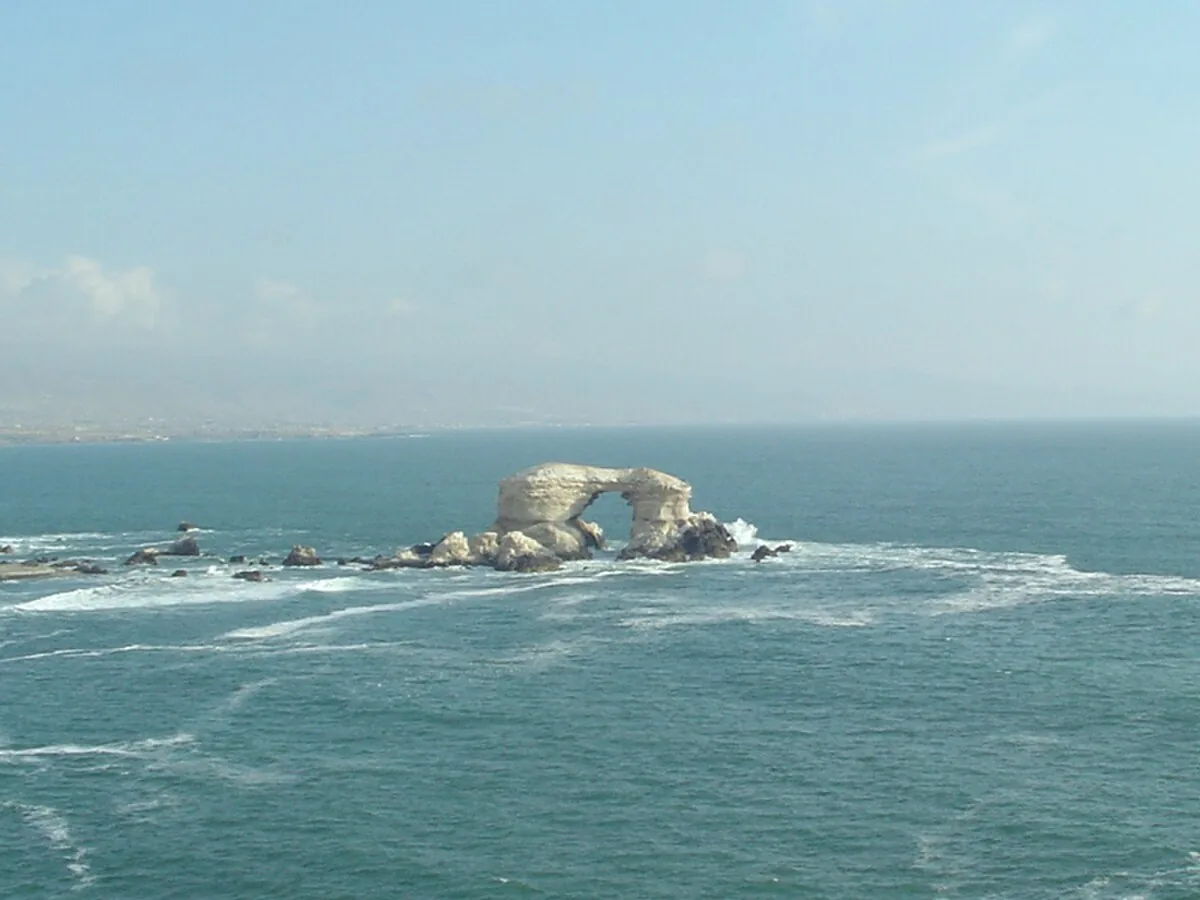
La Portada is a natural rock arch rising from the Pacific Ocean 30 kilometres north of Antofagasta, its volcanic tuff carved by wave action over millions of years into a form that the Spanish colonists named after a cathedral portal. The arch stands about 40 metres above the water, its base continuously washed by Pacific swells, and the contrast between the deep rust and black of the rock and the white of the breaking surf below it is the visual logic that has made it the most recognised natural landmark in northern Chile. The surrounding coastline, the Monumento Natural La Portada, protected by CONAF, includes the arch, several adjacent rock formations, sea bird nesting sites, and a beach at the base of the coastal cliffs. The cold Humboldt Current, which runs north along Chile's entire Pacific coast, keeps the water temperature year-round between 14 and 18 degrees Celsius and sustains the marine productivity that draws the Humboldt penguins and sea lion colonies that use the arch's base as haul-out territory.
La Portada's geology is a record
La Portada's geology is a record of the Pacific plate's volcanic activity over the past several million years, the arch is composed of Miocene-period tuff, volcanic ash compressed into soft rock that erodes more quickly than the surrounding basalt. The wave action of the Pacific worked preferentially on the tuff layers, hollowing the formation from the sea side while the basalt cap above it resisted. The arch is the result: a tuff bridge beneath a basalt crown. The formation's long-term future is geologically uncertain. The same erosive processes that created the arch continue working at its base, and periodic rock falls reduce the tuff columns. The arch is measured and monitored by Chilean geological services, though the timescale of major change is geological rather than human.
The viewpoint above the arch, reached
The viewpoint above the arch, reached by a short path from the CONAF entrance, gives the clearest composition, the full arch visible, the Pacific beyond it, the sea lion colony hauled out on the rocks below. Binoculars reveal the Humboldt penguins nesting in the tuff crevices above the water line and the Chilean pelicans using the arch's crown as a resting platform. The beach below the viewpoint is accessible via a steep path and puts you at water level looking up at the arch from below, a completely different perspective that the viewpoint does not anticipate. At this level the scale of the formation becomes clear, the sound of the Pacific swell against the arch base is continuous and substantial, and the spray from breaking waves reaches far enough inland to require waterproof clothing.
La Portada is 30 kilometres
La Portada is 30 kilometres north of Antofagasta on Route 1, the coastal highway. Antofagasta is served by frequent domestic flights from Santiago and the journey north to the monument by taxi or rental car takes about 30 minutes. CONAF maintains the viewpoint with a small entry fee. The site is open daily.
The Experience
The viewpoint is exposed to the Pacific wind, which comes consistently from the south and carries sea spray far enough inland to taste salt at the observation platform. The sea lions hauled out below the arch are audible before they are visible, the barking of a colony carries clearly over the surf noise. The late afternoon light from the northwest illuminates the arch face most directly, deepening the rust and black of the tuff against the white water below. At this time of day the shadow of the arch crown falls across the column faces in a way that emphasises the depth of the hollowed interior. The Humboldt penguins in the tuff crevices are easiest to see in the early morning when they are most active around the nesting sites.
Why It Matters
La Portada is Chile's most significant coastal natural monument and one of the best examples on the Pacific coast of South America of the biological productivity sustained by the Humboldt Current. The arch is the visual emblem of northern Chile's coastal identity, a landscape defined by the meeting of extreme desert aridity and one of the world's most productive cold ocean currents.
Why Visit
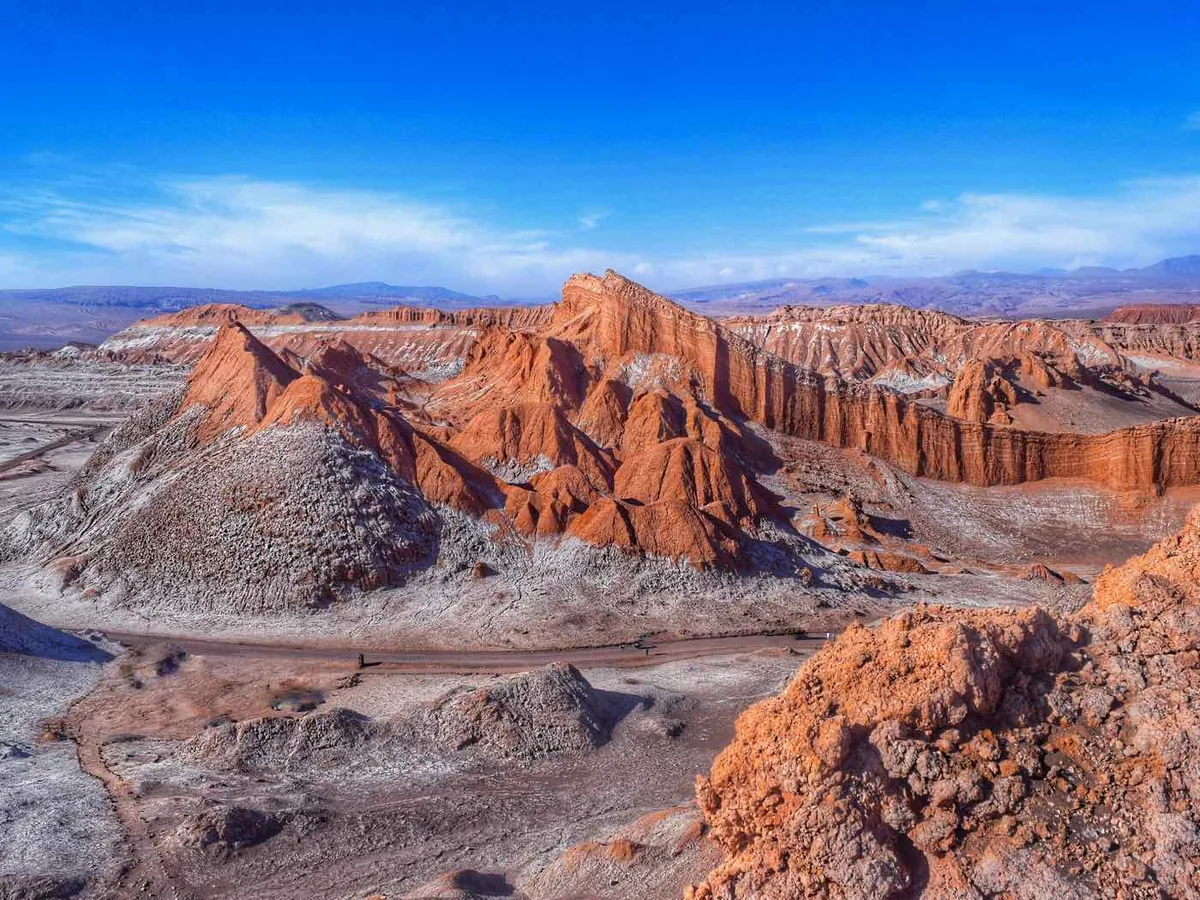
The Atacama's interior landscapes, the Valley of the Moon, El Tatio, the salt lakes, receive most of the attention. The Pacific coast immediately below the desert is its own landscape, and La Portada is the point where the two meet most dramatically: the desert cliff falling directly into cold Pacific swell, the arch standing as evidence of the ocean's work on the volcanic rock. The 30-minute drive from Antofagasta is proportionate to the scale of what you find.
✦ Photo Gallery
Best Season
🌤 Year-round. The Humboldt penguin breeding season (September–January) is the peak wildlife period with the most colony activity visible from the viewpoint. Winter (June–August) produces the strongest Pacific swells and the most dramatic wave action against the arch base.
Quick Facts
Best time to visit
Year-round. The Humboldt penguin breeding season (September–January) is the peak wildlife period with the most colony activity visible from the viewpoint. Winter (June–August) produces the strongest Pacific swells and the most dramatic wave action against the arch base.
Getting there
In Antofagasta, Chile; reach Antofagasta first, then continue to the site.
Location
Antofagasta, Chile
Type
attraction
Coordinates
-23.5064°, -70.4269°
Insider Tips
- 1
Binoculars are worth bringing for the Humboldt penguin nesting sites in the tuff crevices, from the viewpoint the penguins are visible but small.
- 2
The beach-level path below the viewpoint requires a steep descent and is not suitable for those with mobility limitations; the viewpoint itself is flat and accessible.
- 3
A windproof jacket is required at the viewpoint regardless of the inland temperature, the Pacific wind is consistent and carries spray.
- 4
The CONAF entry booth takes cash; carry small notes as change availability is limited.
- 5
Combine with the Pan de Azúcar National Park two hours north, the two sites together represent the best of the Atacama coast's marine biology and coastal landscape.