“On September 11, 1973, Chilean air force jets fired rockets into the presidential palace while the elected president was still inside.”
About Palacio de La Moneda
Joaquín Toesca designed La Moneda in 1784 as a colonial mint, giving it the severe neoclassical proportions of an institution meant to project permanence and fiscal authority. Construction ran until 1805; the transition to presidential palace came in 1846 under President Bulnes, who needed a residence that matched the ambitions of an independent republic. For over a century the building served that purpose without incident. The coup of September 11, 1973 changed what La Moneda means permanently. General Pinochet's junta demanded Allende's surrender; he refused and died inside the building as it burned around him. The official account called it suicide; the circumstances remain disputed. The junta used La Moneda as its headquarters through the dictatorship and restored it in 1981. After the return to democracy in 1990, successive governments have wrestled with how to inhabit a building whose walls carry that weight.
The presidential palace of Chile sits
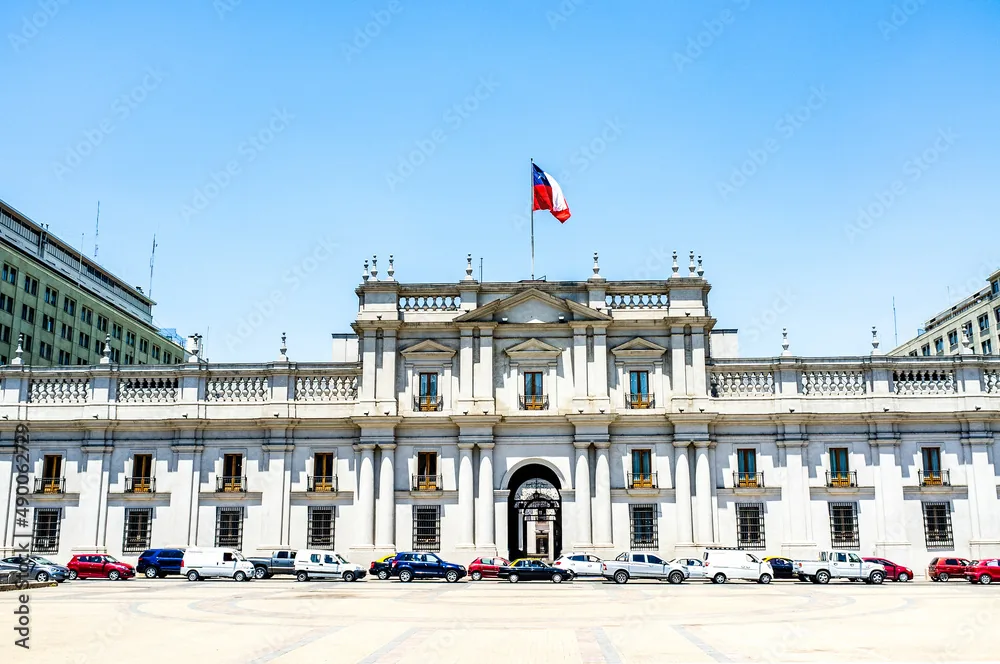
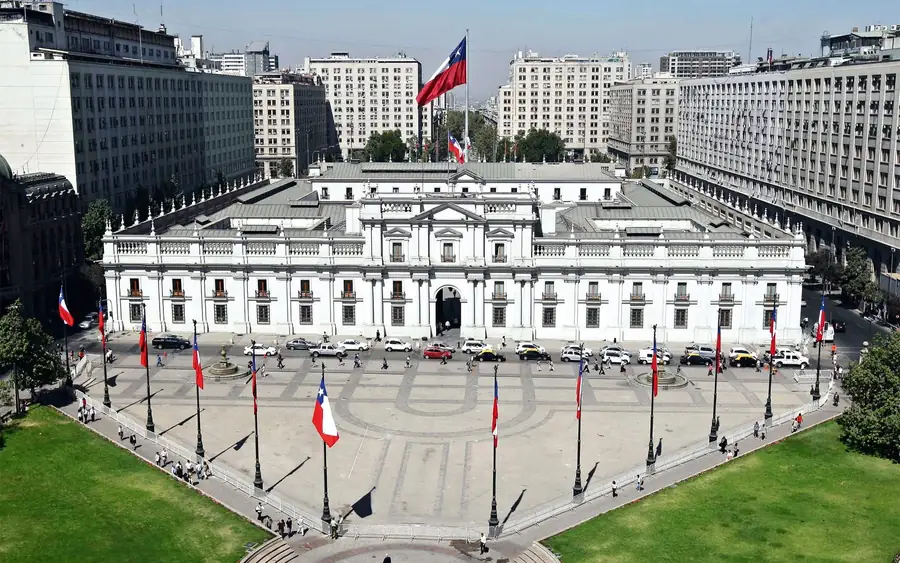
The presidential palace of Chile sits at the exact centre of Santiago, a neoclassical building of such measured proportion that its facade gives nothing away about the violence it has absorbed. La Moneda was built as a mint, the name means exactly that, and its colonial-era architects gave it the cool dignity of an institution that handles money rather than power. Power arrived later and never entirely left. The building is the seat of the Chilean executive, the address of the national government, and the site of the most consequential event in modern Chilean history: the military coup of September 11, 1973, when air force jets strafed its facade and President Salvador Allende died inside. The bullet holes have been repaired. The building has been restored. The plaza in front of it, Plaza de la Constitución, fills each day with office workers eating lunch on the grass and tourists photographing the changing of the guard. The ordinary life that surrounds La Moneda is not a denial of its history, it is what continuity looks like.
The presidential palace of Chile sits at the exact centre of Santiago, a neoclassical building of such measured proportion that its facade gives nothing away about the violence it has absorbed.
designed La Moneda, 1784
Joaquín Toesca, an Italian architect working under the Spanish colonial administration, designed La Moneda in 1784. Construction took twenty years; the building was completed in 1805 and functioned as the royal mint until 1846, when the government of President Manuel Bulnes converted it to the presidential palace. The move was practical, the colonial administration buildings elsewhere in the city were inadequate, but it gave Chile's executive branch a home of genuine architectural gravity. For 127 years, La Moneda was a stable seat of government through wars, constitutional crises, and the transitions of a developing republic. That stability ended on the morning of September 11, 1973, when General Augusto Pinochet's military junta launched a coup against the democratically elected Allende government. Allende refused to leave the building. By afternoon he was dead, the palace was occupied, and Chile had entered seventeen years of military dictatorship. The palace was restored and returned to civilian use after the return to democracy in 1990.
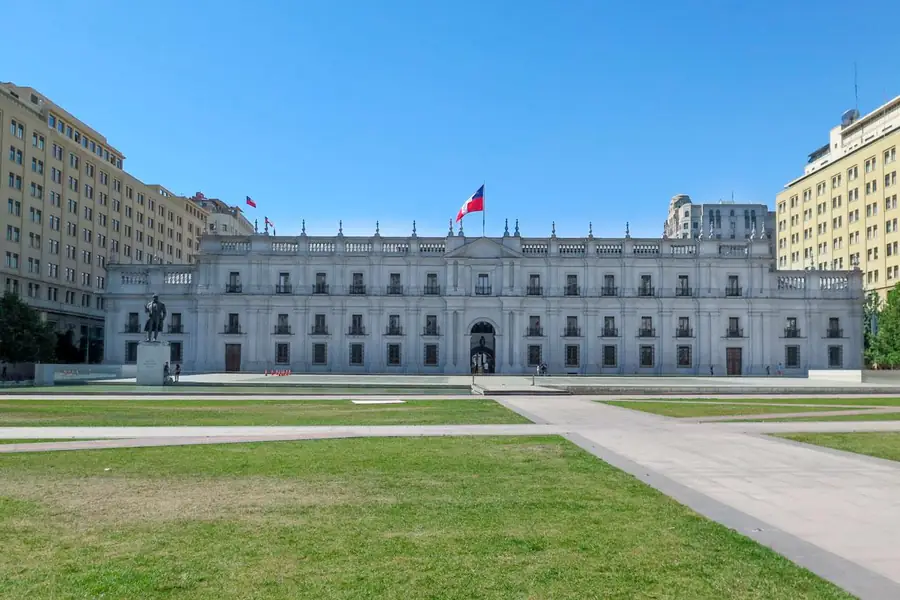
The exterior is accessible at all hours
The exterior is accessible at all hours, and the changing of the guard at the main entrance on Morandé street occurs every other day at 10am with full military ceremony. The internal courtyards are open to the public on weekdays without prior booking, walking through security, cross the first patio with its clipped orange trees, and feel the building's mass around you. The Cultural Centre La Moneda, built below the plaza and accessible via a below-ground entrance on the north side, operates as a free exhibition space with rotating shows of Chilean and Latin American art. The permanent exhibits on the building's history include photographs from September 1973 that the government has chosen not to soften.
La Moneda is at the corner
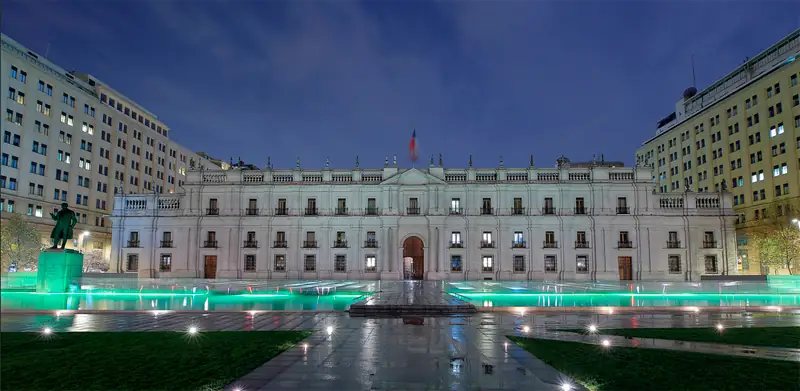
La Moneda is at the corner of Moneda and Morandé streets in central Santiago, served by metro lines 1 and 2 at La Moneda and Universidad de Chile stations respectively. The walk from either station takes under five minutes. The building is open for courtyard visits Monday through Friday during business hours.
La Moneda is at the corner of Moneda and Morandé streets in central Santiago, served by metro lines 1 and 2 at La Moneda and Universidad de Chile stations respectively.
The Experience
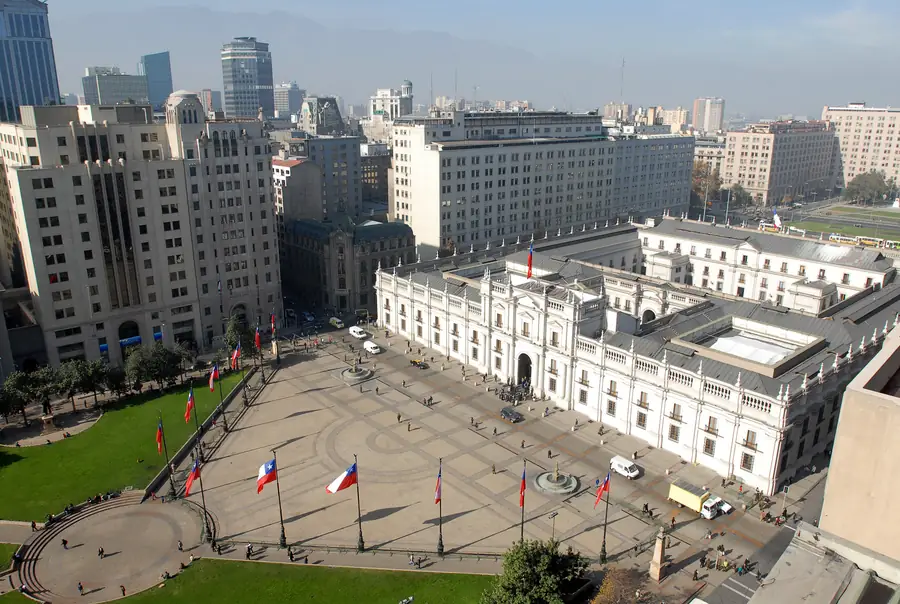
The internal courtyards are quieter than you expect for the seat of a national government. Orange trees grow in geometric rows, trimmed to identical heights, and the stone underfoot carries the particular cold of thick colonial-era walls regardless of the season. Government officials cross the patio with folders under their arms; tourists move slowly and look up. Below the plaza, the Cultural Centre runs exhibitions without charge, the below-ground space was built during the Pinochet era as a car park and converted after democracy returned, a transformation that the building's curators are aware carries its own symbolism.
Why It Matters
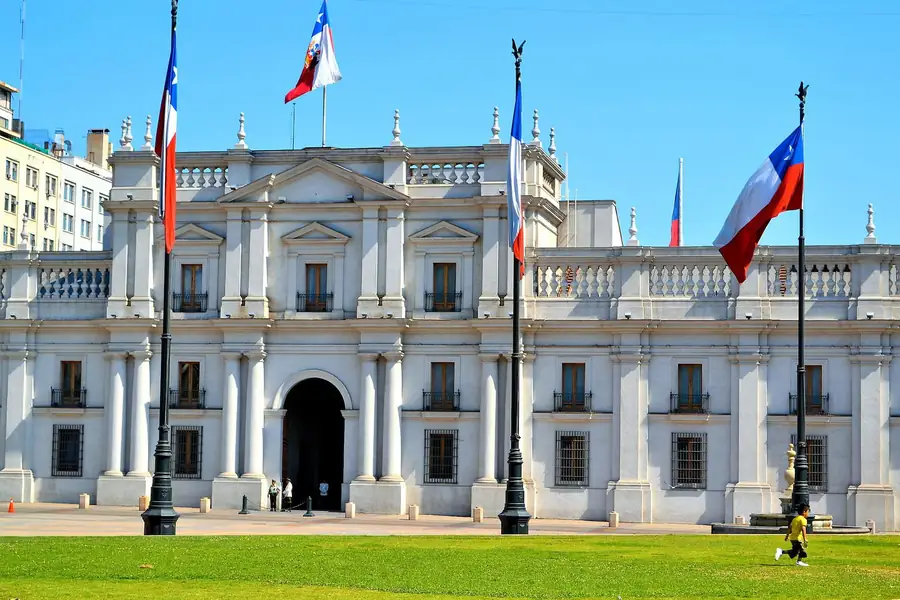
La Moneda is the address of Chilean democracy in both its strongest and most broken moments. The building witnessed the country's most traumatic political event and survived it, which is the architectural argument for why it continues to function as a seat of government rather than a memorial. No other building in Chile carries the same concentration of political meaning.
Why Visit
The building is not a museum, it is a working presidential palace that allows civilian access to its courtyards, which makes the visit different from any heritage site. Crossing the patio where Allende made his final broadcast, on an ordinary Tuesday, surrounded by ordinary government activity, is the experience. The normalcy is the point.
✦ Insider Tips
- 1
The changing of the guard occurs every other day at 10am at the Morandé entrance, the schedule is posted on the palace website and alternates daily.
- 2
The Cultural Centre La Moneda below the plaza is free and often hosts significant Chilean contemporary art exhibitions with no advance booking required.
- 3
Courtyard access requires passing through a security checkpoint on weekdays; carry your passport rather than a photocopy.
- 4
The north facade on Agustinas street shows the repaired stonework from the 1973 bombardment, the restoration is visible on close inspection.
- 5
Plaza de la Constitución on the north side of the palace is the better photography position; the south plaza on Alameda is busier with traffic.