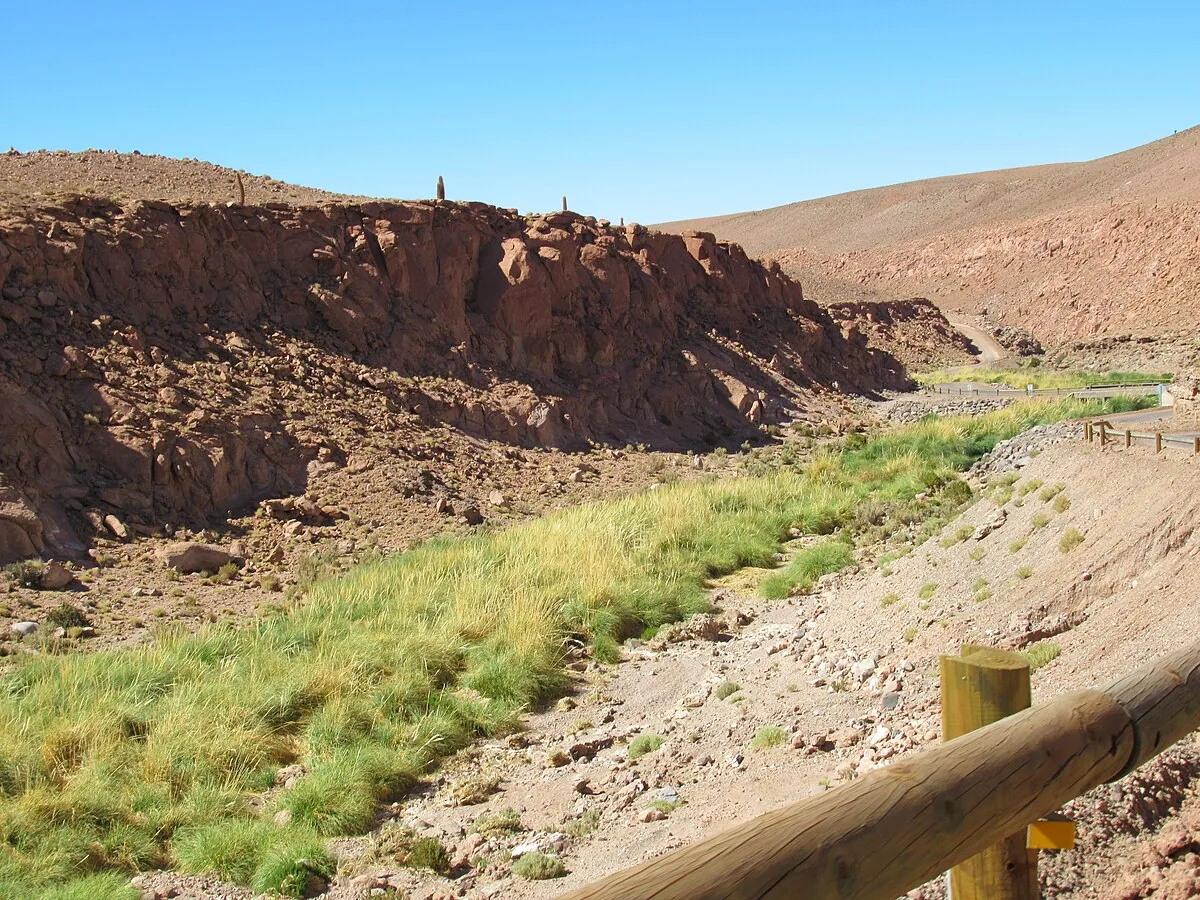
In one of the driest places on earth, a geothermal stream feeds eight warm pools in a narrow canyon full of reeds and flowering plants, the only green visible for many kilometres in any direction.
About Puritama Hot Springs
The Kunza-speaking Atacameño people called this place Puritama, hot water, and used it as a known resource within the broader network of oases, springs, and salt lakes that made the Atacama inhabitable for human populations over the past three thousand years. The warm water's consistent temperature and flow made it a reliable waypoint in a landscape where water was the primary constraint on movement. Spanish colonial documentation of the springs begins in the seventeenth century, when the route north from San Pedro was the primary connection between the Atacama oasis and the altiplano silver mines of the Bolivian highlands. The springs at Puritama were noted as a rest point where animals could drink and travellers could bathe. The site passed through various private and state administrations before Explora, the Chilean luxury expedition hotel group, took management in the 1990s. The infrastructure they built is genuinely restrained by commercial site standards, no large facilities, no accommodation, a small café using solar power, the pools maintaining their natural gradient.
Puritama Hot Springs in Chile
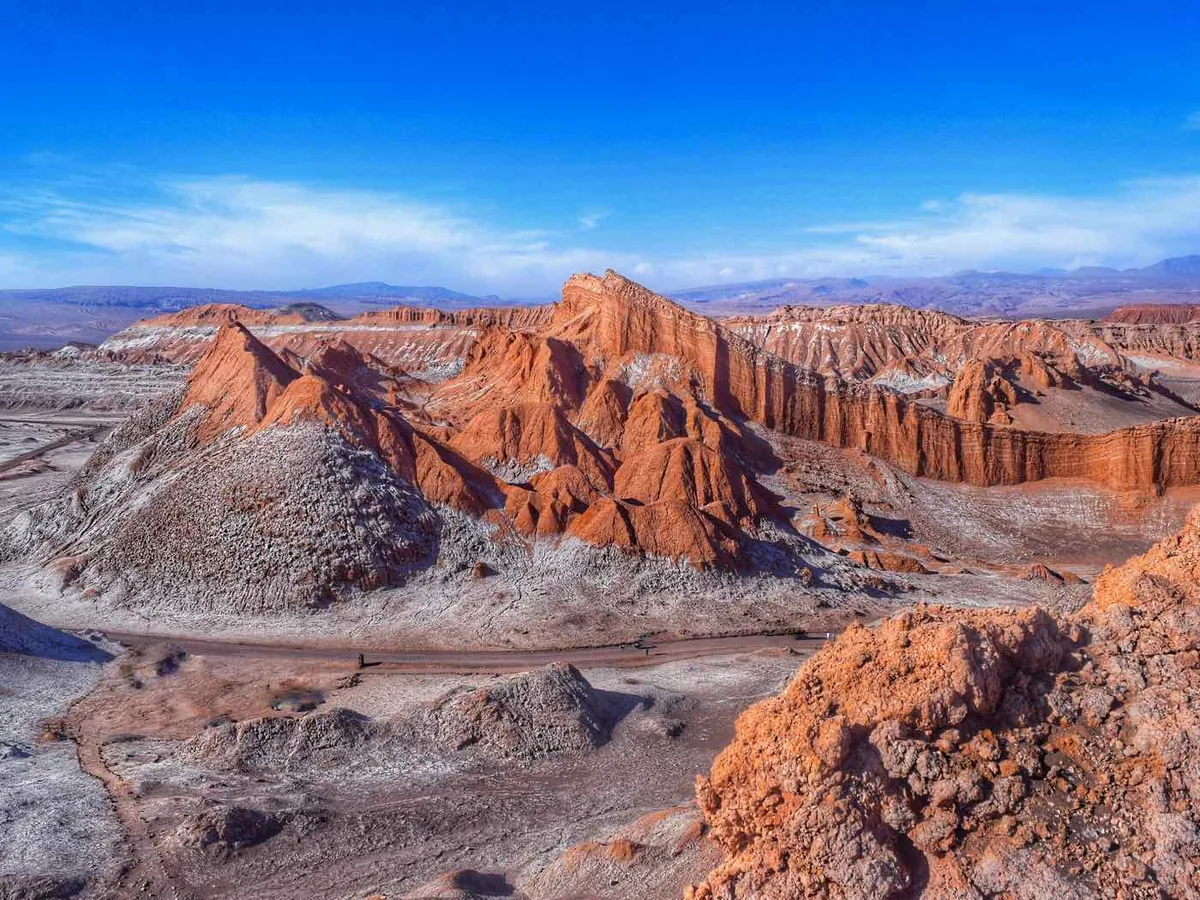
Puritama is a canyon of hot springs 60 kilometres north of San Pedro de Atacama, carved into the desert rock at an altitude of 3,500 metres, where a geothermal stream runs warm through a narrow ravine dense with totora reeds and flowering plants. Eight pools of graduated temperature descend along the canyon floor, connected by channels and small waterfalls, the surrounding walls of red and ochre rock pressing close on both sides. After the absolute aridity of the surrounding Atacama, the green of the canyon vegetation hits the eye with an almost physical force. The springs are managed as a private site by the Explora hotel group, with entry by timed ticket available to non-guests. The facility is maintained without compromising the canyon's character, the pools follow the natural terrain, the infrastructure is minimal, and the only sounds are water and the wind above the canyon rim.
“Eight pools of graduated temperature descend along the canyon floor, connected by channels and small waterfalls, the surrounding walls of red and ochre rock pressing close on both sides.”
Puritama Hot Springs, Chile
Puritama, the name means hot water
Puritama, the name means hot water in the Kunza language of the Atacameño people, has been known as a bathing and healing site for as long as human occupation of the San Pedro oasis has been recorded. The warm water, emerging from the same geothermal system that drives El Tatio's geysers 35 kilometres to the north, creates the only permanently green environment within many kilometres of otherwise absolute desert. The Atacameño people used the canyon's warm pools and the totora reed beds, a plant otherwise found only at the edges of the Atacama's salt lakes, as part of their management of the desert's scarce biological resources. The Spanish colonial record documents the springs as a known waypoint on the altiplano trade routes. Explora took management of the site in the 1990s and built the minimal infrastructure that exists today, changing rooms, a small café, the connecting channels between the natural pools, without significantly altering the canyon's character.
The descent into the canyon from the parking
The descent into the canyon from the parking area takes about ten minutes on a switchback path, and the temperature and humidity change is immediate, the air in the canyon is noticeably warmer and carries moisture that the surrounding desert does not. The lowest pools are the coolest, running at around 28 degrees Celsius; the uppermost pools approach 35 degrees, where the geothermal source emerges from the rock. The middle pools are the most used and the most comfortable for extended soaking. The canyon walls above them are close enough to create a sense of enclosure that the surrounding desert's vast openness does not offer, and the red rock reflects heat in a way that makes the air above the water warm even in winter. In the afternoon, when the sun drops below the western canyon rim, the light on the eastern walls turns the rock from ochre to deep copper.
Puritama is 60 kilometres north of San Pedro
Puritama is 60 kilometres north of San Pedro de Atacama on a paved road to kilometre 40, then unpaved. Entry is by timed ticket, bookable through the Explora website. Most San Pedro tour operators run afternoon transfers to the springs, returning before sunset. The site is not accessible by public transport.
“Puritama is 60 kilometres north of San Pedro de Atacama on a paved road to kilometre 40, then unpaved.”
The Experience
The contrast between the Atacama surrounding the canyon and the canyon interior is the experience's defining quality. You drive through absolute desert for an hour, park on a gravel flat, and walk down into a slot canyon where warm water, green reeds, and flowering desert plants create a biological intensity that the surrounding landscape makes remarkable. The pools work best in the late afternoon when the day-trip visitors have thinned and the canyon light is at its most saturated. The upper pool, closest to the source, is the hottest and the smallest, usually occupied by two or three people, with the geothermal water entering visibly from a cleft in the rock above. Audibly, the of the water running down through the series of pools is continuous and specific, a sound pattern that the surrounding desert amplifies rather than absorbs.
Why It Matters
Puritama represents a specific type of desert oasis, geothermally sustained rather than rainfall-dependent, that is rare in the Atacama and globally. The biological community it supports, including plant and invertebrate species adapted to warm mineralized water in a hyperarid environment, is found nowhere else in exactly this combination. The canyon's use by human populations for three millennia is a record of how the Atacama's scattered water resources structured pre-modern movement through the desert.
Why Visit
The experience of soaking in a hot spring at 3,500 metres in the middle of the driest desert on earth, in a canyon you descended through ten minutes ago from an absolutely bare landscape, is the specific thing Puritama offers. The quality of the infrastructure is secondary to the quality of the contrast.
Insider Tips
- 1
Book entry tickets through the Explora website before traveling, timed slots sell out during peak periods and the site turns away walk-ins when capacity is reached.
- 2
The upper pool closest to the geothermal source is the hottest; descend to lower pools if the temperature feels excessive.
- 3
Bring a towel, sun protection, and a windproof layer for the drive back, the canyon is sheltered but the return journey at altitude in a wet swimsuit is cold.
- 4
The café at the site serves basic food and hot drinks at reasonable prices; it is the only food option for the visit.
- 5
Allow two to three hours in the canyon, rushing through the pools misses the slow decompression that is the main product of the visit.