“This is one of the only Jewish heritage sites outside Israel on the UNESCO World Heritage list.”
About Jewish Quarter
Trebic's Jewish community lived in the quarter for centuries, building synagogues, schools and a cemetery in a compact settlement beside the Christian town. The community was destroyed in the Holocaust, but the buildings survived largely intact, a rare and complete physical record of pre-war Jewish life in Central Europe. In 2003 the quarter and the adjacent basilica were jointly listed by UNESCO.
What Jewish Quarter (Trebic) actually is
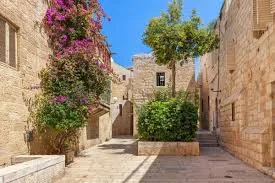
The Jewish Quarter of Trebic, in the Moravian region of the Czech Republic, is one of the best-preserved Jewish ghettos in Europe and a rare UNESCO World Heritage Site dedicated to Jewish heritage outside Israel. Its dense maze of historic houses, two synagogues and an old cemetery tell the story of centuries of Jewish life alongside the neighbouring Christian town.
Its dense maze of historic houses, two synagogues and an old cemetery tell the story of centuries of Jewish life alongside the neighbouring Christian town.
A Rare Survival of Jewish Heritage
The quarter preserves an extraordinarily complete Jewish settlement, with around 120 houses, two synagogues, a town hall, schools and a large cemetery with some 3,000 tombstones, the oldest dating back centuries. Remarkably intact, it stands beside the Christian Basilica of St Procopius, and the two were jointly inscribed by UNESCO as a testimony to the long coexistence of Jewish and Christian communities. The Jewish quarter survived even though its community did not.
The Experience
You wander the narrow lanes of the old quarter, visit the restored synagogues, one now a museum of Jewish life, and climb to the atmospheric hillside cemetery with its thousands of weathered tombstones. The nearby Romanesque-Gothic basilica completes the visit. The remarkable completeness of the quarter, and the poignancy of a community gone but its town preserved, make Trebic a moving and important place.
Why It Matters
The Jewish Quarter of Trebic is of exceptional importance as one of the best-preserved Jewish ghettos in Europe and a unique UNESCO World Heritage Site honouring Jewish heritage and Jewish-Christian coexistence. It is a vital place of memory and a rare survival of a once-widespread way of life.
It is a vital place of memory and a rare survival of a once-widespread way of life.
Why Visit
One of Europe's best-preserved Jewish quarters, a UNESCO World Heritage Site of synagogues, houses and an old cemetery, in Trebic, Czech Republic.
✦ Insider Tips
- 1
Visit both synagogues, one now a museum of Jewish life.
- 2
Climb to the old cemetery with its 3,000 tombstones.
- 3
See the adjacent Basilica of St Procopius.
- 4
It is a rare UNESCO Jewish heritage site outside Israel.