“Alexander the Great crossed the desert to this remote temple to be told he was the son of a god.”
About Temple of the Oracle of Amun
The Temple of the Oracle was built around the 6th century BC and became one of the most famous oracular sanctuaries of antiquity, drawing pilgrims and rulers. Its renown peaked when Alexander the Great consulted it in 331 BC and was reportedly declared the son of Amun. Set in the isolated Siwa Oasis, the temple and the surrounding ancient settlement of Aghurmi are evocative ruins today.
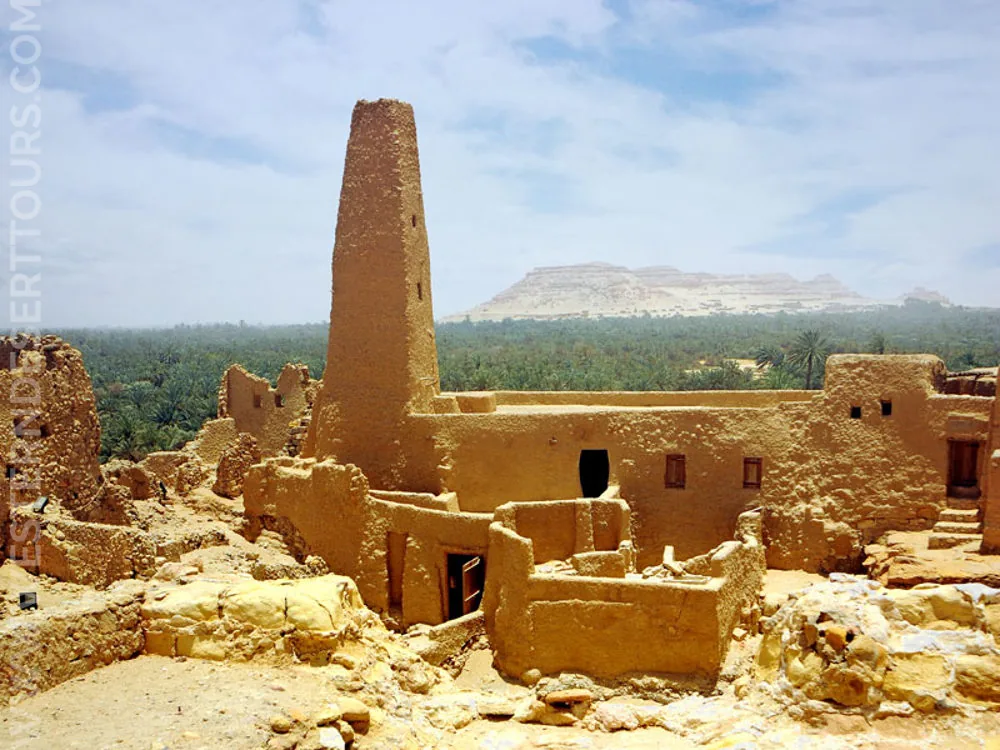
The Temple of the Oracle of Amun stands on a rocky outcrop in the remote Siwa Oasis of Egypt's Western Desert, the ruins of an ancient sanctuary famed throughout the classical world for its oracle. Overlooking a sea of date palms and salt lakes, it is most celebrated as the place where Alexander the Great came to consult the god and have his divine destiny confirmed.
The Temple of the Oracle of Amun stands on a rocky outcrop in the remote Siwa Oasis of Egypt's Western Desert, the ruins of an ancient sanctuary famed throughout the classical world for its oracle.
Where Alexander Sought the Gods
In 331 BC, after conquering Egypt, Alexander the Great made an arduous journey across the desert to the Oracle of Amun at Siwa, then one of the most renowned oracles in the ancient world. There, according to tradition, the priests confirmed him as the son of the god Amun, legitimising his rule and fuelling his belief in his own divinity. The temple, built around the 6th century BC, sits atop the mud-brick ruins of the old town of Aghurmi, surrounded by the lush oasis.
The Experience
Heading up the rocky outcrop crowned by the temple ruins amid the labyrinth of the old mud-brick town, looking out over an ocean of date palms, olive groves and salt lakes that make up the Siwa Oasis. The remoteness, the romance of Alexander's pilgrimage and the beauty of the oasis make the visit memorable. Siwa's distinctive Berber culture, hot springs and desert add to the experience.
Why It Matters
The Temple of the Oracle of Amun is one of the most storied ancient sites in Egypt, linked to the legend of Alexander the Great and the religious world of antiquity. In its extraordinary oasis setting, it offers a remote, atmospheric encounter with both classical history and the unique culture of Siwa.
The Temple of the Oracle of Amun is one of the most storied ancient sites in Egypt, linked to the legend of Alexander the Great and the religious world of antiquity.
Why Visit
The ancient oracle temple in Siwa Oasis where Alexander the Great was declared a god's son, set amid palms and salt lakes in Egypt's Western Desert.
✦ Insider Tips
- 1
Climb the outcrop for views over the Siwa Oasis.
- 2
It is where Alexander the Great consulted the oracle.
- 3
Explore Siwa's Berber culture, springs and desert.
- 4
It is remote; plan the long desert journey.