“This new museum reunites all 5,000 of Tutankhamun's treasures for the first time since his tomb was opened in 1922.”
About The Grand Egyptian Museum
Conceived to relieve the crowded old Egyptian Museum in central Cairo and to showcase the country's heritage beside the pyramids, the Grand Egyptian Museum was developed over many years as a flagship national project. It brings together antiquities from across Egypt, with the complete Tutankhamun collection as its highlight, and a soaring modern design oriented toward the Giza plateau.
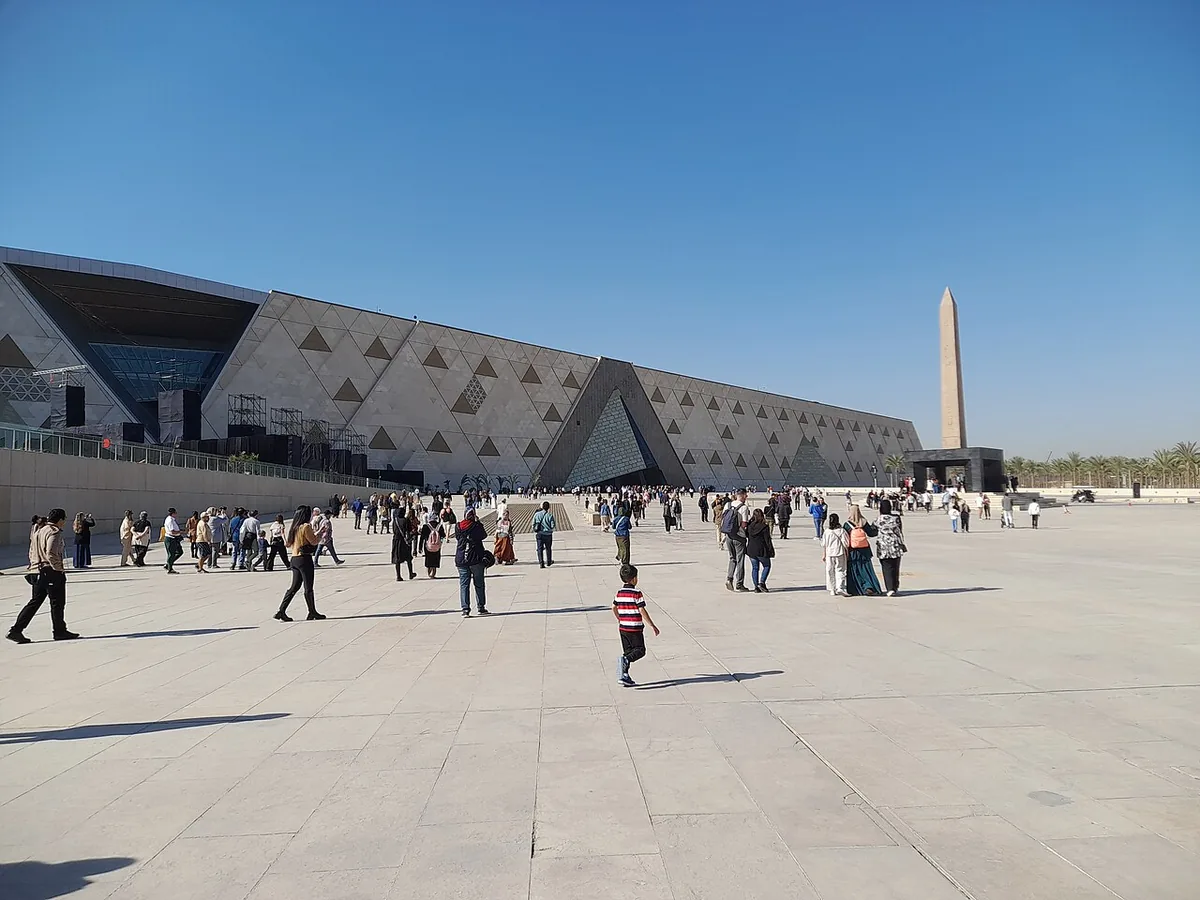
The Grand Egyptian Museum, near the Pyramids of Giza, is one of the largest archaeological museums in the world, a vast modern complex built to house the treasures of ancient Egypt. Its centrepiece is the complete collection of the boy king Tutankhamun, displayed together for the first time, alongside thousands of other masterpieces, in sight of the pyramids themselves.
The Grand Egyptian Museum, near the Pyramids of Giza, is one of the largest archaeological museums in the world, a vast modern complex built to house the treasures of ancient Egypt.
Tutankhamun's Treasures Reunited
The museum was created to provide a magnificent new home for Egypt's antiquities, and its great attraction is the full Tutankhamun collection of over 5,000 objects, including the famous golden mask and treasures, shown all together for the first time since the tomb's discovery in 1922. A grand staircase lined with colossal royal statues ascends past 3,000 years of pharaonic history, and a towering statue of Ramesses II greets visitors in the soaring entrance hall.
The Experience
Inside, a vast atrium dominated by the colossal statue of Ramesses II, climb the grand staircase flanked by monumental statues, and explore galleries of mummies, statues, jewellery and the dazzling Tutankhamun treasures, with views toward the pyramids from the building. The scale, the modern presentation and the proximity to Giza make it a spectacular culmination of any visit to Egypt's ancient sites.
Why It Matters
The Grand Egyptian Museum is one of the most important museums in the world for ancient history, gathering the without equal heritage of pharaonic Egypt in a single monumental setting beside the pyramids. It is the definitive showcase of one of humanity's greatest civilisations.
It is the definitive showcase of one of humanity's greatest civilisations.
Why Visit
The world's premier museum of ancient Egypt, near the Giza pyramids, with the complete Tutankhamun collection reunited and thousands of pharaonic treasures.
✦ Insider Tips
- 1
See the complete Tutankhamun collection, reunited at last.
- 2
Note the colossal Ramesses II statue in the atrium.
- 3
It sits near the Giza pyramids; combine the two.
- 4
Allow most of a day for the vast galleries.