This park protects ancient Roman emerald mines in the desert and vibrant coral reefs in the sea, side by side.
About Wadi el-Gemal National Park
Wadi el-Gemal was established as a national park to protect a large and ecologically rich area of Egypt's southern Red Sea coast and its desert hinterland. The valley was historically a route for caravans and the site of Roman-era emerald mines, while the coast holds important reefs and seagrass beds. The park safeguards this combined natural and cultural heritage, including the lifeways of local Bedouin.
Wadi el-Gemal National Park
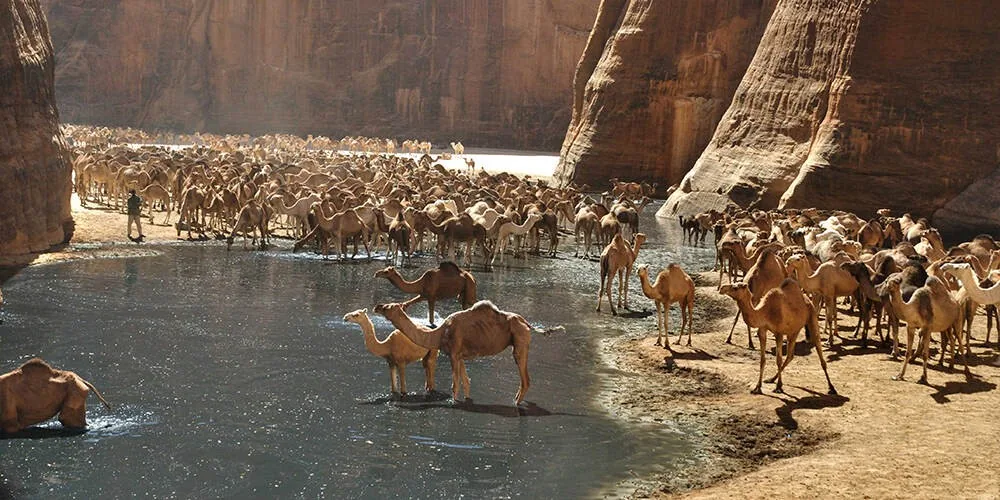
Wadi el-Gemal, the 'Valley of the Camels', is a vast national park on Egypt's Red Sea coast, protecting a spectacular meeting of desert and sea. Combining mountains, dry valleys and ancient ruins with offshore coral reefs, mangroves and islands, it is one of the country's most important and beautiful protected areas, far from the crowded resorts.
Where the Desert Meets the Reef
The park spans both a stretch of pristine Red Sea coast, rich in coral reefs, seagrass meadows, dugongs and turtles, and a great expanse of inland desert and mountains containing the remains of ancient Roman emerald mines and Bedouin heritage. This rare combination of land and sea conservation protects everything from desert wildlife and historic ruins to vibrant marine life, offering snorkelling, diving and desert exploration in an unspoilt setting.
The Experience
You explore pristine beaches and snorkel or dive offshore reefs teeming with fish, turtles and the chance of a dugong, then venture inland into desert valleys to see Roman emerald-mine ruins, mangroves and desert wildlife, often with Bedouin guides. The contrast of vibrant marine life and stark desert, free of mass tourism, makes the park a rewarding destination for nature lovers on the Red Sea.
Why It Matters
Wadi el-Gemal is one of Egypt's most significant protected areas, conserving a rare combination of marine and desert ecosystems alongside ancient mining heritage. It represents a more sustainable, nature-focused side of Red Sea tourism and protects vital habitats and Bedouin culture.
Why Visit
A vast Red Sea national park combining pristine coral reefs, desert valleys, ancient Roman emerald mines and Bedouin heritage, away from the crowded resorts.
✦ Photo Gallery
Best Season
🌤 The cooler months from October to April are best for both desert and coastal activities. Red Sea diving and snorkelling are good year-round in the warm, clear water.
Quick Facts
Best time to visit
The cooler months from October to April are best for both desert and coastal activities. Red Sea diving and snorkelling are good year-round in the warm, clear water.
Getting there
In Marsa Alam, Egypt; reach Marsa Alam first, then continue to the site.
Location
Marsa Alam, Egypt
Type
attraction
Insider Tips
- 1
Snorkel or dive the offshore reefs for turtles and dugongs.
- 2
Explore inland to the Roman emerald-mine ruins.
- 3
Go with Bedouin guides for the desert and culture.
- 4
It is quieter than the main Red Sea resorts.