“This town stopped growing centuries ago, which accidentally preserved it as the most complete medieval town in Germany.”
About Altstadt
Rothenburg flourished as a free imperial city in the 14th and 15th centuries before war, plague and economic decline left it impoverished and unchanged for centuries. That stagnation preserved its medieval walls and houses. Rediscovered by Romantic artists and travellers in the 19th century, it survived the Second World War with damage that was carefully repaired, keeping its old-town character.
What this is
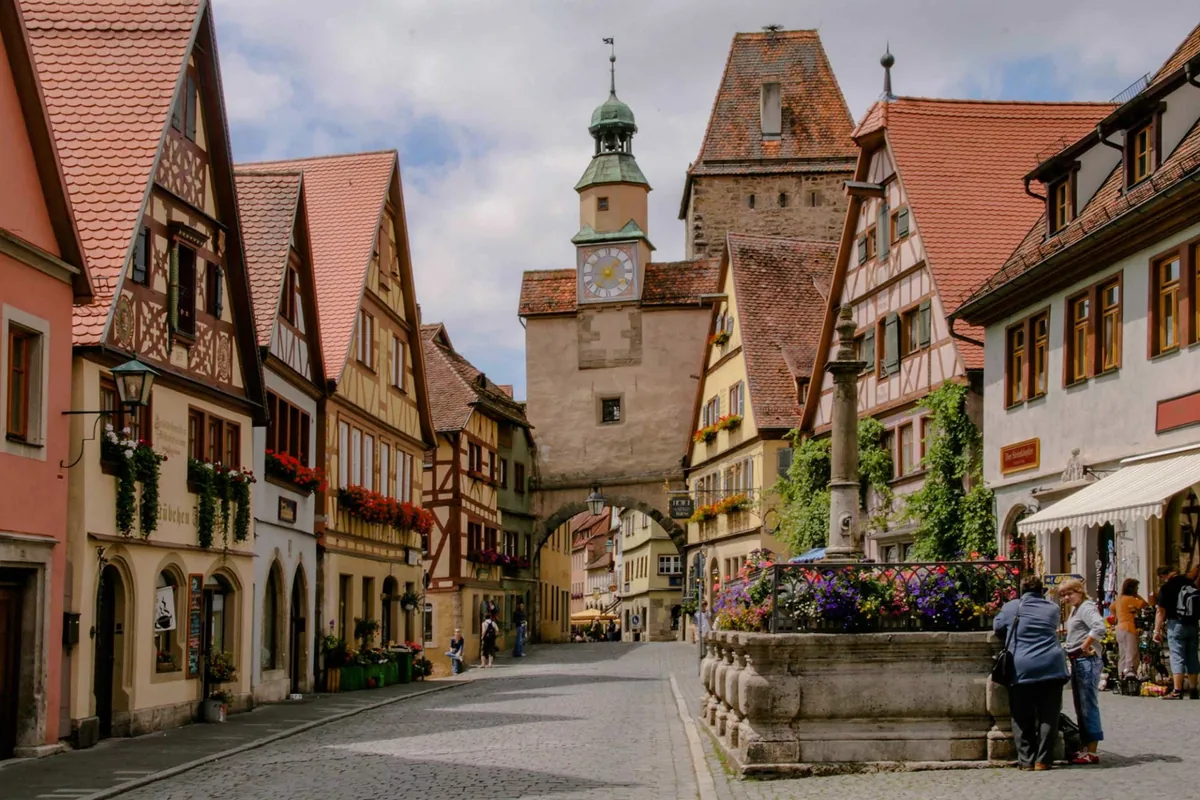
The Altstadt of Rothenburg ob der Tauber is the best-preserved medieval old town in Germany, a fairytale ensemble of half-timbered houses, cobbled lanes and towers enclosed by a complete, walkable ring of 14th-century walls. Perched above the Tauber valley in Bavaria, it looks much as it did in the Middle Ages and is a highlight of the Romantic Road.
Perched above the Tauber valley in Bavaria, it looks much as it did in the Middle Ages and is a highlight of the Romantic Road.
A Town Frozen in the Middle Ages
Rothenburg grew wealthy in the late Middle Ages, then stagnated economically for centuries, which ironically preserved its medieval fabric almost intact. The town retains its entire ring wall with 42 towers and gatehouses, walkable along a covered sentry path, and a townscape of gabled houses, the most famous corner being the Plonlein, a picture-perfect junction of crooked half-timbered buildings and towers that is one of the most photographed spots in Germany.
The Experience
Taking the complete circuit of the medieval walls along the covered rampart, looking down over red roofs and out across the countryside, then wander cobbled lanes to the famous Plonlein corner, the market square and the towered gates. The town is especially magical at quiet times and at Christmas, when its year-round Christmas shop and festive markets enhance the fairytale atmosphere.
Why It Matters
Rothenburg's Altstadt is the finest surviving medieval town in Germany and an icon of the Romantic Road, drawing visitors from around the world. Its complete walls and preserved streetscape offer an unmatched window into medieval German urban life.
Rothenburg's Altstadt is the finest surviving medieval town in Germany and an icon of the Romantic Road, drawing visitors from around the world.
Why Visit
Germany's best-preserved medieval old town, with complete walkable walls and the fairytale Plonlein corner, a highlight of Bavaria's Romantic Road.
✦ Insider Tips
- 1
Photograph the famous Plonlein corner of crooked houses.
- 2
Visit in December for the Christmas market atmosphere.
- 3
Stay overnight to enjoy the town after the day crowds leave.