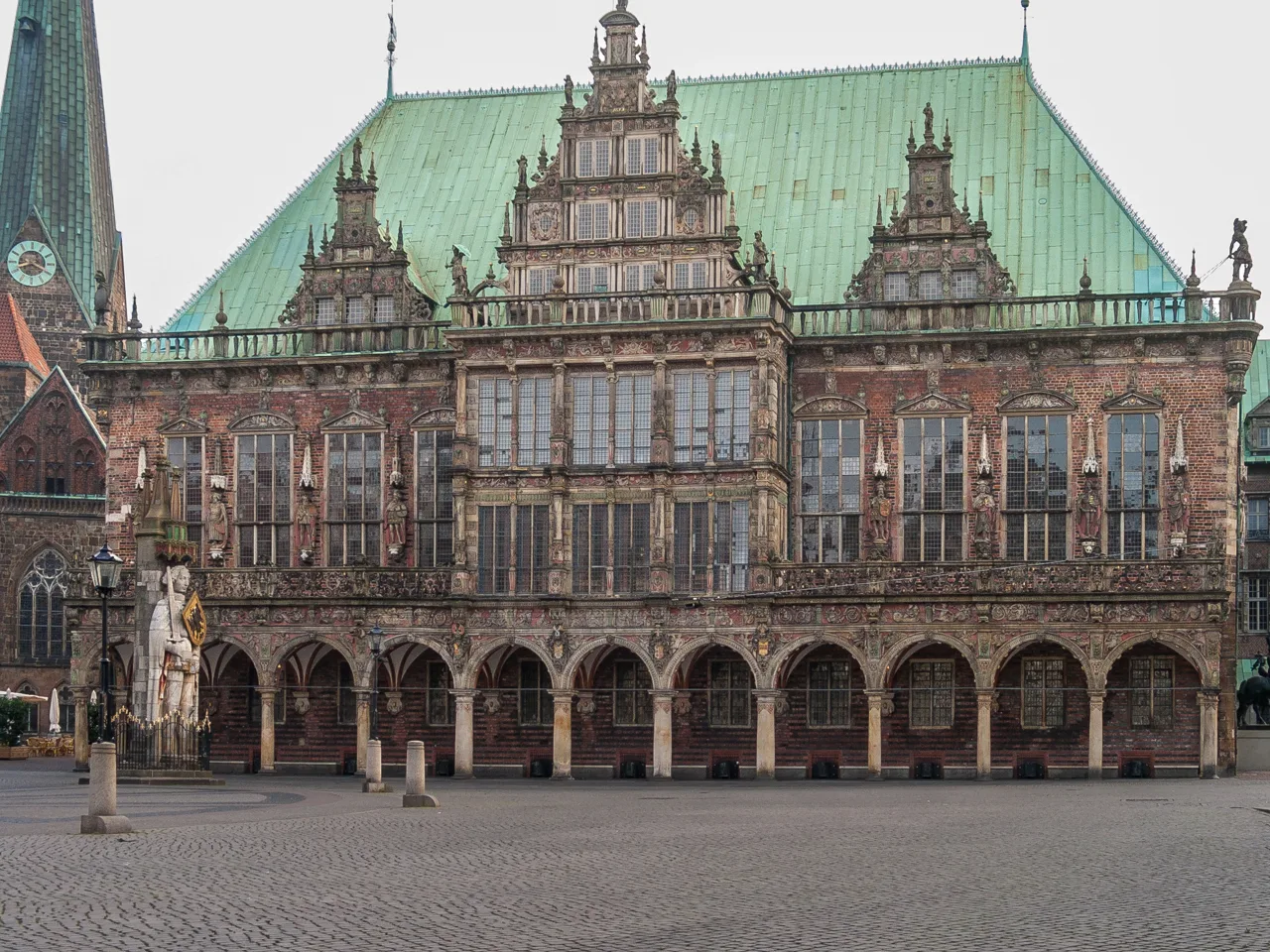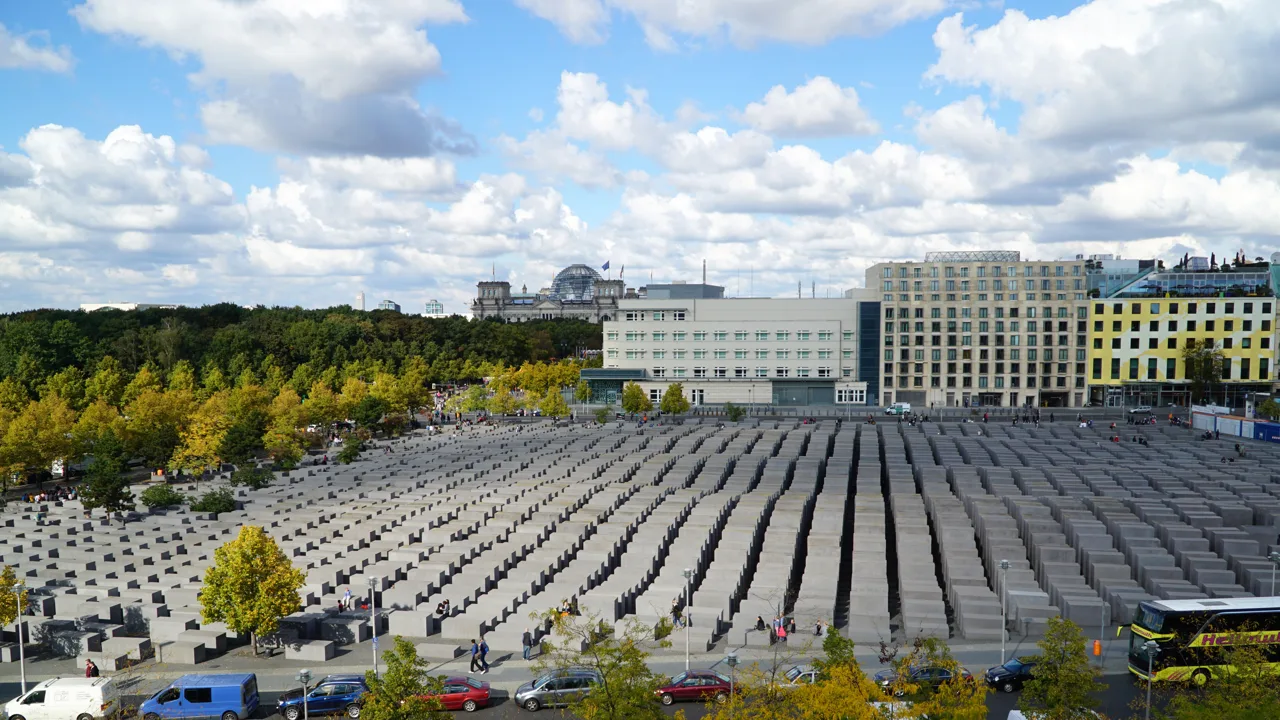
Tradition claims that ancient kings earned their crowns by scaling these 118-meter chalk walls from the churning Baltic Sea with nothing but their bare hands.
About Königsstuhl
The cliffs were formed sixty to seventy million years ago from the skeletons of Cretaceous plankton, later pushed to the surface by the weight of Scandinavian glaciers. In the 1800s, this remote corner of Prussia became a magnet for artists and thinkers who saw the cliffs as a symbol of the German soul. Frequent collapses, such as the famous Wissower Klinken slide in 2005, have continuously reshaped the coastline. Today, the site is managed as part of a national park that protects the last remaining old-growth beech forests in Central Europe, balancing the heavy flow of tourists with the preservation of a disappearing ecosystem.
What Königsstuhl actually is
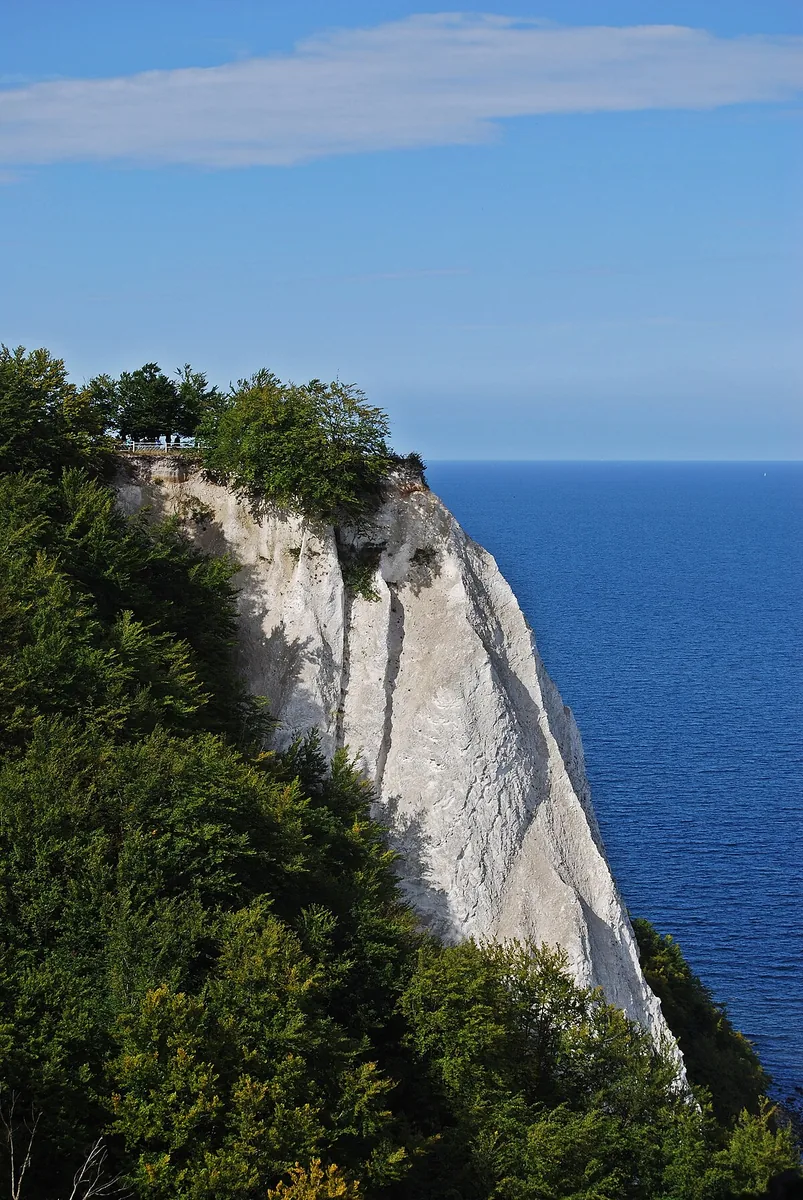
White chalk cliffs plunge 118 meters into the Baltic Sea, creating a stark, jagged boundary between the ancient beech forests of Rügen and the turquoise waters below. Königsstuhl is the most imposing pinnacle of the Jasmund National Park, a landmark that has captivated Romantic painters and weary sailors for centuries. The chalk is a soft, brilliant white, crumbly to the touch and constantly evolving as the sea gnaws at the base of the island. Above the cliffs, the 'Stubnitz' forest forms a dense canopy of UNESCO-protected beech trees that filter the northern sunlight into a soft, ethereal green. This is a landscape of high contrasts where the blinding white stone meets the deep blue of the sea and the ancient, mossy shadows of the woods.
History
Legend suggests that in ancient times, a candidate for the kingship of Rügen had to climb these sheer chalk walls from the sea to claim his throne on the summit, hence the name 'King’s Chair.' Geologically, the cliffs are composed of the remains of microscopic sea creatures that settled on the ocean floor millions of years ago, later thrust upward by tectonic shifts. The site became a focal point of German Romanticism in the early 19th century, most famously depicted by Caspar David Friedrich, whose paintings captured the sublime and terrifying beauty of the heights. Over the years, the cliff has faced significant erosion, leading to the 2023 opening of the 'Skywalk,' a massive elliptical bridge that allows visitors to view the formation without putting further pressure on the fragile chalk edge.
Walking through the beech forest toward the coast
Walking through the beech forest toward the coast, It smells of sea salt mixed with the earthy, damp scent of fallen leaves. The clatter of the wind through the treetops is suddenly joined by the rhythmic crashing of waves against the flint stones far below. What stands out is the way the light changes the color of the cliffs, which can turn from a cold grey to a warm, glowing ivory in a matter of minutes. There is a slight sense of vertigo stepping onto the Skywalk, looking down through the trees at the sheer drop. People often miss the smaller coastal paths that lead down to the pebble beaches, where you can find fossils and pieces of amber washed up after a storm. The detail that stays with you is standing at the Victoria-Sicht viewpoint, looking across the void to see the Königsstuhl in its full, massive profile against the horizon.
The cliffs are located
The cliffs are located on the Jasmund Peninsula on the island of Rügen. The nearest major town is Sassnitz, which is accessible by train from Stralsund. From Sassnitz, a well-marked hiking trail leads through the forest to the National Park Center, a walk of about seven kilometers that offers the most rewarding approach. For those with less time, frequent shuttle buses run from the parking area in Hagen directly to the entrance. The island of Rügen is connected to the German mainland by the massive Rügen Bridge, making it easily reachable by car from Berlin or Hamburg in about three to four hours.
The Experience
See how the white chalk dust coats the railings and the leaves of the nearby trees like a fine powder. Nearby, the Baltic is muffled by the dense forest until you reach the very edge of the precipice. The immense age of the trees, some of which have clung to the cliffside for over seven hundred years. Most visitors miss the tiny 'black mirrors' of the forest moors located just a few hundred meters inland. The moment that stays with you is the view from the Skywalk when a passing ship on the horizon provides the only scale for the vastness of the water and the height of the stone.
Why It Matters
Königsstuhl is the definitive landmark of the German Baltic coast. It combines geological rarity with deep cultural heritage, serving as the birthplace of the Romantic landscape movement. The surrounding beech forests are of global importance, representing the natural state of Europe before the dawn of agriculture.
Why Visit
Visit Königsstuhl to see a side of Germany that feels more like the White Cliffs of Dover than the Black Forest. It is a place of raw, oceanic beauty that offers a refreshing, breezy alternative to the castle-heavy itineraries of the south. The new Skywalk provides a world-class architectural experience that lets you hover over history without damaging it.
✦ Photo Gallery
Best Season
🌤 The best months are May and June, ideal, as the new beech leaves are a vivid, translucent green and the Baltic mists have begun to clear, offering the sharpest views of the coastline.
Quick Facts
Best time to visit
The best months are May and June, ideal, as the new beech leaves are a vivid, translucent green and the Baltic mists have begun to clear, offering the sharpest views of the coastline.
Getting there
In Rügen, Germany; reach Rügen first, then continue to the site.
Location
Rügen, Germany
Type
attraction
Coordinates
54.5731°, 13.6625°
Insider Tips
- 1
Avoid the midday shuttle crowds by walking the 'Hochuferweg' trail from Sassnitz; the forest views are worth the extra effort.
- 2
The chalk is incredibly unstable, never attempt to climb or stand on the edge outside of the designated viewing platforms.
- 3
Visit the National Park Center’s multi-media exhibition if it rains; the 2,000 square meters of indoor displays are surprisingly engaging.
- 4
Look for 'thunderbolts', cylindrical fossils of ancient cephalopods, among the stones on the beach at the foot of the stairs.
- 5
The light for photography is best in the late afternoon when the sun hits the face of the cliffs directly from the west.