“Bauhaus architects designed this coal mine in 1932 as architecture, not just engineering. Contemporary critics called it a cathedral of industry. The last coal was mined in 1986. Now there is an ice rink on the coking plant floor and a swimming pool in the coal washing basin.”
About Zollverein
Zollverein Shaft XII opened 1932, designed in Bauhaus style by Fritz Schupp and Martin Kremmer. Operated as the world's largest coal mine; produced 12,000 tons per day at peak. Closed December 1986. UNESCO World Heritage Site 2001; transformed into cultural complex through the 1990s and 2000s.
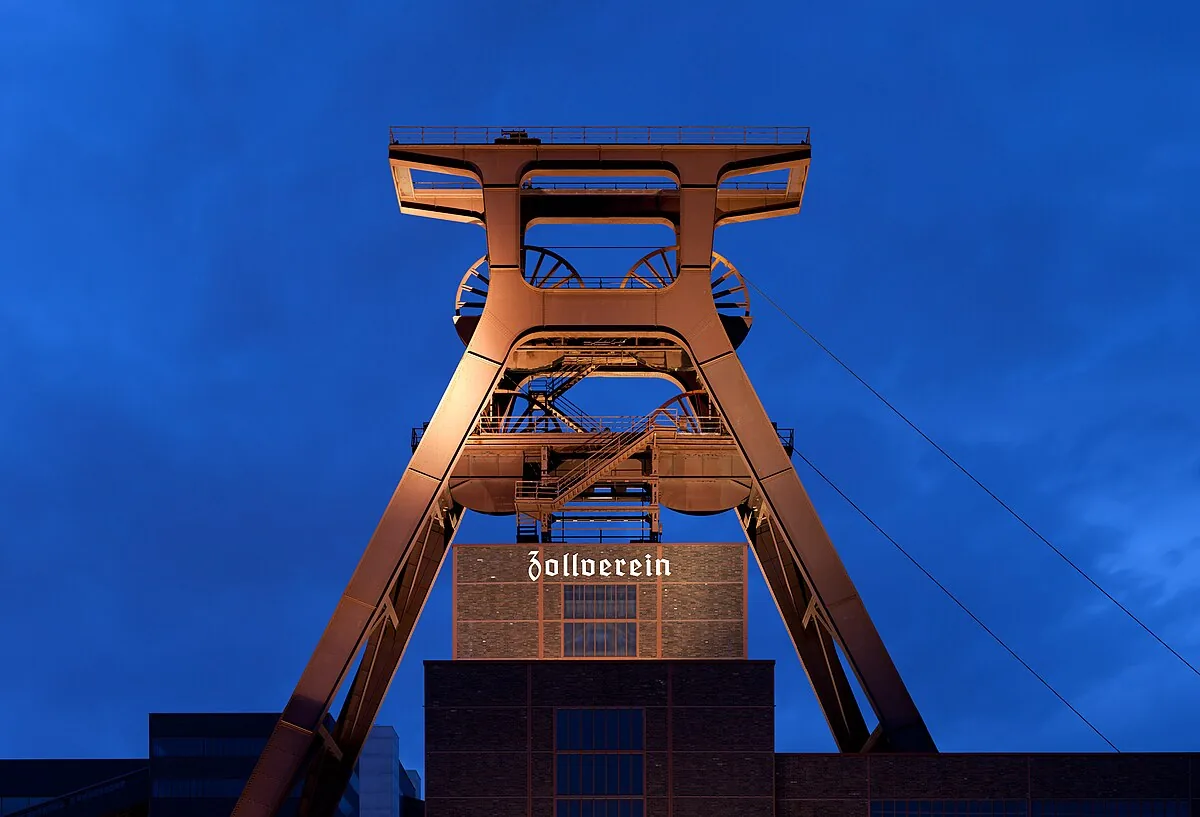
The Zollverein Coal Mine Industrial Complex in Essen is the most celebrated industrial heritage site in Europe, a complete coalmining installation from the early twentieth century that operated as the world's largest coal mine before closing in 1986. The UNESCO listing came it a World Heritage Site in 2001. The pit head infrastructure, the coking plant, and the architectural ensemble, designed in the Bauhaus style by Fritz Schupp and Martin Kremmer, now house museums, design offices, a swimming pool in a former coal washing basin, and winter ice skating on the coking plant floors.
The UNESCO listing came it a World Heritage Site in 2001.
twelve shafts, opened, 1932
Shaft XII, the most architecturally significant of Zollverein's twelve shafts, opened in 1932 during the Depression, when the Bauhaus functionalist aesthetic was at its intellectual peak. The architects designed the mine infrastructure not merely as engineering but as architecture: the symmetrical pit head with its paired wheels, the processing buildings arranged in a clear geometric sequence, and the consistent use of brick and glass produced a mine that was compared to a cathedral of industry by contemporary critics. Zollverein produced 12,000 tons of coal per day at its peak in the 1950s; the combination of cheaper oil, North Sea gas, and international competition eroded the economics through the 1960s and 1970s. The last coal was mined in December 1986.
The Ruhr Museum in the coal washing building is the primary cultural institution, covering the full history of the Ruhr industrial region from glacial formation to deindustrialization. The Red Dot Design Museum occupies the former boiler house. The PACT Zollverein dance and performance venue is in the former workshops. The coking plant structures, now open as a viewing landscape, give the industrial scale its most visceral expression. The swimming pool in the former Kokerei wash basin and the ice skating rink are seasonal attractions that make the industrial infrastructure a social venue.
Tram 107 from Essen Hauptbahnhof to Zollverein (20 minutes). The complex is 6 kilometers north of Essen city center.
The Experience
The Ruhr Museum in the coal washing building, the Red Dot Design Museum in the boiler house, the PACT performance venue, the coking plant viewing landscape, seasonal ice skating on the processing floors, and a swimming pool in a former washing basin.
Why It Matters
Zollverein is the most architecturally serious industrial complex ever built and the model for industrial heritage conversion across Europe, a mine that was designed as architecture from the start and has been reimagined as culture without losing the industrial character.
Why Visit
The coking plant structures at Zollverein give the scale of the industrial operation a physical reality that any museum exhibit about coal mining cannot provide. Walking among the blast furnaces and processing towers is an architectural experience as much as a historical one.
✦ Insider Tips
- 1
The Ruhr Museum underground tour descends into the former mine galleries, the most engaging encounter on the complex.
- 2
Visit the coking plant landscape in the late afternoon when the industrial structures catch the low light.
- 3
The Red Dot Design Museum is worth entering if contemporary design interests you, the curated collection is strong.