“The Blue Lagoon's famous milky-blue water isn't a natural hot spring at all, it's the cooled runoff of a geothermal power station next door, rich in silica that turns it opaque.”
About Blue Lagoon
The lagoon formed by accident in 1976 when the Svartsengi power plant began discharging mineral-laden water into the surrounding lava field. People started bathing in it within a few years after reports that the silica-rich water eased psoriasis and eczema. A dedicated bathing facility opened in 1992, a research and treatment clinic followed, and the site grew into a full luxury spa and hotel complex. Recent volcanic activity on the Reykjanes peninsula has periodically closed it, a record of how active the geology beneath it remains.
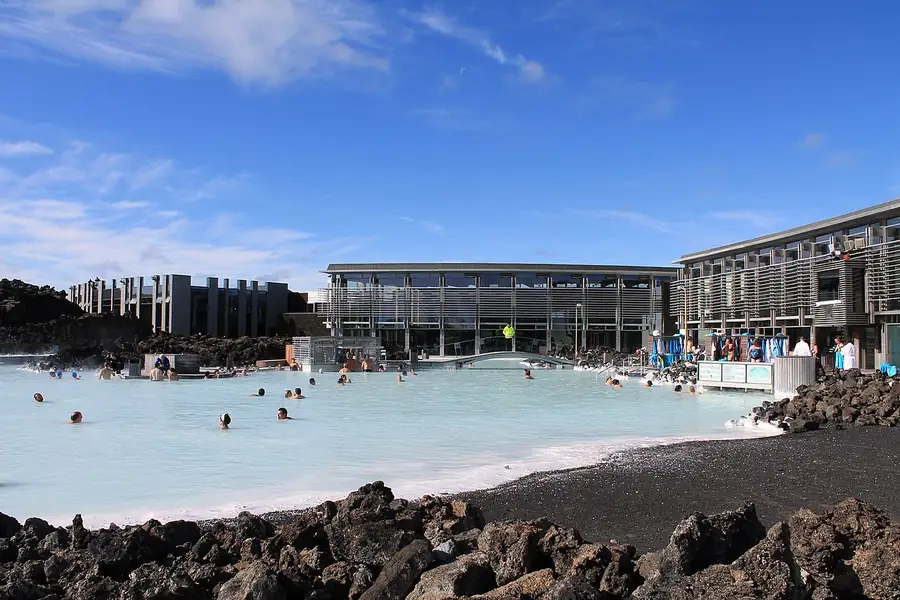
The Blue Lagoon is not a natural hot spring. The milky turquoise water is the runoff of the Svartsengi geothermal power station, drawn from nearly two kilometres underground at 240C, used to spin turbines, then released into a lava field where it cools to a bathable 38-40C. The colour comes from silica and algae suspended in the seawater-freshwater mix. What began in 1976 as a wastewater pond where a psoriasis sufferer noticed his skin improving is now the most visited attraction in the country.
The colour comes from silica and algae suspended in the seawater-freshwater mix.
What You'll Find is
The lagoon sits in a black lava field on the Reykjanes peninsula, twenty minutes from Keflavik airport and forty-five from Reykjavik. Bathers smear the free silica mud on their faces at a swim-up bar, drift through steam that hangs over the water in any weather, and book in-water massages. The water is so mineral-dense it will wreck your hair if you let it soak, locals slather on conditioner and tie it up.
The Experience
The contrast is the thing: you wade through opaque, body-warm water while cold Atlantic air bites your face and steam blurs everything more than a few metres away. The silica mud, scooped from a bar in the middle of the lagoon, dries to a tight white mask. It is busy and engineered rather than wild, but the sensory effect, warm water, cold air, black lava, white steam, is genuinely strange and specific to this place.
Why It Matters
The Blue Lagoon turned a power-plant byproduct into Iceland's tourism flagship and proved the country could build a global brand on geothermal heat. It reshaped the standard Iceland itinerary, becoming the first or last stop for most visitors because of its position between the airport and the capital, and it set the template for the geothermal spas that have since opened across the island.
The Blue Lagoon turned a power-plant byproduct into Iceland's tourism flagship and proved the country could build a global brand on geothermal heat.
Why Visit
It is the easiest possible introduction to Iceland's geothermal power and a logical first or last stop given its position near the airport. Go in early morning or late evening to dodge the heaviest crowds, and treat the entry fee as the price of an experience you cannot replicate elsewhere rather than a simple swim.
✦ Insider Tips
- 1
Book your entry time online well ahead, walk-up admission is not available and slots sell out in peak periods.
- 2
Coat your hair in conditioner and clip it up before entering; the silica water leaves it straw-stiff for days otherwise.
- 3
Schedule it for your arrival or departure day, it sits between Keflavik airport and Reykjavik, not near the city centre.
- 4
Check Reykjanes volcanic activity updates before travelling, as eruptions have forced temporary closures.