“Diamond Beach is named for the chunks of glacier ice that wash up on its black sand and glitter like scattered diamonds, fresh ice delivered and reclaimed by every tide.”
About Diamond Beach
The beach is fed by Jokulsarlon, the glacier lagoon formed in the twentieth century as Breidamerkurjokull retreated. Icebergs calved from the glacier drift through the lagoon's outlet to the Atlantic, and waves cast some back onto the black sand. As the glacier has retreated and the lagoon grown, the supply of ice to the beach has become a reliable spectacle.
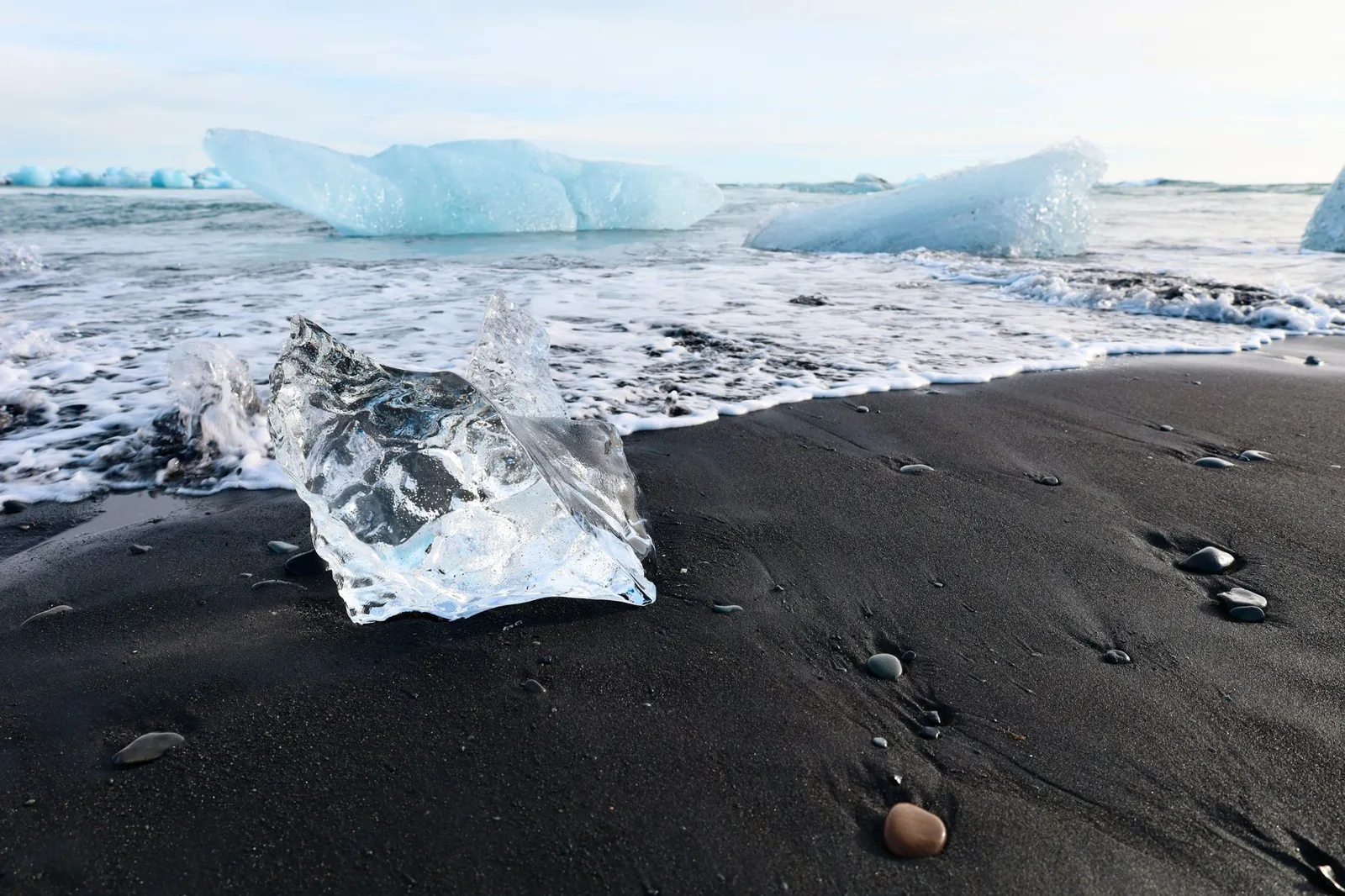
Diamond Beach is the stretch of black volcanic sand at Breidamerkursandur, directly across the ring road from Jokulsarlon. Icebergs that drift out of the glacier lagoon and into the sea are washed back onto the beach by the tide, where they sit on the dark sand like scattered diamonds, clear, blue and white chunks of ancient glacier ice catching the light.
Diamond Beach is the stretch of black volcanic sand at Breidamerkursandur, directly across the ring road from Jokulsarlon.
The Cycle
The ice arrives fresh with each tide and melts or floats away again, so the beach is never the same twice. Seals sometimes rest among the larger pieces. Combined with neighbouring Jokulsarlon, it is one of the most visited stops on the south coast.
The Experience
Translucent ice blocks, some the size of a car, sit stranded on jet-black sand while waves wash around them. The contrast, clear blue ice on black grit under often-grey sky, is the whole point, and it photographs best in low side light. Because the tide constantly delivers and removes ice, no two visits look the same.
Why It Matters
Diamond Beach is the visible end of the journey glacier ice makes from the Vatnajokull ice cap to the sea, and one of Iceland's most photographed coastal scenes. It is inseparable from Jokulsarlon across the road, the two forming a single must-stop on the long south-coast drive.
Diamond Beach is the visible end of the journey glacier ice makes from the Vatnajokull ice cap to the sea, and one of Iceland's most photographed coastal scenes.
Why Visit
Few beaches anywhere display fresh glacier ice on black sand, and it costs nothing and never looks the same twice. Pair it with the lagoon opposite, and aim for low light early or late in the day when the ice glows.
✦ Insider Tips
- 1
It is directly across the ring road from Jokulsarlon, do both in one stop.
- 2
Shoot in low morning or evening light, when the ice glows against the black sand.
- 3
Keep back from the waterline; the same sneaker waves that plague south-coast beaches reach here.
- 4
The amount of ice changes with every tide, so an empty beach one hour can be strewn the next.