“Dyrholaey is named for the giant sea arch punched through it, an opening so large that boats, and reportedly even a small plane, have flown straight through.”
About Dyrhólaey
Formed by volcanic activity and shaped by the relentless Atlantic, Dyrholaey's arch and cliffs have long been a landmark for sailors rounding the south coast. A lighthouse was built on the high point, and the headland became known for both its views and its dense seabird colonies, leading to seasonal access restrictions to protect nesting birds.
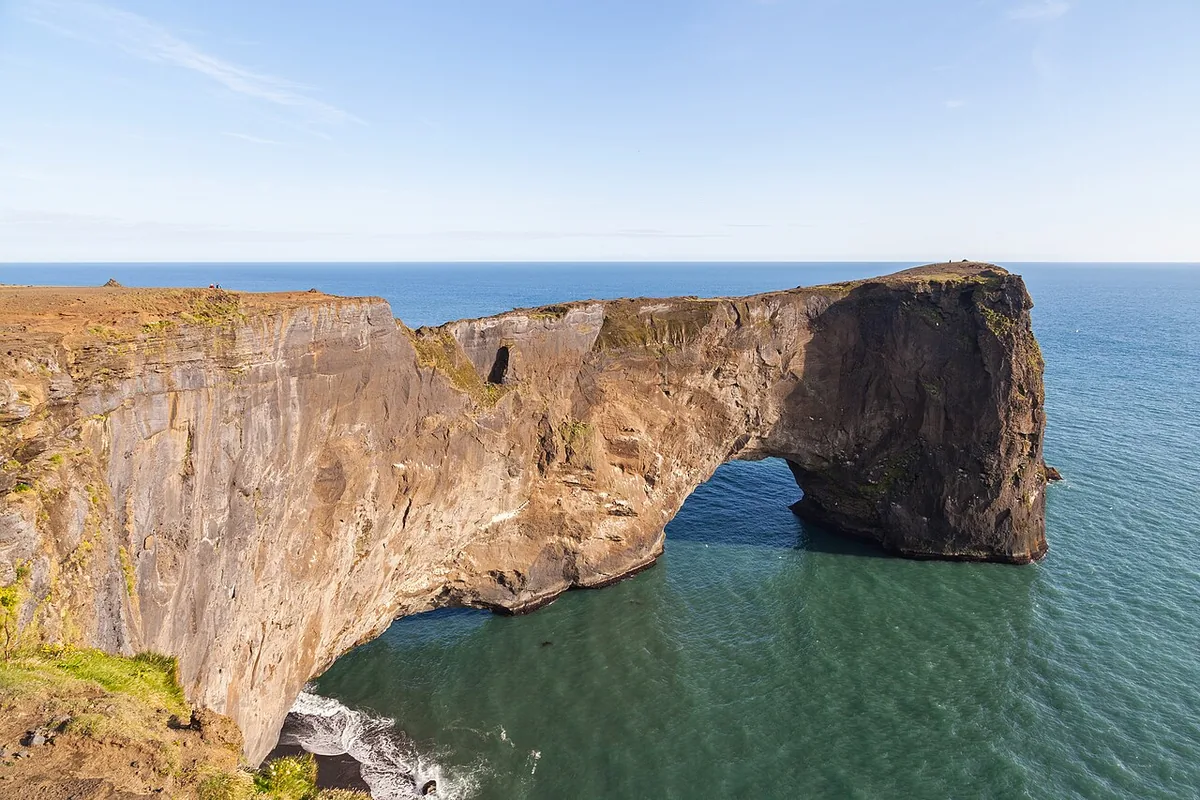
Dyrholaey is a 120-metre rocky promontory on the south coast near Vik, named for the huge natural sea arch carved through it, 'dyrholaey' means 'door-hill-island', and the arch is large enough that small boats and even a light aircraft have passed through it. A lighthouse stands on the headland, and the cliffs are a major puffin nesting site in summer, with sweeping views over the black beaches of Reynisfjara and the coastline.
A lighthouse stands on the headland, and the cliffs are a major puffin nesting site in summer, with sweeping views over the black beaches of Reynisfjara and the coastline.
A Protected Headland
Because it is a key nesting ground, parts of Dyrholaey close during the bird breeding season to protect the puffins and other seabirds.
The Experience
From the upper headland by the lighthouse you look down the long black ribbon of the south coast, with Reynisfjara's stacks one way and the arch jutting into the surf the other. In summer, puffins whirr along the cliff edges close enough to watch easily. The wind up here is fierce and constant.
Why It Matters
Dyrholaey is the southernmost point of mainland Iceland and one of the best accessible puffin-watching sites in the country, combining a dramatic sea arch, a lighthouse and panoramic coastal views in one stop near Vik.
Why Visit
It pairs an enormous sea arch with easy summer puffin-watching and some of the south coast's widest views. Visit in the breeding season to see the birds, respect the closures that protect them, and brace for strong wind on the exposed headland.
✦ Insider Tips
- 1
Come in summer for puffins, which nest along the cliffs and are easy to watch up close.
- 2
Respect seasonal closures during the bird breeding season, they protect the colonies.
- 3
The headland is intensely windy; secure hats, hoods and tripods.
- 4
The upper road can require a higher-clearance vehicle and closes in bad weather.