Standing on a cliff that was once the shore of a prehistoric sea, this white stone church is a luminous beacon for travelers navigating the canyons of the Răut.
About Biserica Sfântul Mihail
The church of St. Michael the Archangel was established as part of the 19th-century modernization of Ivancea. The village itself was a significant administrative center, and the church's scale was meant to reflect the prosperity of the local landowners. During the 20th century, the building survived the closures and demolitions that affected many other Moldovan churches, largely due to its architectural significance and the protective efforts of the local community. It stands today as a rare, well-preserved example of the 'aristocratic' style of village church, where the influence of urban architectural trends is clearly visible in a rural setting.
What Biserica Sfântul Mihail is
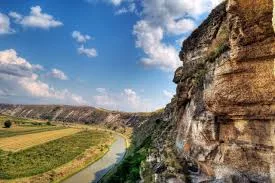
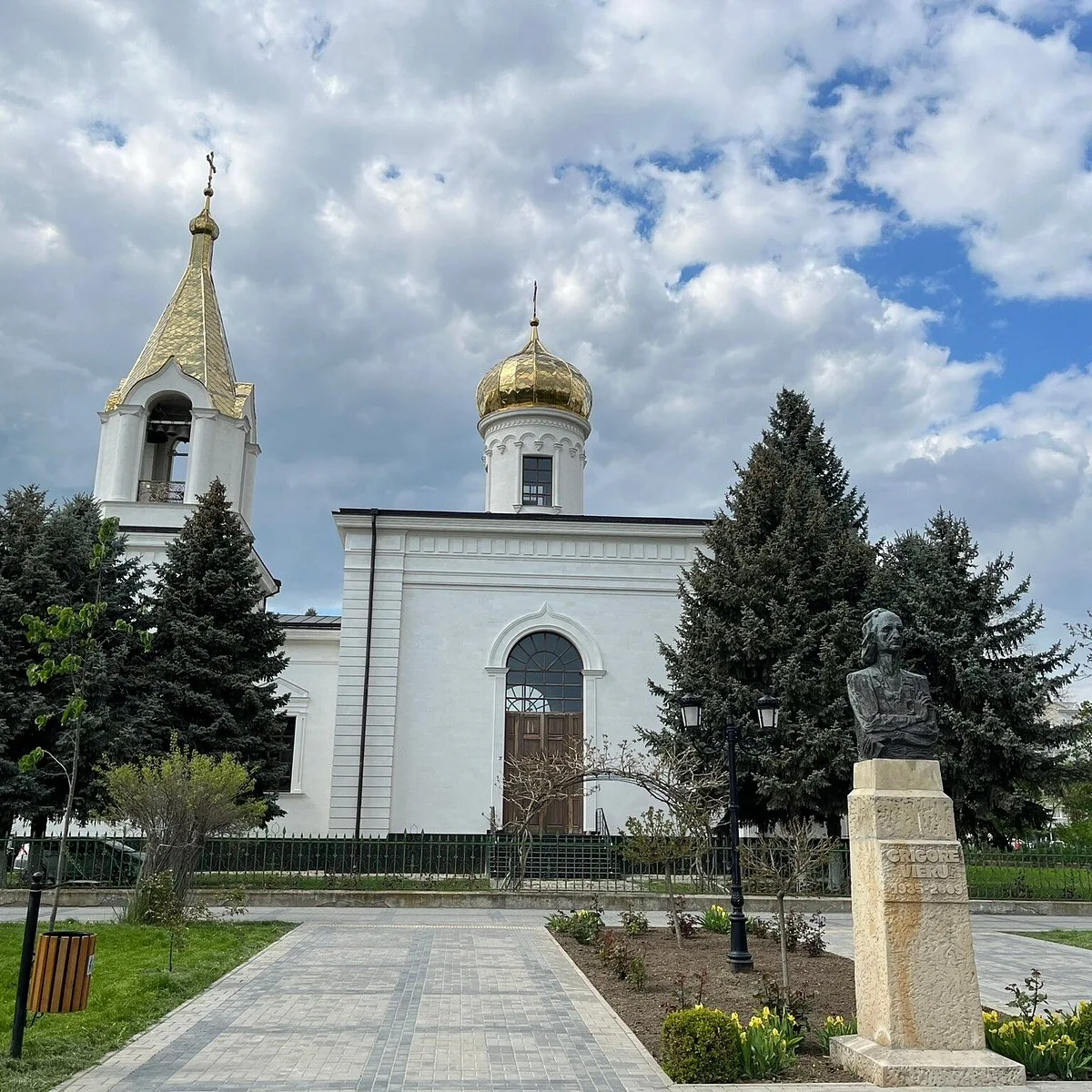
Perched on a limestone ridge overlooking the winding Răut River, Biserica Sfântul Mihail in Ivancea is a striking example of the architectural transition from medieval defensive structures to the ornate elegance of the late nineteenth century. The church is still a sentinel over the valley, its white stone walls contrasting sharply with the deep green of the surrounding Codru forest. This is not a dark, cave-like sanctuary, but a building filled with verticality and light. The air around the church is often crisp and carries the scent of wild thyme from the cliffs and the faint, sweet perfume of incense drifting from the open doors. It is the spiritual heart of a village known for its aristocratic history and its proximity to the ancient cave monasteries of Orheiul Vechi, yet it possesses a distinct, polished character all its own.
The current stone church was completed
The current stone church was completed in the 1880s, replacing an older wooden structure that had served the village for generations. It was built during a period when the Balș family, prominent Moldovan aristocrats, were developing their nearby estate. The architecture reflects the 'Neo-Byzantine' style that was popular across the region, characterized by its central dome and the rhythmic arrangement of its arched windows. Unlike many rural churches that were neglected during the mid-twentieth century, Sfântul Mihail maintained its role as a focal point for the community through the sheer persistence of the local parishioners. Recent restorations have focused on the interior frescoes, which were painted in a realistic style that differs from the more abstract icons found in the country’s older rock-cut chapels.
Walking up the steep path toward the entrance
Walking up the steep path toward the entrance, The way the wind whips around the church’s elevated position, a constant, low-frequency hum. The bells here is particularly clear, echoing off the limestone cliffs of the Răut canyon. The smell of fresh plaster and old beeswax stepping inside, the sensory signature of a living house of worship. The light is a major participant in the experience, streaming through the high windows and illuminating the golden halos of the saints in dusty, diagonal beams. The coolness of the thick masonry, which keeps the interior at a constant, reverent temperature even in the height of summer. What most skip is the intricate stone carvings around the portal, which feature traditional Moldovan floral motifs blended with classical religious symbols. On the church terrace at dusk, There is a sense of immense perspective as the lights of the valley begin to flicker on below.
Ivancea is located about 40 kilometers north
Ivancea is located about 40 kilometers north of Chisinau, a short drive on the road toward Orhei. It is easily accessible by car or by the frequent minibuses that run from the capital to the Orhei region. Once in the village, the church is visible from almost any point, sitting on the highest ground. It is an excellent stop for those traveling to the famous museum complex at Orheiul Vechi, as it offers a more intimate and less crowded look at the religious life of the Moldovan countryside.
The Experience
You notice the quality of the silence here, which is deep and expansive, broken only by the rhythmic chanting of the priest during the morning service. The floor is made of large, cool stone slabs that have been polished by the feet of five generations of villagers. A sense of vibration of the liturgy in your chest, a sound that seems to rise directly from the earth. Most visitors miss the small historical cemetery behind the church, where the worn gravestones tell the story of the families who built this place. What sticks with you is looking out from the cliff edge and seeing the river bend in a perfect silver arc, exactly as it must have appeared to the masons who laid the church's foundation.
Why It Matters
Biserica Sfântul Mihail is a key architectural landmark of the Orhei region. It represents the late-19th-century flourishing of Orthodox architecture in Moldova, blending local stone-carving traditions with imperial aesthetic standards. Its prominent location makes it a vital part of the cultural landscape, connecting the modern village to its medieval and prehistoric roots.
Why Visit
Visit Ivancea for the view and the light. While the cave monasteries nearby get all the fame, this church offers a more serene and airy experience of Moldovan spirituality. It is the best place in the region to see the interaction between high-church architecture and the raw, dramatic beauty of the Răut canyon.
✦ Photo Gallery
Best Season
🌤 October tends to be the most atmospheric time to visit, as the valley below is a riot of autumn colors and the light has a golden, crisp quality that emphasizes the church's white facade.
Quick Facts
Best time to visit
October tends to be the most atmospheric time to visit, as the valley below is a riot of autumn colors and the light has a golden, crisp quality that emphasizes the church's white facade.
Getting there
In Cahul, Moldova; reach Cahul first, then continue to the site.
Location
Cahul, Moldova
Type
attraction
Insider Tips
- 1
Visit during the morning liturgy to hear the local choir, whose acoustics are amplified by the church's high dome.
- 2
Bring binoculars to scan the cliffs below for the entrances to ancient, abandoned hermit cells.
- 3
Wear sturdy shoes, as the path from the village center up to the church ridge is steep and can be slippery after rain.
- 4
Check out the nearby Balș mansion to see the secular side of Ivancea’s nineteenth-century history.
- 5
Photography is usually allowed if you are discreet and avoid using flash during services.