Fifteen million years ago, these hills were teeming with tropical coral and sea life; today, they are the silent, stony guardians of Moldova's oldest human settlements.
About Brânzeni Reefs
The Brânzeni Reefs are a key part of the 'Toltre' chain, a geological phenomenon unique to the Prut River basin. Unlike the Carpathian mountains, which were formed by tectonic folding, these hills grew organically as reefs. In the 1960s, archaeologists discovered a Paleolithic site in one of the reef's caves, containing flint tools and mammoth bones, proving that humans have lived among these stones for over 40,000 years. Today, the site is a protected natural monument, recognized for its geological importance and its role in preserving rare steppe flora that cannot survive in the surrounding agricultural lands.
What Brânzeni Reefs is
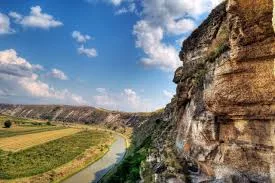
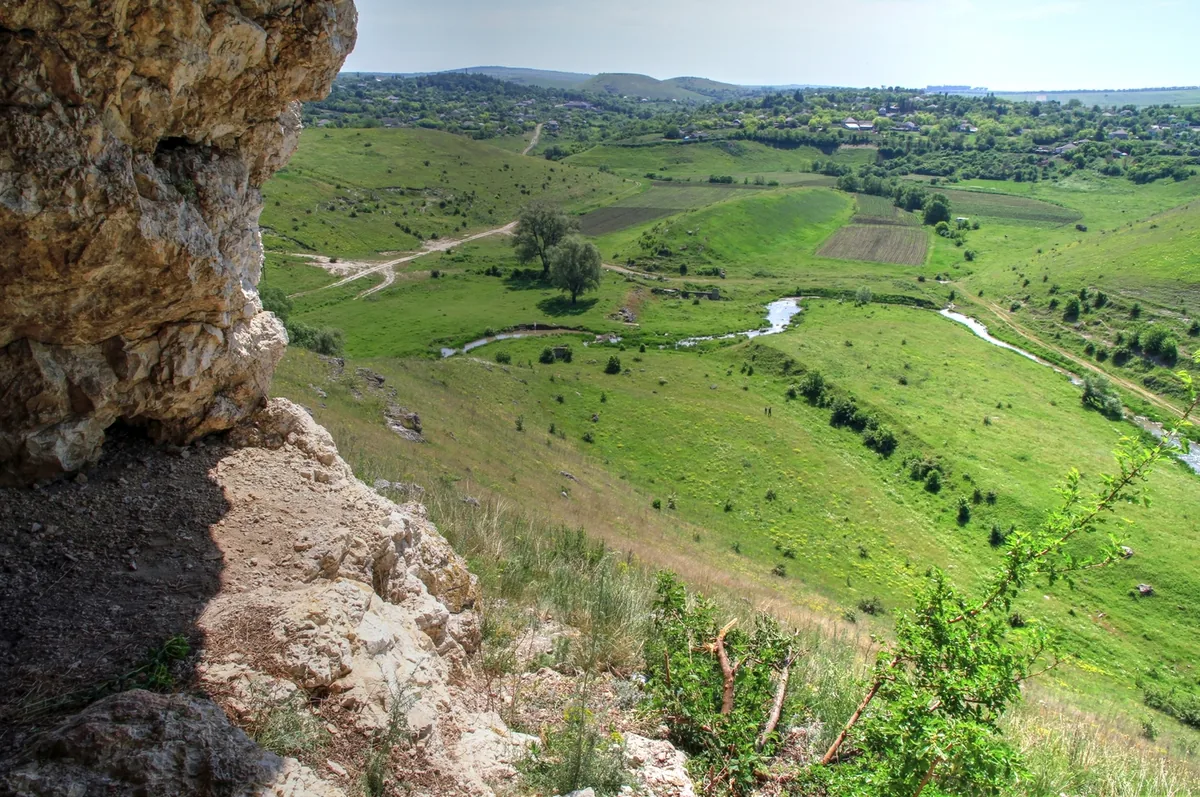
The Brânzeni Reefs are a prehistoric monument written in stone, a series of limestone massifs that rise like sleeping giants from the northern Moldovan steppe. These formations are part of the unique 'Toltrele Prutului', a chain of ancient coral reefs that once thrived in the warm, shallow waters of the Sarmatian Sea. Today, they stand as rugged hills, their slopes covered in rare steppe grasses and their peaks weathered into strange, sculptural shapes. The landscape around Brânzeni is raw and evocative, characterized by a silence that is only broken by the wind and the bells of grazing sheep. It is a place of deep time, where the very ground you walk on is composed of the remains of millions of ancient sea creatures. The reefs provide a dramatic verticality to the horizon, creating a landscape that feels more like a desert canyon than a typical Eastern European field.
These reefs began their life fifteen
These reefs began their life fifteen million years ago, built not by stone, but by colonies of bryozoans, corals, and algae in a tropical sea. As the waters receded and the land rose, these organic structures were left behind, eventually fossilizing into the hard limestone we see today. For the people of Brânzeni, the reefs have been a constant presence for millennia. Archaeological excavations in the nearby caves have revealed some of the oldest human settlements in Moldova, dating back to the Paleolithic era. These early humans used the reefs as natural fortresses and hunting lookouts. In more recent centuries, the stone was quarried for the local 'white architecture,' but the most impressive massifs have been preserved as natural monuments. They are survivors of both geological epochs and human history, standing firm as the climate and cultures around them have shifted.
Approaching the reefs, The way
Approaching the reefs, The way the light catches the white and grey stone, making the hills look like they are glowing from within. The wind here is constant, a rhythmic rushing through the dry grass that sounds like the sea that used to be here. The texture of the rock is surprisingly porous and jagged, filled with the hollows and imprints of long-dead organisms. As you climb to the top of the 'Marea Stîncă' (The Great Rock), the air grow thinner and the view expand to show the winding path of the Racovăț River. The thing you pick up on is the tiny, resilient flowers that grow in the cracks of the stone, their bright colors standing out against the monochrome reef. Most visitors are struck by the sheer scale of the boulders, some the size of houses, that have tumbled down the slopes over the centuries. The element that stays with you is standing on the summit at midday, when the shadowless light makes the prehistoric landscape look like another planet.
Location and access
Brânzeni is located in the Edineț district, about 210 kilometers north of Chisinau. The journey requires a car, as the village is remote and public transport is limited. From Edineț, you follow a series of smaller roads that wind through the northern hills. The reefs are visible long before you reach the village, dominating the skyline to the west. There are several access points for hikers, mostly informal paths used by local shepherds. It is a wild site with no gates or tickets, offering an unfiltered experience of the Moldovan wilderness.
The Experience
The way the temperature shifts as you move into the shadows of the massive stone pillars, a sudden, damp chill that feels like entering a cellar. Nearby, a shepherd’s whistle in the distance adds a sense of timelessness to the climb. The grit of the limestone on your skin, a fine white dust that seems to coat everything. Most visitors miss the ancient petroglyphs carved into the less accessible parts of the rock, faint lines that hint at the spiritual lives of those who lived here thousands of years ago. What lingers with you is finding a fossilized urchin sitting perfectly in the sun on a flat ledge, a tiny, perfect piece of the deep past.
Why It Matters
The Brânzeni Reefs are a world-class geological and archaeological site. They offer a rare glimpse into the biological history of the planet and the earliest chapters of human migration into Europe. They are a core element of Moldova’s natural heritage, representing a landscape that has remained largely unchanged since the end of the last Ice Age.
Why Visit
Visit Brânzeni for a sense of perspective. Standing on a reef that was once underwater, surrounded by the echoes of Paleolithic hunters, makes the modern world feel very small. It is the perfect destination for the traveler who wants to get lost in a landscape that is as intellectually stimulating as it is visually powerful.
✦ Photo Gallery
Best Season
🌤 Late September is ideal, as the heat of the summer has faded and the low autumn sun highlights the dramatic textures and fossilized details of the limestone.
Quick Facts
Best time to visit
Late September is ideal, as the heat of the summer has faded and the low autumn sun highlights the dramatic textures and fossilized details of the limestone.
Getting there
In Edinet, Moldova; reach Edinet first, then continue to the site.
Location
Edinet, Moldova
Type
attraction
Insider Tips
- 1
Bring a magnifying glass if you can; the level of fossil detail in the limestone is incredible when viewed up close.
- 2
The village of Brânzeni has no hotels, so plan to stay in nearby Edineț or bring camping gear for a night under the stars.
- 3
Watch your step near the cliff edges, as the limestone can be unstable and there are no guardrails.
- 4
Ask a local where 'The Cave of the Paleolithic' is located; it's a bit hidden but holds immense historical weight.
- 5
The best light for photography is during the 'golden hour' just before sunset, when the reefs turn a brilliant orange.