“One woman saved her family's house from ruin only to turn it into a global sanctuary for a weaving technique that the rest of the world had forgotten.”
About Casa Părintească
The house was originally a typical family residence until Tatiana Popa reclaimed it at the turn of the millennium. She spent years collecting authentic tools and patterns from elderly villagers who remembered the pre-industrial ways of life. This reclamation was not just about the building, but about the 'raised carpet' or 'covorul în bumbi,' a unique textile art that adds three-dimensional texture to woven wool. In 2004, the museum gained international recognition, becoming a partner of various European heritage organizations, ensuring that the techniques of Palanca are now studied by textile artists from as far away as Japan and Norway.
Deep within the village of Palanca, a modest
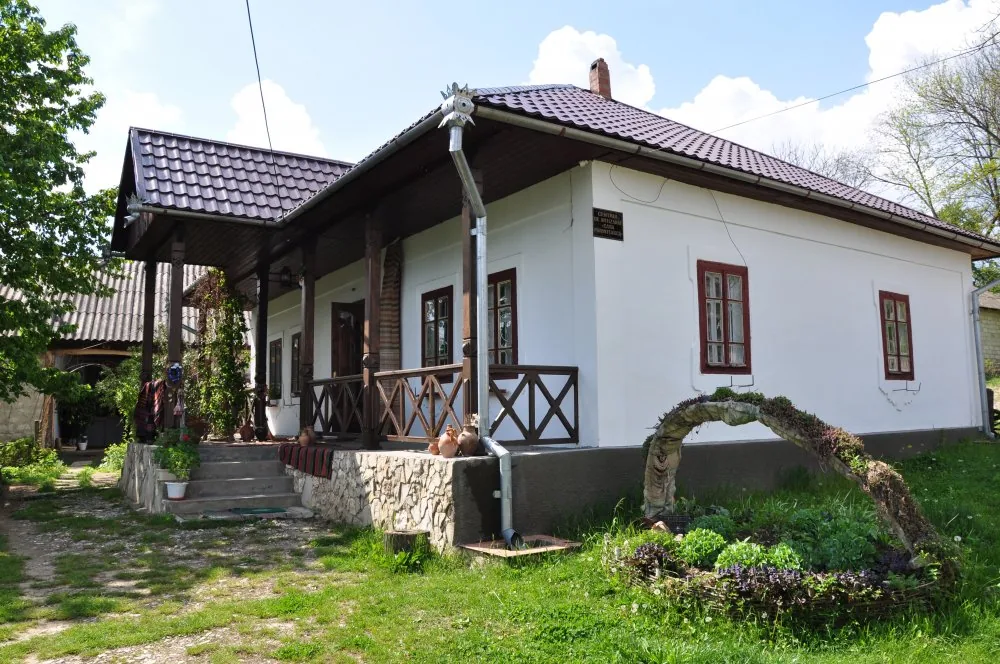
Deep within the village of Palanca, a modest wooden gate opens into a world where the frantic pace of the twenty-first century simply ceases to exist. Casa Părintească, or the Parental House, is a living museum dedicated to the preservation of Moldovan craft and the quiet dignity of rural life. There is a sweet, toasted scent of woodsmoke and the dry aroma of hand-spun wool. This small museum complex consists of a perfectly restored traditional peasant home, a workshop for weaving, and a lush garden that feels more like a wild sanctuary than a formal botanical display. It functions as a cultural heartbeat for the region, where the clatter of the loom provides a rhythmic soundtrack to the afternoon. Visitors do not just look at artifacts here; they sit at the table, share herbal tea, and feel the soul of a lineage that refused to let its heritage be paved over by modernity.
Deep within the village of Palanca, a modest wooden gate opens into a world where the frantic pace of the twenty-first century simply ceases to exist.
Tatiana Popa transformed her family’s ancestral
Tatiana Popa transformed her family’s ancestral home into this museum in 2000, but the history of the structure stretches back much further. The house survived the Soviet era with its character intact, standing as a silent witness to the changing political tides of the Prut river basin. Tatiana's vision was to create more than a static display of antique furniture. She focused on the revival of the 'raised carpet' technique, a specific style of Moldovan weaving that was on the brink of extinction. By training local women and hosting international workshops, she turned this humble homestead into a global center for textile arts. The house itself remains a masterclass in vernacular architecture, utilizing local clay, straw, and wood to create a space that is naturally insulated and deeply harmonious with the surrounding hills of Călărași.
Stepping through the threshold, The cool
Stepping through the threshold, The cool, earthy temperature of the 'casa mare,' the traditional guest room where the family’s finest textiles are displayed. The walls are draped with vibrant kilims, their geometric patterns telling stories of fertility, protection, and the cycle of the seasons. The rhythmic thud and click of the wooden looms in the adjacent workshop, a hypnotic sound that has echoed in these valleys for centuries. The light filters through small, lace-curtained windows, illuminating the fine dust of wool fibers dancing in the air. The rough, honest texture of the unprocessed hemp and the surprising softness of the vegetable-dyed yarns. Frequently skipped is the intricate details of the exterior eaves, which are carved with protective symbols meant to ward off misfortune. Sharing a meal of 'plăcinte' and tea brewed from mint gathered in the backyard, There is a profound sense of belonging that few grand museums can ever replicate.
Palanca village lies about 80
Palanca village lies about 80 kilometers northwest of Chisinau, a journey that takes you through the heart of the Codru forests. The most authentic way to arrive is by driving or hiring a local driver, as the route allows for stops at the nearby Hârjauca monastery. While minibuses do run from the central station in the capital to Călărași, you will likely need a local taxi to cover the final stretch into the quiet lanes of Palanca. The roads are narrow and wind through rolling vineyards, offering a slow-motion introduction to the rural landscape.
Palanca village lies about 80 kilometers northwest of Chisinau, a journey that takes you through the heart of the Codru forests.
The Experience
What you smell is the scent of lavender and dried savory hanging from the rafters, a fragrance that defines the Moldovan pantry. The sunlight hits the white-washed walls in a way that makes the room feel both spacious and incredibly intimate. There is a weight of the traditional 'catrință' or wrap-around skirt, realizing the immense labor required to create a single garment by hand. What remains with you is watching a weaver’s hands move with impossible speed across the warp, a blur of motion that produces perfect, ancient geometry. What most skip is the herb garden in the back, but a walk through the tall grass there reveals a combination of local insects and the quiet rustle of the surrounding forest.
Why It Matters
Casa Părintească is the guardian of the Moldovan textile soul. It represents the successful resistance of folk art against mass production. Culturally, it is the only place in the country where the specific three-dimensional weaving style of the Călărași region is taught and preserved in its original context.
Why Visit
Visit Palanca if you are tired of looking at history through glass cases. This is a place where you can actually touch the past and participate in its continuation. It offers a warmth and hospitality that makes you feel like an invited guest of the family rather than a ticket-holding tourist.
✦ Insider Tips
- 1
Call ahead to book a traditional lunch; the 'plăcinte' made here in the outdoor oven is legendary among locals.
- 2
Ask Tatiana to show you the 'carpet of the soul,' a piece that incorporates the personal histories of the weavers.
- 3
Bring cash for the gift shop, as the hand-woven scarves are unique and cannot be found in Chisinau markets.
- 4
Plan to spend at least three hours here; rushing through this house defeats the purpose of the experience.
- 5
Check the schedule for the 'National Festival of the Loom' which often takes place in the village during the summer.