Deep in the southern steppe, this yellow-and-teal sanctuary is the spiritual home for the world's only Turkic-speaking Orthodox Christian nation.
About Cathedral of St. John the Baptist
The cathedral was built as part of the initial urban planning of Comrat, intended to be the grandest building in the Budjak region. Its bells were cast in the mid-19th century and are famous for their clear, far-reaching tone. Throughout the 20th century, the cathedral served as a stabilizing force for the Gagauz community during periods of famine and political transition. In 1990, it became the site of significant cultural gatherings as the Gagauz sought autonomy within the newly independent Moldova. The recent renovations have added a new level of ornamentation to the exterior, ensuring the cathedral remains the most photographed building in the autonomous region.
Rising above the industrial and residential blocks
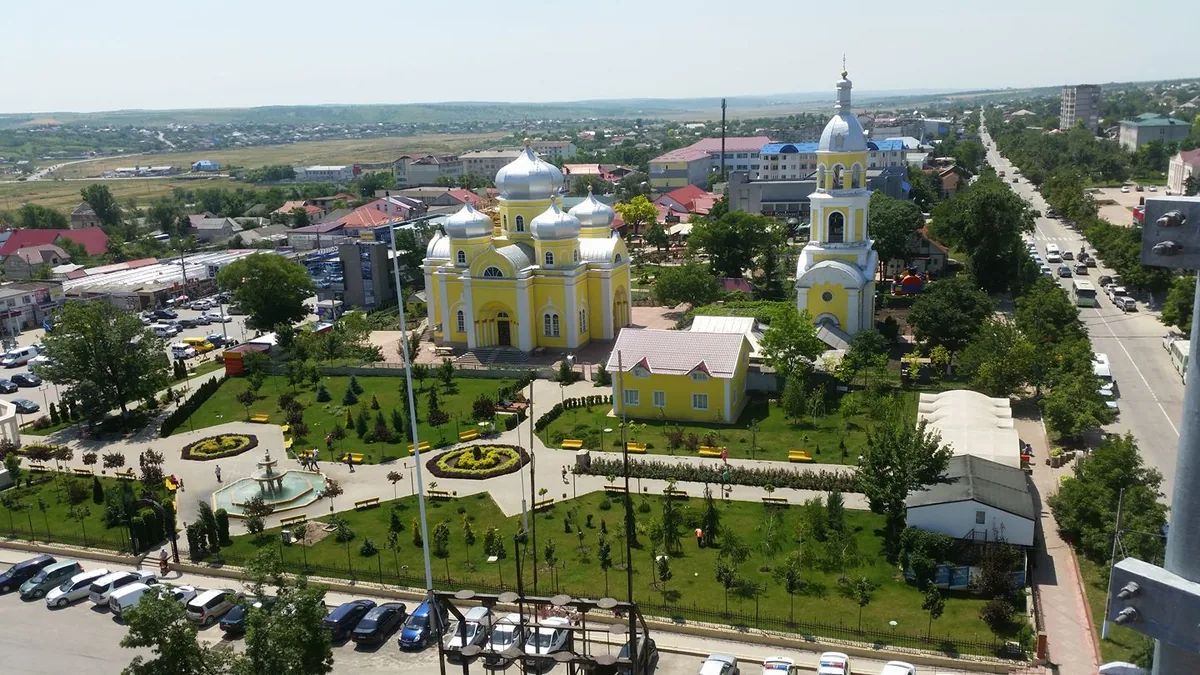
Rising above the industrial and residential blocks of Comrat, the Cathedral of St. John the Baptist is the vibrant spiritual center of the Gagauzia region. This bright yellow structure, with its teal domes and white accents, provides a sharp contrast to the dusty, sun-baked plains of southern Moldova. It is a landmark of the Gagauz people, a unique Turkic-speaking Orthodox Christian group. The cathedral feels energetic and welcoming, acting as a social hub as much as a religious one. The air is often full of bells and the low murmur of the local Gagauz language, a linguistic bridge that connects the church to its distinct heritage. Here tradition is not just remembered, but actively lived every single day.
“Rising above the industrial and residential blocks of Comrat, the Cathedral of St.”
Cathedral of St. John the Baptist, Moldova
Background
Construction of the cathedral began in 1820 and was completed in 1840, during a time when the Gagauz people were settling in the Budjak steppe after fleeing Ottoman-controlled lands. The Russian Empire encouraged the settlement, and the cathedral was built to provide a central house of worship for the newly established town of Comrat. Architecturally, it follows the Russian Orthodox style common in the 19th century, but it has been adapted over time to reflect the specific identity of the local community. It survived the Soviet years with its structure largely intact, though it functioned more quietly during that era. Since the establishment of the Gagauz Autonomous Region in the 1990s, the cathedral has seen a massive revival. It has been repainted in its signature bright colors and its interior icons have been restored, making it a proud symbol of the Gagauz people’s survival and their deep Christian faith.
Walking toward the cathedral, The brightness
Walking toward the cathedral, The brightness of the yellow walls, which seem to glow in the intense southern light. There is a feeling of heat of the sun on the open plaza, which makes the shade of the tall poplars nearby particularly inviting. The sound of the liturgy here is unique; while the music follows Orthodox traditions, the prayers are often a mix of Church Slavonic and the Turkic Gagauz language. What gets your attention is the smell of drying herbs and flowers that are often brought as offerings and placed near the icons. Inside, The verticality of the space, with the central dome rising high above a sea of gold-framed icons. The light is bright and clear, reflecting off the polished floors and the silver-clad Bibles. Most visitors are struck by the friendliness of the congregation, who often greet strangers with a quiet nod. The feel of the experience is one of community and resilience, a feeling that the building is a cherished home for everyone in the city.
Comrat is about 100 kilometers
Comrat is about 100 kilometers south of Chisinau, a drive of roughly an hour and forty-five minutes. The road passes through the heart of Moldova’s wine country. Minibuses run frequently between Chisinau and Comrat from the Southern Bus Station. The cathedral is located right in the center of Comrat, just off the main Victory Street. It is impossible to miss due to its height and brilliant color. Most of Comrat’s sights are within walking distance of the cathedral, including the regional museum and the local market.
“Comrat is about 100 kilometers south of Chisinau, a drive of roughly an hour and forty-five minutes.”
The Experience
What catches your eye is is the way the teal domes shimmer against the deep blue sky, a color combination that feels distinctly Mediterranean. The clatter of the pigeons nesting in the eaves provides a constant, gentle background noise to the courtyard. The cool, smooth surface of the marble columns inside, which provide a physical relief from the southern heat. Most visitors miss the small memorial plaques near the entrance that tell the stories of the community leaders who helped build and maintain the church. The light during the late afternoon services creates long shadows across the plaza, making the yellow walls look almost orange. The moment you hear the liturgy spoken in the Gagauz tongue, you realize you are witnessing a rare and beautiful cultural intersection that exists nowhere else on earth.
Why It Matters
The Cathedral of St. John the Baptist is the ultimate symbol of Gagauz identity. It represents the unique history of a people who merged Turkic language with Orthodox Christianity. Historically, it is the oldest and most significant stone building in Comrat, acting as the foundation upon which the modern city was built. Culturally, it is the guardian of a specific linguistic and religious tradition that is a vital part of Moldova’s multicultural fabric.
Why Visit
Visit this cathedral to experience a corner of Europe that feels completely different from the rest of the country. It is the best place to encounter the Gagauz culture in its most authentic and sacred form. The vibrant colors and the unique language of the services offer a sensory experience that is both beautiful and deeply educational.
Insider Tips
- 1
The cathedral is especially beautiful at night when it is illuminated by spotlights.
- 2
Check out the small museum nearby to learn more about the history of the Gagauz settlement in the 19th century.
- 3
Photography is allowed, but it is best to ask the priest for permission if you want to take pictures of the icons.
- 4
The local market behind the cathedral is a great place to find traditional Gagauz textiles and handmade goods.
- 5
Dress modestly, as this is a very traditional community where religious norms are highly respected.