To avoid the wrath of Ottoman soldiers, this 18th-century congregation dug their church into the ground, hiding a masterpiece of Byzantine art beneath a shed-like roof.
About Church of the Assumption
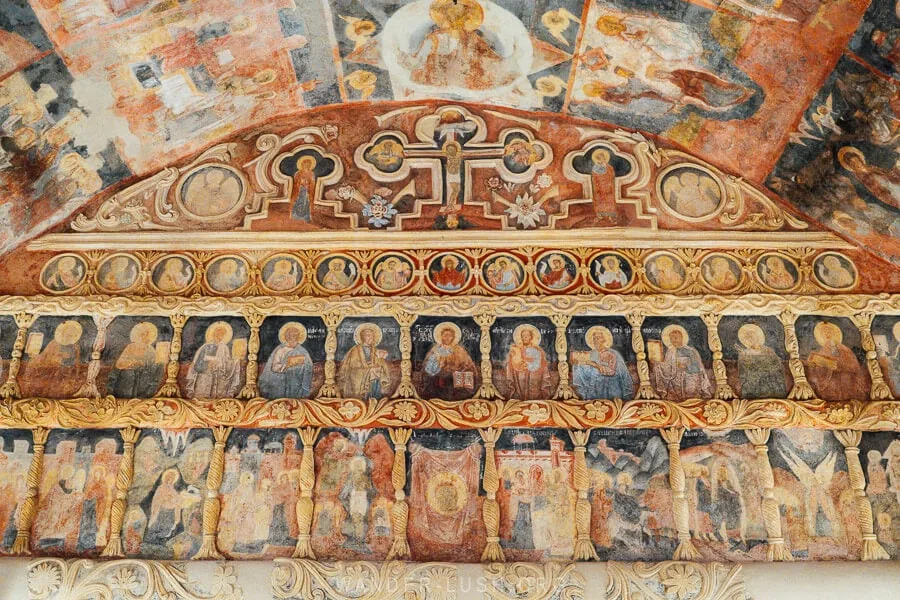
The Church of the Assumption was a focal point for the religious identity of southern Moldova during a time of significant political pressure. The frescoes painted by Stancul and Radu are considered the highest achievement of the late medieval Moldovan school of art. Unlike many churches that were updated with 19th-century styles, Căușeni remained frozen in time due to its remote location and underground nature. During the 20th century, it was recognized as a monument of national importance, leading to several international conservation projects. The most recent restoration, completed in the 2020s, used laser technology to stabilize the paint without damaging the original 18th-century plaster.
Tucked away in the village of Căușeni
Tucked away in the village of Căușeni, the Church of the Assumption is a subterranean mystery that defies the typical grandeur of Orthodox architecture. From the outside, the building appears to be little more than a low, modest stone shed with a sagging roof. However, this humble exterior was a clever act of defiance against Ottoman rule. Because the local laws forbade Christian churches from rising higher than a soldier on horseback, the villagers dug deep into the earth. Stepping inside requires descending several stone steps into a sunken sanctuary that holds the most exquisite and well-preserved medieval frescoes in Moldova. It is a place of profound intimacy, where the art is so close you can almost feel the brushstrokes of the master painters.
History
The current structure dates back to the early 18th century, though it was built on the foundations of an even older 15th-century church. During the period of Ottoman influence, the Christian population had to find creative ways to maintain their places of worship without drawing the ire of the Turkish administrators. The decision to build downward was a masterstroke of architectural survival. Between 1763 and 1767, two master painters, Stancul and Radu, were commissioned to cover the interior walls with frescoes. These artists used a palette of earth tones and vibrant ochres to depict scenes from the life of Mary and various saints. The church was a hidden jewel for the local community for centuries, surviving the decline of the Ottoman Empire and the later neglect of the Soviet era. Recent restoration efforts have finally secured the delicate plaster, allowing these 300-year-old images to shine once more.
Walking toward the low stone walls
Walking toward the low stone walls, There is a sense of confusion at the lack of height. The texture of the rough-hewn stone and the small, ground-level windows. As you descend the stairs into the cool darkness, the temperature drops and the air becomes smelling of damp earth and ancient lime. The thing you pick up on is the sudden explosion of color on the walls as your eyes adjust to the low light. The frescoes are incredibly detailed, with the faces of the saints looking back at you with a startlingly human intensity. The sound inside is perfectly muffled, creating a silence that feels thick and protective. There is a feeling of low ceiling pressing down on you, a physical reminder of the constraints under which the church was built. Most visitors find themselves speaking in whispers, as the space feels less like a public building and more like a private, holy grotto. The light, entering from the small windows at eye level, illuminates the dust motes dancing in front of the painted icons.
Căușeni is located about 75 kilometers southeast
Căușeni is located about 75 kilometers southeast of Chisinau. The drive takes approximately an hour and a half through the rolling hills of the southern Moldovan countryside. Frequent minibuses run from the Central Bus Station in Chisinau to Căușeni. Once in the town, the church is located in a quiet residential area and is well-signposted. It is often kept locked for the protection of the frescoes, so you may need to ask for the key at the nearby administrative office or the local museum.
The Experience
Pay attention to the light catches the metallic gold leaf that still clings to some of the figures, shimmering in the gloom. The hum of your own breathing is loud in the small, stone-lined chamber. A sense of awe at the craftsmanship that was poured into a building intended to be invisible from the road. Often overlooked is the intricate patterns around the window frames, which show a mix of local folk motifs and classical religious symbols. The grain of the floor is uneven and cool, made of large stones that have been worn smooth by centuries of kneeling. The moment you step back out into the bright Moldovan sun, the world feels loud and overly large by comparison.
Why It Matters
The Church of the Assumption is an architectural and artistic anomaly. It is the only semi-subterranean church of its kind in the region and holds the best-preserved late-Byzantine frescoes in Moldova. It represents the resilience and creativity of a people who refused to let their culture be diminished by external laws, finding a way to reach for heaven from beneath the earth.
Why Visit
Visit this church to see something genuinely rare. It is not just a building; it is an act of defiance and a treasure chest. For anyone interested in art history or the hidden stories of Eastern Europe, the descent into the Căușeni frescoes is a transformative experience that no grand cathedral can replicate.
✦ Photo Gallery
Best Season
🌤 Spring is the best time to visit, as the hills around Căușeni are covered in wildflowers and the humidity inside the church is most stable for viewing the frescoes.
Quick Facts
Best time to visit
Spring is the best time to visit, as the hills around Căușeni are covered in wildflowers and the humidity inside the church is most stable for viewing the frescoes.
Getting there
In Causeni, Moldova; reach Causeni first, then continue to the site.
What's nearby
Transfiguration Cathedral, Suvorov Square and Nativity Cathedral are also in the area.
Location
Causeni, Moldova
Type
attraction
Coordinates
46.6398°, 29.4108°
Insider Tips
- 1
Bring a small flashlight to help see the details in the darkest corners of the sanctuary.
- 2
Check the opening times in advance, as the church is often closed during lunch hours or for specialized conservation work.
- 3
Take a moment to look at the exterior roofline; you can see where the original stone tiles meet the later repairs.
- 4
Dress warmly even in summer, as the underground temperature remains quite low year-round.
- 5
Ask the caretaker to point out the 'Master's Mark' hidden among the frescoes, a rare signature from the original painters.