“Twelve years before his tower transformed the Parisian skyline, Gustave Eiffel conquered the treacherous mud of the Prut River with this iron-boned railway masterpiece.”
About Eiffel Bridge
Completed in April 1877, the Eiffel Bridge was a pioneer in the use of iron for large-scale river crossings in Eastern Europe. It was built during a frantic period of railway expansion, serving as a critical supply line during the 19th-century conflicts that redrew the map of the Balkans. Unlike many of its contemporaries, the bridge was never fully destroyed, although it underwent significant technical upgrades in the mid-20th century to accommodate heavier modern locomotives. It stands today as a rare surviving example of Eiffel's pre-Parisian portfolio, still fulfilling the exact function for which it was designed nearly 150 years ago.
About Eiffel Bridge
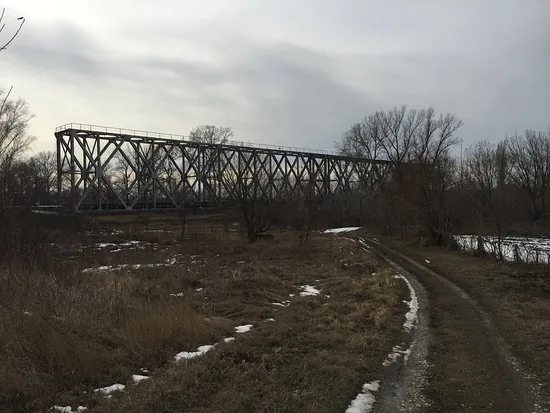
Spanning the Prut River between the towns of Ungheni in Moldova and Iași in Romania, the Eiffel Bridge is a marvel of 19th-century engineering that remains hidden in plain sight. It is a skeletal masterpiece of lattice-work iron, stretching across the water with a rhythmic precision that betrays its famous designer. While thousands of travelers cross it by train every year, few realize they are traversing a structure conceived by Gustave Eiffel just years before he began work on his namesake tower in Paris. The bridge acts as a vital artery between two nations, its industrial aesthetic providing a sharp, metallic contrast to the soft, willow-lined banks of the Prut. The rigidity of Victorian engineering meets the fluid history of the borderlands.
Spanning the Prut River between the towns of Ungheni in Moldova and Iași in Romania, the Eiffel Bridge is a marvel of 19th-century engineering that remains hidden in plain sight.
In the early 1870s, the Russian Empire sought
In the early 1870s, the Russian Empire sought to improve its railway connections to Europe, necessitating a reliable crossing over the temperamental Prut River. Traditional bridges had repeatedly failed due to the river's frequent spring flooding and the unstable sandy soil of the banks. The railway authorities turned to Gustave Eiffel, then a rising star in the world of iron construction. Eiffel designed a continuous lattice girder bridge, completed in 1877, just in time for the Russo-Turkish War. The bridge’s strategic importance meant it was a target in multiple conflicts, yet its robust iron bones survived the world wars and the shifting borders of the 20th century. Today, it remains one of the few places where Eiffel's early experimental work is still in active, heavy-duty use, carrying international trains between Chisinau and Bucharest.
Standing on the riverbank, The intricate
Standing on the riverbank, The intricate geometry of the iron beams, a dizzying array of X-shapes that seem to vibrate when a train approaches. The sound is unmistakable; a deep, rhythmic thrumming that builds into a deafening metallic roar as the iron wheels meet the iron rails. The ground shake beneath your feet, a visceral reminder of the bridge's enduring strength. The light at sunset is particularly striking, as the sun dips behind the Romanian hills and casts long, latticed shadows across the surface of the Prut. The contrast between the rusted patina of the old iron and the modern security fences that mark this international boundary. Often missed is the small stone markers on the riverbank that record the historical flood levels the bridge has successfully weathered. There is a sense of transition here, a feeling of being in the 'in-between' space where Eastern and Western Europe physically connect.
Location and access
The bridge is located in the town of Ungheni, about 100 kilometers west of Chisinau. The most evocative way to see it is by taking the international train from Chisinau toward Iași or Bucharest, which takes you directly across the structure. For a view from the bank, you can travel to Ungheni by bus or car and head toward the border zone. Because it is an active border crossing, access to the immediate riverbank is regulated, but the bridge is clearly visible from the public areas of the Ungheni river park. It is best to visit during the day to appreciate the detail of the ironwork.
The bridge is located in the town of Ungheni, about 100 kilometers west of Chisinau.
The Experience
Leading is the temperature feels slightly cooler near the massive iron pillars, which seem to pull the dampness from the river. Audible: the wind whistling through the lattice-work is haunting, a high-pitched hum that sounds almost like a distant choir. Something strange sense of vertigo looking through the gaps in the iron toward the swirling water below. Most visitors only see the bridge through a train window, missing the way the rivets and plates show the marks of individual 19th-century craftsmen. The piece that stays with you is the silence that follows a passing train, as the iron slowly stops vibrating and the sounds of the river birds return.
Why It Matters
The Eiffel Bridge is a significant monument to the Industrial Revolution and a tangible link to one of history's greatest architects. It serves as a literal and symbolic bridge between Moldova and the European Union. Its continued operation is proof of the superior engineering standards of the 19th-century iron age.
Why Visit
Visit Ungheni to see a side of Eiffel that isn't a postcard cliché. This is functional, industrial beauty at its most raw. It is a pilgrimage for engineering nerds and history buffs who want to stand in the presence of a structure that changed the way the world moves, long before the world knew the name Eiffel.
✦ Insider Tips
- 1
Check the train schedule beforehand so you can be on the bank to hear and feel the bridge in action as a train crosses.
- 2
Bring binoculars if you want to see the details of the original iron rivets and construction marks from a distance.
- 3
The riverside park in Ungheni offers the best legal vantage point without entering the restricted border zone.
- 4
Combine the trip with a visit to the Ungheni History Museum, which houses photos of the bridge's construction.
- 5
Respect all border security signs; the Prut is a strictly monitored international boundary.