Beneath the soil of the northern plains lies a fossilized coral reef that was once the floor of a tropical sea, now rising as the 'Swiss' cliffs of Moldova.
About Fetești Landscape Reserve
The geological formation of Fetești dates back roughly 10 to 15 million years. The limestone here is exceptionally rich in calcium, which attracted early settlers who used the stone for both construction and traditional lime-burning. The reserve was formally established in 1975 to protect the unique canyon of the Draghiște River, which is one of the few places in Moldova where the geological layers of the Sarmatian period are so clearly exposed. Despite its proximity to local quarries, the heart of the reserve has remained untouched, serving as a vital sanctuary for endangered birds of prey and rare steppe vegetation.
Commonly referred to as 'Little Switzerland,'
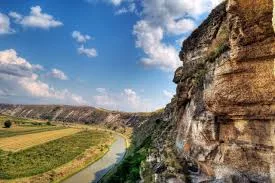
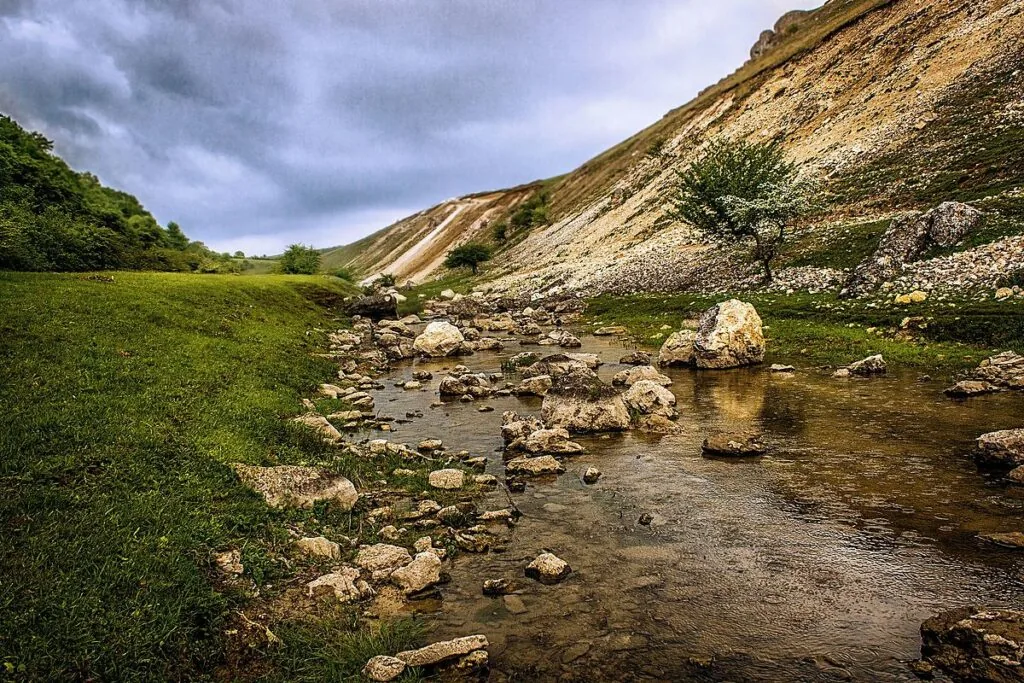
Commonly referred to as 'Little Switzerland,' the Fetești Landscape Reserve is a geological fracture that reveals the dramatic, hidden bones of the Moldovan north. This is not the rolling, agricultural landscape that defines most of the country; instead, it is a spread of steep limestone cliffs, deep ravines, and ancient forests. The reserve is centered around the Draghiște River, which has spent millions of years carving through the soft sarmatian limestone to create a miniature canyon system. The air is noticeably cooler and smells of damp rock and wild thyme. It is a place of vertical drama, where the white stone of the cliffs contrasts sharply against the deep green of the oaks and the azure of the northern sky. For those who think Moldova is purely flat, Fetești is a startling and beautiful correction.
The landscape here is a remnant
The landscape here is a remnant of the ancient Tortonian and Sarmatian seas that covered this region millions of years ago. The cliffs at Fetești are actually fossilized coral reefs, a ghost of an underwater world now perched high above the river level. Historically, these cliffs provided more than just a view; they were a source of the high-quality limestone used to build the villages of the north. The reserve was officially protected to preserve the unique microclimate and the rare species of flora that thrive in the crevices of the limestone. Unlike the managed parks of Europe, Fetești feels prehistoric and untamed. Local legends speak of hidden caves within the cliffs that served as shelters during nomadic raids, and archaeological finds in the area suggest that humans have been drawn to this natural fortress for thousands of years.
Walking along the ridge of the 'Stînca lui
Walking along the ridge of the 'Stînca lui Stan', the highest cliff in the reserve, There is a sense of expansion that is rare in the Moldovan interior. The wind through the limestone crags is a low, melodic whistle, occasionally punctuated by the cry of a circling hawk. The surface of the rock is surprisingly sharp, filled with the tiny, stony imprints of prehistoric shells and sea life. As you descend toward the Draghiște River, the sound of bubbling water becomes the dominant theme. Pay attention to the way the light hits the white cliffs at noon, making them appear almost incandescent against the forest. The soft, thick carpet of moss in the valley floor, where the sun rarely reaches. Frequently skipped is the rare wildflowers that cling to the rock faces, species that have adapted to live in the thin, mineral-rich soil of the reef.
Location and access
Fetești is located in the Edineț district, approximately 220 kilometers north of Chisinau. The drive is long but takes you through the heart of the northern agricultural belt. Most visitors arrive via car, as public transport to the specific trailheads is infrequent. From the village of Fetești, a series of dirt tracks lead to the edge of the reserve. There are no formal visitor centers or paved paths, so a local guide or a good GPS map is essential. The effort of the journey is rewarded by the feeling of having the entire canyon to yourself, away from the more crowded tourist spots near the capital.
The Experience
The way your voice carries across the ravine, the limestone walls providing an echo that makes the space feel larger than it is. The smell of sun-warmed stone and crushed wild mint is the sensory signature of a summer hike here. Something like a sense of discovery when you find a perfect fossilized shell embedded in a boulder, a physical connection to a world millions of years old. Most visitors miss the small, natural caves at the base of the cliffs, which stay ice-cold even in August. What stays with you is standing on the edge of the cliff as the sun sets, watching the white stone turn a deep, dusty rose.
Why It Matters
Fetești is a geological treasure and a vital ecological corridor. It is one of the most important 'toltre' (limestone reef) formations in Eastern Europe. Culturally, it represents the wild, rugged heart of the Moldovan north, a landscape that has inspired local folklore and provided the very stone from which the region's history was built.
Why Visit
Visit Fetești if you want to see a side of Moldova that feels entirely wild. It is a playground for hikers, photographers, and anyone who loves the quiet drama of geology. It offers a sense of solitude and natural grandeur that is becoming increasingly hard to find in more developed European destinations.
✦ Photo Gallery
Best Season
🌤 October tends to be the most visually stunning time, as the hardwood forests turn brilliant shades of red and gold, providing a fiery contrast to the stark white limestone cliffs.
Quick Facts
Best time to visit
October tends to be the most visually stunning time, as the hardwood forests turn brilliant shades of red and gold, providing a fiery contrast to the stark white limestone cliffs.
Getting there
In Edinet, Moldova; reach Edinet first, then continue to the site.
Location
Edinet, Moldova
Type
attraction
Insider Tips
- 1
Wear hiking boots with good grip; the limestone can be crumbly and the slopes are steeper than they look.
- 2
Bring all the water and food you'll need, as there are no shops or services once you leave the village of Fetești.
- 3
The best panoramic view is from the top of 'Stan’s Rock,' located on the eastern side of the reserve.
- 4
Keep an eye out for fossils in the loose scree at the base of the cliffs; they are everywhere if you look closely.
- 5
If you're visiting in summer, start your hike at dawn to avoid the intense heat reflected off the white stone.