After serving as a Soviet juvenile prison for decades, this valley sanctuary has been reborn as a garden of roses and silver domes that lives up to its name: 'The Beautiful.'
About Frumoasa Monastery
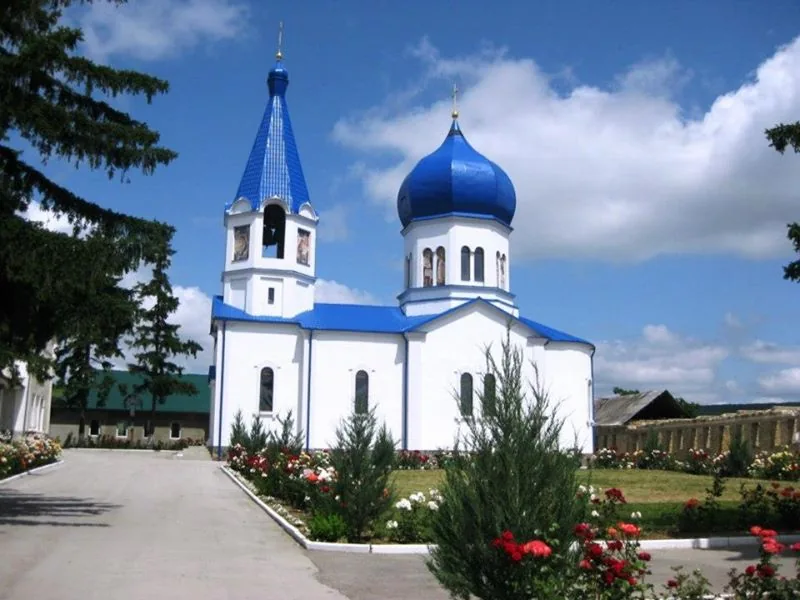
Founded in 1804, Frumoasa grew from a remote hermitage into a significant spiritual center under the guidance of Archimandrite Benedict in the 1850s. The stone Church of the Assumption was completed in 1851, representing the height of Moldovan ecclesiastical architecture. Following its closure in 1946, the site underwent a series of tragic re-purposings that nearly destroyed its architectural integrity. Since its reopening in 1994, the monastery has been converted into a nunnery. The resident sisters have led the extensive reconstruction, focusing as much on the spiritual life as on the restoration of the 19th-century frescoes and the expansive botanical gardens.
True to its name, which translates to 'The
True to its name, which translates to 'The Beautiful,' Frumoasa Monastery is an enclave of serenity set against the lush backdrop of the Codru Forest. This monastic complex is defined by its impeccable gardens, vibrant frescoes, and a sense of order that feels almost celestial. Located in a natural amphitheater of rolling green hills, the monastery's white walls and silver domes sparkle against the deep emerald of the surrounding oaks. The atmosphere here is softer and more welcoming than some of the more austere rock monasteries of the Dniester. The horticultural skill of the monastics is on full display, with rose bushes and manicured lawns creating a paradise-like setting. For the visitor, Frumoasa offers a quiet, contemplative space where the beauty of nature and the beauty of human craft are in perfect, peaceful alignment.
Frumoasa was founded, 1804
Frumoasa was founded in 1804 by three monks, Eftimie, Avramie, and luda, who were drawn to this specific valley by its silence and the clarity of its water. Originally a men's monastery, it has a history marked by both rapid growth and sudden tragedy. In the mid-19th century, the wooden buildings were replaced with stone structures, including the impressive Church of the Assumption, designed with the elegant proportions of the time. The monastery’s life was brutally interrupted in 1946 when the Soviet authorities closed it, eventually turning the sacred space into a school for children with disabilities and later a prison for juveniles. The monks returned in 1994, finding the buildings in a state of advanced decay. Over the last three decades, a Herculean effort by the new community, now a convent of nuns, has transformed the ruins back into one of the most aesthetically pleasing religious sites in the country.
Visiting Frumoasa Monastery
As you walk through the gatehouse, The immediate transition from the wildness of the forest to the curated beauty of the monastery courtyard. Nearby, the wind in the pines is joined by the gentle splash of a central fountain and the distant, melodic chanting of the nuns during their prayers. The smell of damp earth, fresh grass, and the hundreds of roses that line the pathways. Inside the main church, The coolness of the marble floors and the warmth of the golden icons that cover almost every inch of the walls. The incredible detail of the frescoes, which use a palette of soft blues and golds to create a feeling of airy light. Most visitors find themselves lingering in the gardens, where the benches offer views of the surrounding hills that haven't changed in centuries. There is a sense of deep restoration here, a feeling that the peace of the valley has finally been reclaimed from its troubled mid-century history.
Frumoasa is located about 60 kilometers
Frumoasa is located about 60 kilometers northwest of Chisinau, in the Călărași district. The drive takes you through the scenic Codru forest, one of the few remaining large tracts of old-growth woodland in Moldova. Minibuses depart regularly from the Central Bus Station in Chisinau to the town of Călărași, where you can find local transport or a taxi for the final 15-kilometer stretch to the monastery. The road to the monastery is paved and winds through several traditional villages, making it a very accessible and pleasant trip from the capital.
The Experience
You notice the meticulous care in every corner of the grounds, from the perfectly trimmed hedges to the hand-painted details on the window frames. Audible: the semantron, a rhythmic wooden percussion, calling the nuns to prayer is a haunting, ancient sound that echoes through the valley. There is a sense of calm that is almost physical, a slowing of the pulse as you move through the quiet cloisters. Most visitors miss the small museum on the grounds that houses artifacts saved by local villagers during the Soviet years. The moment that stays with you is the view from the monastery gate looking back toward the forest at sunset, when the silver domes reflect the last light of the day.
Why It Matters
Frumoasa Monastery is a premier example of 19th-century Moldovan religious architecture and a symbol of post-Soviet spiritual reclamation. It is particularly significant for its role in the preservation of traditional choral music and horticultural arts. It is a product of to the resilience of the monastic tradition in the face of ideological suppression.
Why Visit
Visit Frumoasa if you need a break from the noise of the world. It is arguably the most aesthetically pleasing monastery in Moldova, offering a level of tranquility and visual beauty that is hard to match. It is the perfect place to experience the gentler, more garden-like side of Orthodox monasticism.
✦ Photo Gallery
Best Season
🌤 June is the most magical month, as the monastery’s famous rose collection is in full bloom and the surrounding Codru forest is at its most vibrant green.
Quick Facts
Best time to visit
June is the most magical month, as the monastery’s famous rose collection is in full bloom and the surrounding Codru forest is at its most vibrant green.
Getting there
In Calarasi, Moldova; reach Calarasi first, then continue to the site.
Location
Calarasi, Moldova
Type
attraction
Insider Tips
- 1
Try the homemade tea or preserves sold at the monastery shop; they are made from fruits and herbs grown on the grounds.
- 2
The nuns are known for their beautiful liturgical singing; try to stay for the evening service (Vespers) to hear it.
- 3
Dress respectfully with covered shoulders and knees, as this is an active and traditional monastic community.
- 4
Walk a short distance into the forest behind the monastery for a spectacular view of the entire complex from above.
- 5
The monastery is a popular weekend destination for locals, so visit on a weekday if you want a more solitary experience.