“The man who built this palace was an Armenian merchant who negotiated an empire-shifting treaty, then designed a house with secret tunnels to ensure he could escape his own guests.”
About Manuc Bey Mansion
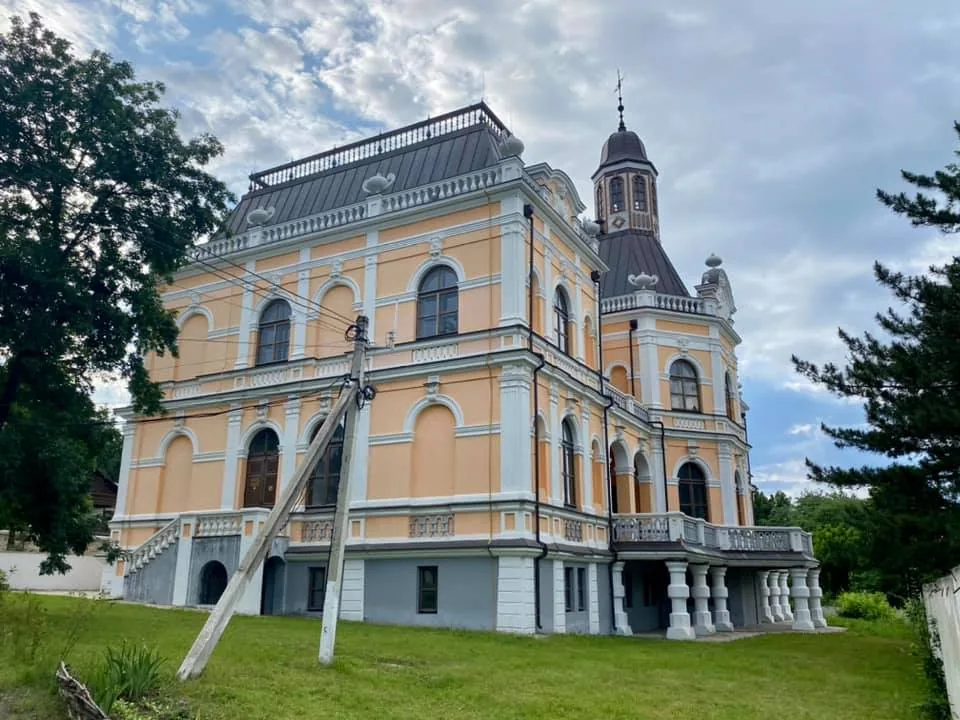
Founded by Manuc Bey in the early 1800s, the estate reached its architectural peak under his grandson, Grigore. The involvement of Alexander Bernardazzi, the most famous architect of the Bessarabia region, gave the mansion its distinct French Classicist flair. It served as a cultural and political hub for the regional elite until the Soviet nationalization in 1944. For decades, it housed a school for agricultural mechanics, which led to the degradation of its artistic elements. The recent $2.5 million restoration, funded in part by the European Union, has returned the site to its status as a premier architectural landmark of Eastern Europe.
What Manuc Bey Mansion actually is
Rising from the hills of Hîncești like a displaced piece of the French countryside, the Manuc Bey Mansion is an architectural anomaly in the Moldovan landscape. This sprawling estate, with its pale stone walls and elegant terraces, was designed to be a palace of diplomacy and luxury. It was the seat of one of the most enigmatic figures in Balkan history, a man who moved between empires with the grace of a master chess player. The mansion is surrounded by a park that once held exotic plants and fountains, creating an oasis of refinement far from the dusty trade routes of the 19th century. Inside, the rooms are a masterclass in restorative art, where gold leaf and heavy silks have been returned to their former glory after decades of ruin. It is a place that speaks of high-stakes treaties, secret meetings, and a level of opulence that feels almost mythological.
Rising from the hills of Hîncești like a displaced piece of the French countryside, the Manuc Bey Mansion is an architectural anomaly in the Moldovan landscape.
Manuc Bey Mirzaian was an Armenian
Manuc Bey Mirzaian was an Armenian merchant, diplomat, and suspected double agent who played a pivotal role in the Russo-Turkish War. After helping negotiate the Treaty of Bucharest in 1812, he purchased this estate to build a home that reflected his immense wealth and political influence. Though he died shortly after the foundations were laid, his son and grandson completed the vision, hiring the renowned architect Alexander Bernardazzi to refine the structures. The estate was more than just a house; it was a complex system of underground tunnels, hunting lodges, and guest villas. Along the Second World War, the mansion was nationalized and turned into a technical college, a period during which much of its interior grandeur was stripped away. A massive restoration project in the 2010s saved the building from collapse, meticulously reconstructing the French Classicist facade and the ornate interiors based on historical sketches.
Visiting Manuc Bey Mansion
Walking up the main driveway, The symmetry of the facade, which seems to command the surrounding valley. The echo of your footsteps on the polished wooden floors of the grand ballroom creates an echo that highlights the room's vastness. The smell of fresh plaster and beeswax, the scents of a building that has been recently reborn. The light in the morning streams through the tall windows, illuminating the intricate ceiling moldings and the heavy velvet curtains. A sense of coolness of the air as you descend into the legendary underground tunnels, which were designed to allow the Bey to move unseen across his estate. Most visitors are captivated by the 'Prince’s Castle,' a smaller, more defensive-looking structure on the grounds that houses a fascinating historical museum. The view from the upper terraces, where the vineyards of Hîncești stretch out in every direction, reminding you of the agricultural wealth that funded this palace.
Hîncești is located about 35 kilometers southwest
Hîncești is located about 35 kilometers southwest of Chisinau, making it an easy day trip. The drive takes about 45 minutes on well-maintained roads. Regular minibuses and buses depart from the South-West station in Chisinau every half hour. Once in Hîncești, the mansion is a short walk from the town center and is visible from most elevated points in the city. The estate is open for tours throughout the week, though the underground tunnels are sometimes restricted depending on the season.
Hîncești is located about 35 kilometers southwest of Chisinau, making it an easy day trip.
The Experience
Start with the way the light catches the crystal chandeliers, throwing rainbows across the restored frescoes. The sound of the wind through the old trees in the surrounding park is the only noise that reaches the quiet upper galleries. Something like a sense of grand history in the dining hall, imagining the diplomats who once sat here deciding the fate of nations over local wine. Most visitors miss the small details in the woodwork of the grand staircase, where subtle Armenian motifs pay homage to the founder's heritage. The moment that stays with you is emerging from the dark, damp tunnels into the bright, manicured gardens, a transition that feels like traveling through time.
Why It Matters
Manuc Bey Mansion is the most important example of secular 19th-century architecture in Moldova. It represents the cosmopolitan nature of the region's history, where Armenian, Russian, Turkish, and French influences converged. It is a monument to the art of diplomacy and the sheer ambition of the merchant class during the decline of empires.
Why Visit
Visit Hîncești to see the 'Versailles of Moldova.' It is the best place in the country to understand the lifestyle of the 19th-century aristocracy. The combination of beautiful architecture, a deep history of espionage, and the eerie thrill of the underground tunnels makes it far more interesting than a standard museum visit.
✦ Insider Tips
- 1
Book a guided tour if you want access to the full length of the underground tunnels; they are too dangerous to explore alone.
- 2
Look for the hidden door in the library that was part of the mansion's original security system.
- 3
The museum in the 'Prince’s Castle' has an excellent collection of traditional Moldovan weaponry and costumes.
- 4
Wear comfortable shoes, as the estate is large and involves many stairs and gravel paths.
- 5
The cafe near the entrance serves excellent coffee and local pastries, perfect for a break after exploring the grounds.