Before Chisinau had a single boulevard, it had this hill, a spring, and a white stone church built by a man who survived a death sentence.
About Mazarache Church
Mazarache Church was completed around 1752 on a site that had seen human occupation since the Stone Age. It served as the city's primary spiritual center throughout the 18th century, a period when Chisinau was under the influence of the Ottoman Empire. When the Russian Empire took control of Bessarabia in 1812, the church remained a focal point for the local Moldovan population even as grander cathedrals were built nearby. Its adoption by the Old Believers (Lipovans) in the 1960s ensured its preservation during a time when many other orthodox churches were being closed or repurposed by the Soviet state.
Perched on a bluff overlooking the Bic River
Perched on a bluff overlooking the Bic River, Mazarache Church is the oldest standing structure in Chisinau, a humble white fortress that predates the city’s grand boulevards by centuries. Its thick, buttressed walls and small, high-set windows speak of a time when a church was as much a place of refuge as it was a house of worship. The building follows the classic Moldovan medieval silhouette, characterized by a steep, tent-like roof and a lack of the sprawling ornamentation found in later centuries. It works as a silent witness to the city's evolution from a minor trading outpost to a national capital, stubbornly occupying the very spot where the first spring of Chisinau was discovered.
“Perched on a bluff overlooking the Bic River, Mazarache Church is the oldest standing structure in Chisinau, a humble white fortress that predates the city’s grand boulevards by centuries.”
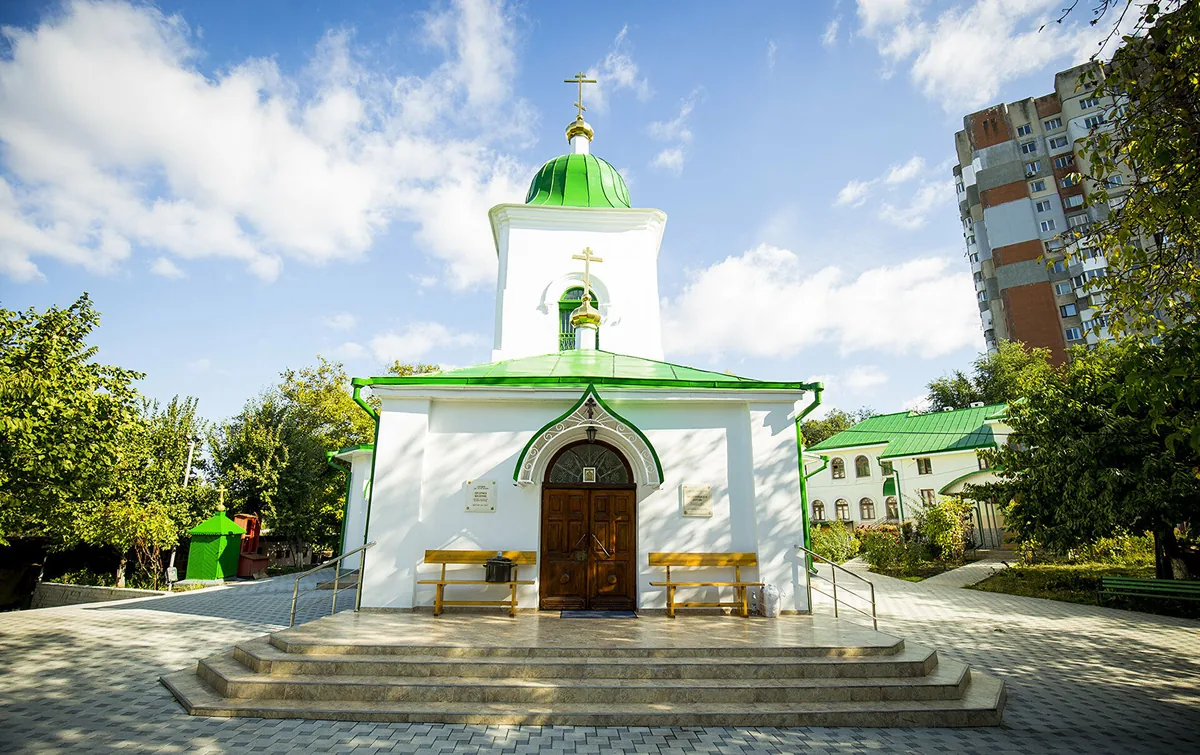
Mazarache Church, Moldova
Legend credits the city official Vasile
Legend credits the city official Vasile Mazarache with the church's construction in the 1750s, allegedly to fulfill a vow made after being cleared of a false accusation before the local governor. The site itself is even older, built upon the ruins of a 15th-century fortress that once guarded the river crossing. For generations, the spring at the foot of the hill, the 'Chisinau' or 'hidden water', was the primary water source for the surrounding settlement. The church survived the devastating fire of 1811 and the massive urban redevelopment of the Russian Empire. Since the mid-20th century, it has served the Lipovan community, an Old Believer sect that fled Russia to preserve their ancient liturgical traditions, adding a unique layer of cultural seclusion to this historic hilltop.
Walking up the steep path from the river
Walking up the steep path from the river, the shift from the industrial noise of the lower city to a pocket of deep, historical silence. What draws the eye is the unusual lack of external decoration, with the white lime-washed stone emphasizing the building's muscular, protective form. Inside, the atmosphere is dense smelling of strong incense and the sight of bearded men and women in traditional Old Believer attire. The icons here are different, darker, older, and strictly following the pre-17th-century Russian canons. like an intruder in a very private, living history. Often missed is the foundation stones near the base of the hill, which hint at the earlier fortifications. The view from the churchyard provides a stark perspective of Chisinau’s layers, with the ancient church in the foreground and the skeletal frames of modern glass towers rising in the distance.
The church is located on Mazarache
The church is located on Mazarache Street, tucked behind the busy Albișoara thoroughfare. It is a short but steep walk from the Roman Catholic Cathedral or the pedestrian Eugen Doga street. Because it sits on a hill, it remains visible from many parts of the lower city, serving as a navigational north star. Taxis are the easiest way to reach the entrance if you wish to avoid the climb, but the walk up from the river allows you to appreciate the defensive positioning that made this spot so valuable to the city’s founders.
“The church is located on Mazarache Street, tucked behind the busy Albișoara thoroughfare.”
The Experience
The temperature drop significantly the moment you cross the threshold of the three-foot-thick walls. You hear the service is a low, guttural chant, lacking the polyphonic harmony of modern Orthodox choirs and favoring the ancient, monophonic 'Znamenny' chant. What draws the eye is the absence of pews; the congregation stands throughout the long services, a physical born from their endurance. The light is dim, provided mostly by slender beeswax candles that illuminate the silver-clad icons of the Old Believer tradition. Most visitors find the austerity of the place striking, a departure from the gold-leafed opulence of the Nativity Cathedral. What stays with you is standing on the hill at dusk, hearing the distant traffic while looking at the very stone that began the city.
Why It Matters
Mazarache Church is the DNA of Chisinau. It is the only physical link to the pre-imperial, medieval town and marks the geographic origin of the capital. Culturally, it is a rare bastion of Lipovan culture, preserving linguistic and religious traditions that have vanished elsewhere.
Why Visit
Visit Mazarache Church to see where Chisinau began. It is the polar opposite of the city's Soviet-style grandeur, small, intimate, and ancient. If you want to see the city stripped of its modern pretensions and understand its core as a river-crossing settlement, this hill is where you must stand.
Insider Tips
- 1
The Old Believers are very traditional; ensure you dress modestly and refrain from taking photos during active services.
- 2
Look for the plaque marking the location of the original spring at the bottom of the hill, which gave the city its name.
- 3
The church is often closed to tourists outside of service hours, so check for the morning or evening liturgy times before heading up.
- 4
Walk around the perimeter to see the varied stone masonry that reveals the many repairs and additions made over 250 years.
- 5
The hill offers a great vantage point for a panoramic photo of the city's northern districts across the river.