Old Orhei (Orheiul Vechi) โ€” historical landmark in Moldova
๐Ÿ“ historicalโ† Moldova

Old Orhei (Orheiul Vechi)

A high-gravity archaeological complex carved into 'shatter-crisp' limestone cliffs; featuring ancestral cave monasteries and panoramic views of the Raut river loop; a high-intensity spiritual trip.

Scroll to read

โ€œSeven hundred years of prayers are etched into these limestone caves, where a single monk still keeps watch over a river that loops back on itself like a silver ribbon.โ€

About Old Orhei (Orheiul Vechi)

Orheiul Vechi is a rare site where the ruins of a medieval Tatar city sit directly beneath an Orthodox monastery. In the 1330s, the Golden Horde established an administrative center here, building a palace and a caravan-serai to control trade routes. By the late 1300s, Moldavian rulers reclaimed the land, and the site became a focal point for the Christian hesychast movement, where monks sought union with God through silence. The cave monastery was eventually abandoned in the 1800s due to cliff instability, only to be secretly re-occupied by a lone monk during the Soviet era. Today, it stands as a UNESCO-candidate landscape, protecting both the archaeological remains of empires and the living traditions of the Raut River valley. Its survival is a testament to the natural fortress-like quality of the limestone meanders.

Old Orhei (Orheiul Vechi) in Moldova
Old Orhei (Orheiul Vechi) โ€” Moldova

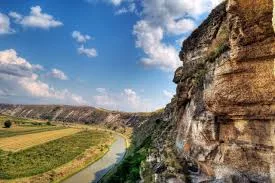
A jagged limestone ridge curves like a sleeping dragon over the Raut River, sheltering a secret world where monks have carved their lives directly into the cliffside for seven centuries. Old Orhei, or Orheiul Vechi, functions as a colossal open-air amphitheater of history, where the geological layers of the earth meet the spiritual layers of the Moldovan soul. The air on the plateau is exceptionally crisp, carrying the dry scent of wild thyme and the distant woodsmoke from the thatched cottages of Butuceni village. You walk along narrow sheep paths that skirt the precipice, noticing how the white stone glows with a pearlescent intensity under the fierce Balkan sun. The soundscape is defined by a profound, wind-whipped silence, occasionally broken by the low chime of a bell echoing from deep within a cave or the rushing water of the river loop far below.

A jagged limestone ridge curves like a sleeping dragon over the Raut River, sheltering a secret world where monks have carved their lives directly into the cliffside for seven centuries.

Old Orhei (Orheiul Vechi) in Moldova โ€” photo 2
Old Orhei (Orheiul Vechi), Moldova

The landscape bears the scars and triumphs of every major wave of civilization to cross the Pontic Steppe, from the Geto-Dacians of the 6th century BC to the Golden Horde of the 14th century. During the Mongol occupation, a city known as Shehr al-Jedid rose here, featuring stone baths and mosques whose ruins still dot the valley floor like scattered teeth. After the Tatars retreated, Orthodox monks sought refuge in the high cliffs, chiseling out the Pestera monastery. They lived in lightless cells, their days measured by prayer and the slow erosion of the limestone walls. Stephen the Great later fortified the ridge, turning it into a strategic sentinel against invaders. The site fell into relative obscurity during the 19th century, preserved by its sheer isolation until archaeologists began peeling back the layers of dust to reveal a multi-civilizational palimpsest that remains unique in Eastern Europe.

Crossing the threshold of the cave monastery, you feel the temperature drop twenty degrees as the heavy, cool dampness of the rock settles on your skin. You notice the way the light from a few beeswax candles illuminates the icons, their gilded surfaces blackened by centuries of soot. The sound of your own breathing becomes loud in the narrow stone passages where the walls are polished smooth by the touch of countless pilgrims. You feel a sudden sense of exposure when you step out onto the tiny stone balcony overlooking the river, a thousand feet of vertical air separating you from the valley floor. You notice the tiny, vibrant splashes of color from the wildflowers growing in the cracks of the limestone. The most enduring moment occurs at sunset, when the entire ridge turns a deep ochre and the shadows of the cross on the hill grow long enough to touch the village roofs.

Most travelers depart from Chisinau's central bus station on a marshrutka bound for the villages of Butuceni or Trebujeni, a journey of roughly sixty minutes through rolling vineyards and sunflower fields. The final approach requires a walk across a narrow bridge where the scale of the limestone cliffs first becomes apparent. Walking the entire ridge is the only way to grasp the site's geography, though the ascent to the main cross and the cave church is steep. Arriving in the early morning allows you to avoid the midday heat and the tour buses, providing a window of time where you can stand on the ridge alone with the wind. For a truly immersive experience, many visitors stay in one of the restored peasant houses in Butuceni, where the rhythm of life remains tethered to the seasons and the soil.

The final approach requires a walk across a narrow bridge where the scale of the limestone cliffs first becomes apparent.

The Experience

The atmosphere is one of rugged, vertical sanctity. You notice the smell of the airโ€”a mix of dry grass, cold stone, and the faint, sweet aroma of church incense. You feel the physical effort of the climb in your legs, a small penance before reaching the quietude of the caves. The light is brilliant and unforgiving on the ridge but turns soft and amber the moment you step inside the rock. You notice the small carvings in the cave walls, crosses and initials left by people seeking protection centuries ago. The most striking detail is the view from the stone cross at the highest point, where you realize the river has carved a perfect natural moat around the history of the nation. It is a place that makes you feel both very small and deeply connected to the earth.

Why It Matters

Old Orhei is the most important historical and archaeological complex in Moldova. It represents a unique confluence of Oriental and European cultures, where nomadic Tatar traditions once blended with settled Slavic and Vlach lifestyles. Historically, it serves as the spiritual heart of the country, preserving a form of cliffside monasticism that has all but vanished elsewhere in the region.

Why Visit

Visit because this is where the map of Moldova makes sense. While Chisinau offers the story of the modern state, Old Orhei offers the story of the land itself. You come here to stand on a cliff edge where the wind sounds like a choir and to see a church that wasn't built, but born from the living rock. It is the only place in the country where you can touch three millennia of history in a single afternoon.

โœฆ Insider Tips

  • 1

    Look for the 'secret' stone staircase inside the cave monastery that leads to an even smaller, lower level used for extreme seclusion.

  • 2

    Eat at one of the local 'pensiune' in Butuceni; the placinteโ€”savory flaky pastriesโ€”are hand-rolled here and baked in traditional clay ovens.

  • 3

    Carry a small flashlight to appreciate the wall carvings in the darker corners of the Pestera monastery where the candles don't reach.

  • 4

    The ethnographic museum in the village is tiny but houses an incredible collection of hand-woven Bessarabian rugs that explain the local visual language.

  • 5

    Avoid the ridge during high winds, as the limestone paths can be slippery and there are no guardrails between you and the river.

Free Travel Tools
Games & Discover

Featured

Conquer the World

195 nations. One dart. Build your empire.

New Game

FateLand

Three darts. The world decides your fortune, heartbreak & legacy.

FateLand
Fortune. Heartbreak. Legacy. Throw & find out.
Show on Map