“Six hundred and fifty-six stone steps separate the dusty riverbank from a limestone flame that honors the silent poets and anonymous builders of the Moldovan spirit.”
About Thanksgiving Candle
The project was funded by donations from across the country, a true grassroots effort led by the intellectual elite of the post-Soviet era. Ion Druță, the nation’s most celebrated writer, wanted a landmark that didn't celebrate a person, but a perseverance. The site chosen, 'Beket’s Hill,' was historically a lookout point for defending the northern borders. Since its completion in 2004, it has become the symbolic counterpart to the Soroca Fortress, representing the spiritual defense of the region just as the castle represents the physical.
About Thanksgiving Candle
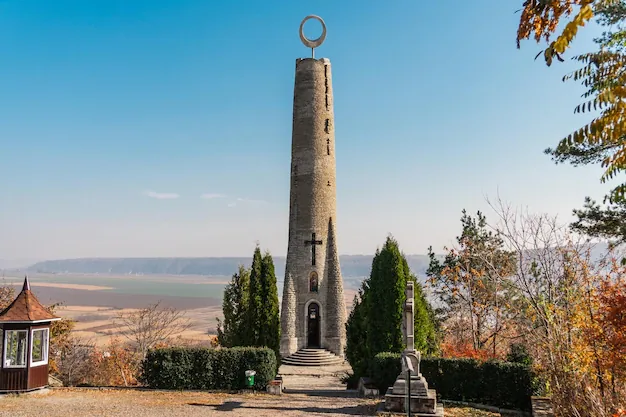
High above the Dniester River, a slender stone column pierces the skyline of Soroca, resembling a flickering flame frozen in limestone. The Thanksgiving Candle is a vertical tribute to the cultural resilience of the Moldovan people, standing on a ridge that has watched over the border for centuries. This monument represents a deliberate fusion of religious devotion and national pride, rising nearly thirty meters from a foundation of deep gratitude. It is a place of physical exertion and spiritual reward, where the climb is as much a part of the experience as the view from the summit. The surrounding parkland feels like a natural balcony, offering a panorama that stretches into the distant Ukrainian plains.
High above the Dniester River, a slender stone column pierces the skyline of Soroca, resembling a flickering flame frozen in limestone.
Poet Ion Druță
Poet Ion Druță envisioned this project as a monument to the nameless artisans who preserved the Moldovan language and faith through centuries of foreign rule. Construction began in the early 2000s, utilizing the same Soroca limestone that fortified the city’s famous medieval castle. The structure was inaugurated on March 27, 2004, a date chosen for its deep historical resonance. Every stone was laid with the intent of creating a symbolic lighthouse for the nation. Inside the base, a small, intimate chapel provides a space for quiet reflection, linking the modern monument to the ancient traditions of Orthodox hermitages. It stands not for a military victory, but for the quiet triumph of a culture that refused to be erased.
Reaching the monument requires ascending over
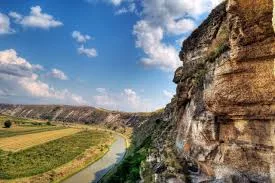
Reaching the monument requires ascending over six hundred stone steps that snake up the steep riverbank. There is a feeling of rhythm of your own breath and the strain in your legs, a physical penance that makes the eventual arrival feel earned. The air grows noticeably sharper and cleaner climbing, smelling of wild thyme and river silt. The way the light catches the rough texture of the limestone, turning the pillar from a dull grey to a brilliant white against the blue sky. At the top, the wind provides a constant, rushing soundtrack to the visual splendor below. The Dniester River curves lazily like a silver ribbon, and There is a sense of profound stillness that only such height can provide. Most visitors pause at the chapel first, where the smell of burning beeswax creates a sensory bridge between the earth and the sky.
Soroca sits about two
Soroca sits about two and a half hours north of Chisinau, and the monument is located on the southern outskirts of the city. Most travelers arrive by car or the frequent 'rutiera' minibuses that depart from the capital’s Northern Bus Station. The entrance to the stairs is well-marked along the main road. Driving allows for a more flexible schedule, which is vital if you want to catch the specific light of dawn or dusk. The stairs are well-maintained, but the incline is significant, requiring a moderate level of fitness to enjoy the journey.
Soroca sits about two and a half hours north of Chisinau, and the monument is located on the southern outskirts of the city.
The Experience
Silence of the climb is often broken only by the chirping of cicadas in the long grass flanking the stairs. The sun beats down on the open path, making the cool interior of the small chapel at the top feel like a profound relief. The wind tugging at your clothes as you look across the water into Ukraine, realizing how thin the borders of history really are. Most people rush to the railing for a photo, but the best moment is sitting on the warm stone steps halfway up, watching the shadows of clouds move across the valley. The grain of the limestone is porous and warm to the touch, holding the heat of the day long after the sun begins to set.
Why It Matters
The Thanksgiving Candle is a rare contemporary monument that has successfully achieved the status of a national icon. It bridges the gap between secular literature and religious tradition, providing a physical focal point for Moldovan gratitude. It preserves the memory of that a nation’s strength lies in its cultural memory and its connection to the land.
Why Visit
Visit this ridge because it offers the most dramatic geographical perspective in northern Moldova. While the fortress in town tells a story of war, the candle tells a story of peace and identity. You come here for the exercise, but you stay for the sense of standing on the roof of the country.
✦ Insider Tips
- 1
Carry a bottle of water with you from the bottom, as there are no vendors once you begin the ascent of the steps.
- 2
Visit at sunset when the limestone reflects the orange glow of the sky, making the 'candle' appear to actually burn.
- 3
Step inside the small chapel at the base of the monument to see the modern icons painted in the traditional style.
- 4
The path can be slippery after rain; check the local forecast before committing to the climb.
- 5
Look for the commemorative plaques along the way that translate some of Ion Druță’s poetry regarding the site.