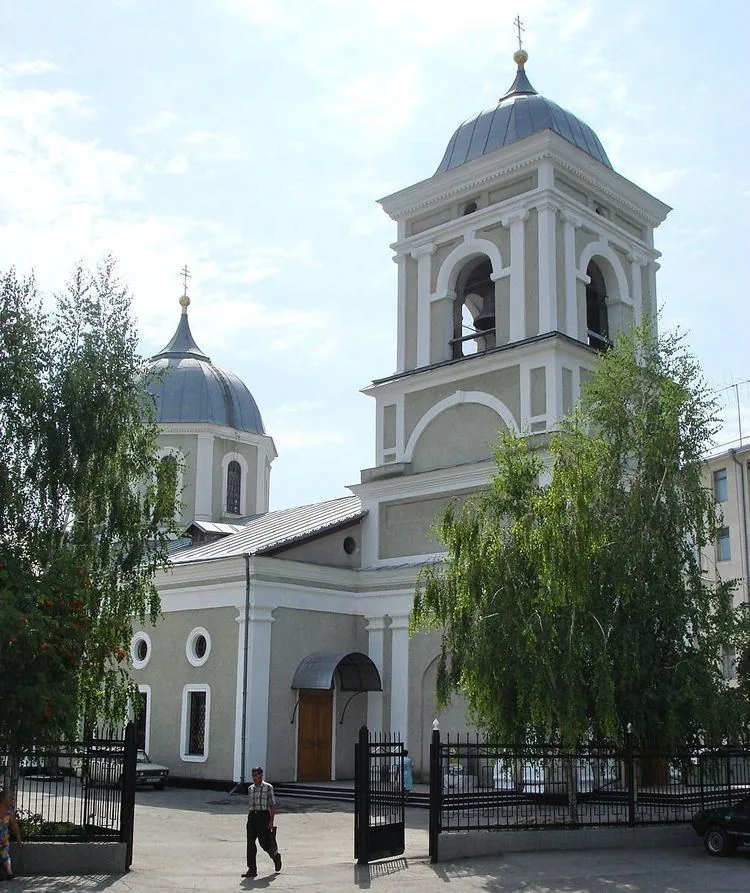
For thirty years, this sanctuary housed a planetarium where Soviet citizens studied the stars on the very dome that once depicted the kingdom of heaven.
About Transfiguration Cathedral
The cathedral's foundation was laid in 1898 under the supervision of the local military administration. It survived the 1940 earthquake and the subsequent bombings of World War II, though its interior suffered significant damage. The transformation into a planetarium in 1962 saved the structure from demolition, a fate that befell many other Moldovan churches. Since 1991, the community has worked tirelessly to re-consecrate the space, blending the original 19th-century architecture with contemporary Moldovan iconographic styles. Today, it is still a symbol of the nation's spiritual reclamation.
What Transfiguration Cathedral is
Standing with a solemn grace on Stefan cel Mare Boulevard, the Transfiguration Cathedral is a resilient anchor for Chisinau’s spiritual life. Its yellow-washed walls and neoclassical columns offer a sense of order amid the busy energy of the capital. Unlike the sprawling metropolitan cathedrals of neighboring capitals, this sanctuary feels intimate and lived-in. The golden domes catch the low Baltic sun, reflecting a warmth that belies the building's tumultuous history. Within these walls, the air stays cool and carries the heavy, comforting scent of beeswax candles and old incense. It remains a place where the modern city pauses, providing a quiet sanctuary for those seeking a moment of stillness under the watchful eyes of painted saints.
Architect Mikhail Lovov
Architect Mikhail Lovov designed this structure in the late 19th century, originally intending it to serve as a military chapel for the local garrison. Completed in 1899, the cathedral reflected the imperial aesthetic of the Russian Empire, characterized by its strict proportions and elegant porticos. However, the 20th century brought waves of ideological shifts that nearly erased its sacred function. During the Soviet period, the state confiscated the building and repurposed it as a planetarium. For decades, locals looked up at the ceiling to see constellations projected onto the dome instead of celestial icons. Along the collapse of the Soviet Union in the early 1990s, the building was returned to the Orthodox Church. A meticulous restoration project began, stripping away the scientific equipment and inviting master painters to return the walls to their former religious splendor.
Stepping through the heavy wooden doors
Stepping through the heavy wooden doors, There is a sudden drop in volume as the traffic noise of the boulevard fades into a soft hum. The rhythmic flickering of hundreds of slender candles, their light dancing against the vibrant blues and golds of the restored frescoes. The floor, worn smooth by generations of shoes, feels cool beneath your feet. The devotion of the locals, who stop in for three minutes or three hours, their whispered prayers creating a soft white noise. If you visit during the morning liturgy, the polyphonic chanting of the choir rises into the dome, creating an acoustic richness that seems to vibrate in your chest. People often miss the intricate wood carvings of the iconostasis, which show a level of detail that rivals the grandest European cathedrals. The light at mid-morning is particularly evocative, streaming through the high windows in dusty beams that illuminate the drifting incense smoke.
The cathedral occupies a prime position
The cathedral occupies a prime position in the center of Chisinau, easily accessible by foot from the Great National Assembly Square. Most trolleybuses in the city stop within a one-block radius of the entrance. If you are staying in the city center, a short walk along the main boulevard will lead you directly to its gates. Taxis are plentiful, but the pedestrian experience of Chisinau’s central park system makes walking the preferred way to arrive.
The Experience
A weight of the air change as you cross the threshold, shifting from the dry heat of a Moldovan summer to a damp, cool stillness. Audible: the choir during the evening service is haunting, the voices intertwining without the need for instruments. First, the older women in floral headscarves tending to the candle stands with a focused, quiet efficiency. What sticks with you is seeing the golden halo of a saint catch a stray beam of light, making the figure seem to step out from the plaster. Most visitors miss the small courtyard in the back, where a few benches offer a view of the cathedral’s backside away from the street noise. The feel of the old stone walls feels solid and ancient, a physical reminder of the building’s survival.
Why It Matters
The Transfiguration Cathedral is a living archive of Chisinau’s endurance. Its shift from a military chapel to a temple of science and back to a house of worship mirrors the political and cultural shifts of Moldova itself. It holds a unique place in the hearts of Chisinau’s residents as a site of quiet, persistent resistance.
Why Visit
Visit this cathedral to witness the seamless blending of history and faith. While other landmarks in Moldova might be more isolated or grand, this one offers an authentic look at the daily spiritual pulse of the capital. It is a rare chance to see a building that has played many roles and finally returned to its original purpose.
✦ Photo Gallery
Best Season
🌤 Easter Sunday is the most dramatic time to visit, as the cathedral is swathed in flowers and the scent of sweet bread fills the surrounding streets, though the soft light of October is better for photography.
Quick Facts
Best time to visit
Easter Sunday is the most dramatic time to visit, as the cathedral is swathed in flowers and the scent of sweet bread fills the surrounding streets, though the soft light of October is better for photography.
Getting there
In Bender, Moldova; reach Bender first, then continue to the site.
What's nearby
Suvorov Square, Church of the Assumption and Nativity Cathedral are also in the area.
Location
Bender, Moldova
Type
attraction
Coordinates
46.8239°, 29.4823°
Insider Tips
- 1
Women should carry a light scarf to cover their heads if they intend to stay for a service, as this is locally respected.
- 2
Look for the smaller icons along the side aisles; many were brought by families during the 1990s as gifts for the reopening.
- 3
The morning service usually starts around 8:00 AM and offers the best opportunity to hear the professional choir.
- 4
Photography is generally allowed if you are discreet and avoid using a flash during prayer times.
- 5
The small kiosk near the entrance sells excellent local honey and handmade beeswax candles.