“Designed by the architect who built the city’s soul, this red-brick tower once pumped the lifeblood of Chisinau before becoming the best place to see its rooftops.”
About Water Tower
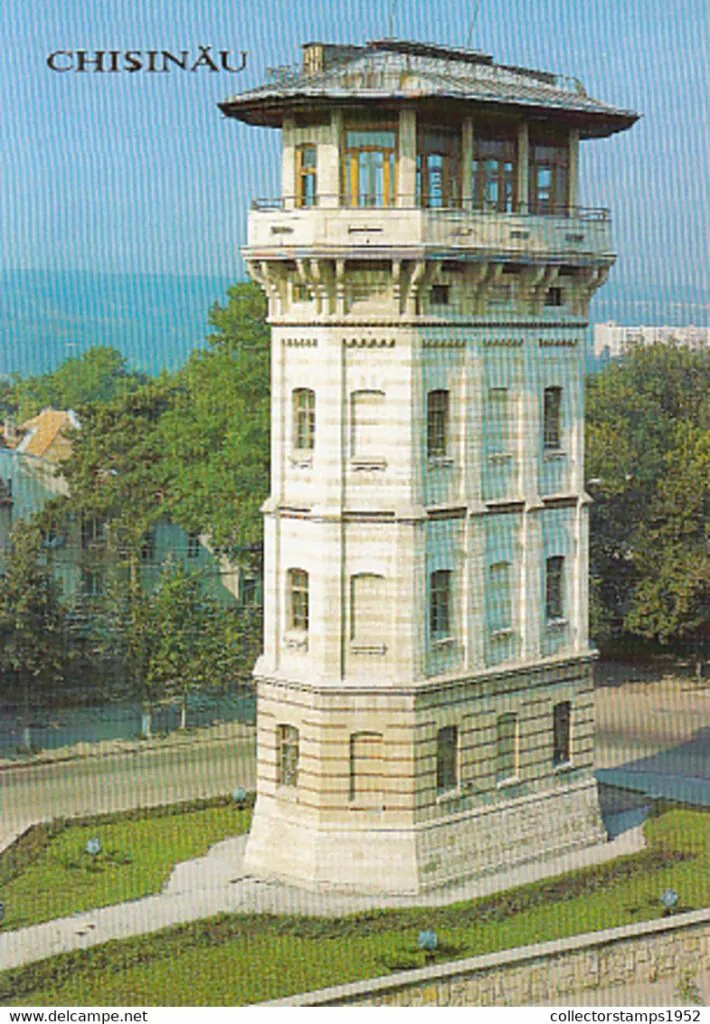
The tower was a technological marvel when it opened in 1892, part of a modernization push that turned Chisinau into a proper European capital. Bernardazzi used a mix of local white limestone and red brick, a stylistic signature that can be seen on many of the city's most beautiful buildings. After the centralized water system was expanded in the mid-twentieth century, the tower lost its practical function. Its conversion into a museum in the 1970s saved it from the demolition that befell its twin tower. Today, it houses the History Museum of Chisinau, documenting the city's journey from a small village to a thriving administrative hub.
High above the university district, Chisinau’s old
High above the university district, Chisinau’s old Water Tower stands like a medieval guardhouse that has somehow found itself in the middle of a modern city. This red-brick and white-stone structure was the literal source of life for the capital in the late nineteenth century, serving as the heart of the first centralized water system. Today, it has been repurposed into the Museum of Chisinau, but the building itself remains the primary exhibit. Its height offers a rare vertical perspective on a city that is notoriously horizontal, providing views that stretch from the glittering domes of the center to the distant, rolling hills of the countryside. It is a place of narrow stairs and echoing chambers, where the utilitarian history of the city feels unexpectedly romantic.
High above the university district, Chisinau’s old Water Tower stands like a medieval guardhouse that has somehow found itself in the middle of a modern city.
designed the tower, 1892
Architect Alexander Bernardazzi, the man who gave Chisinau its nineteenth-century face, designed the tower in 1892. At the time, the city was expanding rapidly, and the old wells were no longer sufficient. Two identical towers were built, one here and another where the Gastronom building now stands, connected to a network that pumped water from the Dniester River. The tower survived the 1940 earthquake and the bombings of the war, though its top floor had to be reconstructed. For a time, it was a fire lookout, with watchmen scanning the horizon for smoke. Since 1971, it has functioned as a museum, preserving the municipal history of the capital within its thick, cooling walls.
Climbing the spiral staircase, the air
Climbing the spiral staircase, the air grow cooler as the thick masonry insulates you from the city’s heat. First, the texture of the original brickwork, alternating between rough clay and smooth stone accents. Your breathing and footsteps is amplified by the hollow, vertical space. As you move from floor to floor, the museum displays offer glimpses into Chisinau’s past, sepia photographs of lost buildings and artifacts of nineteenth-century daily life. At the top observation deck, There is a sudden rush of wind stepping out onto the balcony. The view is a revelation: the green canopy of the city hides the brutalist apartment blocks, and you can see the layout of the streets Bernardazzi himself helped design. Nearby, the city becomes a distant, muted hum, and There is a strange sense of detachment from the bustle below.
The tower is located on Alexei
The tower is located on Alexei Mateevici Street, right next to the entrance of the Moldova State University. It is a fifteen-minute uphill walk from the central park. Several trolleybuses, including lines 3 and 10, stop nearby at the university. Walking to the tower from Valea Morilor Park is a popular route, as the tower sits on the ridge overlooking the lake. The area is quiet and scholarly, filled with students and embassy buildings, offering a much more relaxed environment than the main commercial boulevard.
The tower is located on Alexei Mateevici Street, right next to the entrance of the Moldova State University.
The Experience
You feel the physical effort of the climb, a mark of the tower's functional, industrial roots. The light changes as you ascend, moving from the dim, moody lower levels to the bright, panoramic top floor. What draws the eye is the small, high windows that were originally meant for ventilation but now act like framed paintings of the city. The wind at the top is surprisingly strong, carrying the smell of the nearby lake and the damp earth of Valea Morilor. Most visitors spend a long time on the top floor, simply identifying the various church spires and government buildings. It is a quiet, contemplative spot that feels disconnected from the 21st century.
Why It Matters
The Water Tower is a monument to Chisinau’s transition into modernity. It represents the work of Alexander Bernardazzi, whose architectural legacy defines the capital's historic character. As the home of the city's history museum, it serves as a vertical archive, where the building itself is a survivor of the very events documented in the exhibits.
Why Visit
Visit this tower if you want to understand the layout of Chisinau. It is the only place in the center where you can get above the tree line and see the city’s planning. It offers a rare combination of industrial history, architectural beauty, and the best sunset view in the capital for the price of a coffee.
✦ Insider Tips
- 1
The elevator is often out of service or reserved for those with mobility issues, so be prepared for a steep climb up the spiral stairs.
- 2
Look for the scale model of old Chisinau on one of the middle floors; it shows many buildings that no longer exist.
- 3
The observation deck has a limited capacity, so visit on a weekday morning to avoid having to wait for space.
- 4
Combine your visit with a walk down to Valea Morilor Park, as the tower marks the top of the 'Cascade' stairs.
- 5
The entrance fee is very small, but they often only accept cash (Moldovan Lei), so come prepared.