A glacier of Italian marble rises from the industrial harbor of Oslo, designed so that you can walk across its roof before you ever hear a single note of music.
About Opera House
The project was decades in the making, born from a desire to give the Norwegian National Opera and Ballet a home worthy of its talent. Snøhetta’s winning design was chosen for its 'monumentality and accessibility,' a paradox that the building manages to resolve. Over 36,000 individual stone slabs make up the exterior, each one hand-finished to ensure a seamless look. Since its opening, it has hosted everything from grand Wagnerian operas to outdoor rock festivals on its roof. It served as the catalyst for the surrounding 'Fjord City' development, including the new Munch Museum and the Deichman Library, fundamentally shifting the city's center of gravity toward the water.
What Opera House actually is
Sloping into the dark waters of the Oslofjord like a massive, jagged iceberg, the Oslo Opera House is an architectural challenge to the traditional elitism of high culture. Designed by the Norwegian firm Snøhetta, the building features a vast, white marble roof that functions as a public plaza, inviting anyone to walk, run, or lounge on its surface. It is a democratic space where the boundary between the city and the sea is blurred. The exterior is a puzzle of Carrara marble and white granite, while the interior is a warm, curving cocoon of golden oak. It has become the definitive symbol of modern Oslo, a building that looks different from every angle and changes its character with the shifting Nordic light.
“Sloping into the dark waters of the Oslofjord like a massive, jagged iceberg, the Oslo Opera House is an architectural challenge to the traditional elitism of high culture.”
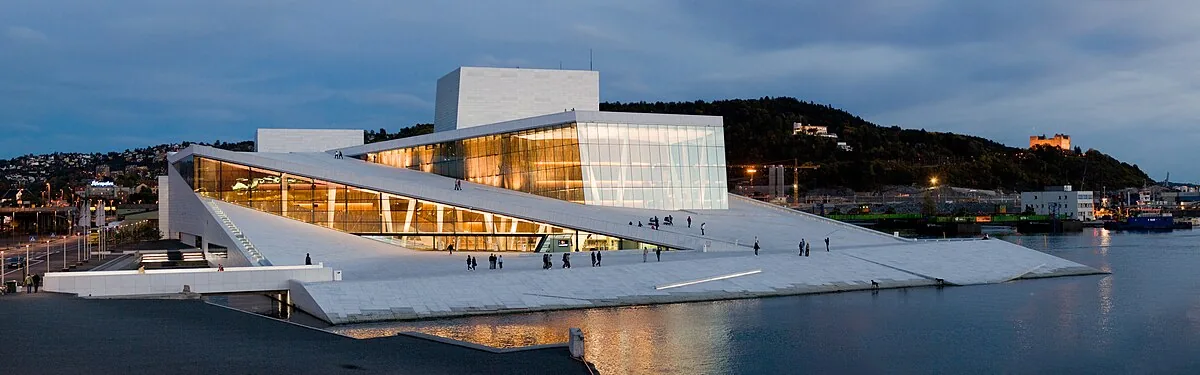
Opera House, Norway
The decision to build a new
The decision to build a new opera house in the derelict shipyards of Bjørvika was the spark that ignited the largest urban redevelopment project in Norwegian history. Completed in 2008, it was intended to be more than a venue; it was a 'carpet' that the public could occupy. The construction involved complex engineering to ensure the massive weight of the building remained stable on the seabed. It won the World Architecture Festival award in its opening year, proving that Norway could be a global leader in contemporary design. More importantly, it successfully transformed a part of the city people used to avoid into a place where they now gather for Sunday strolls and summer concerts.
Walking up the inclined roof,
The slight grip of the textured marble under your shoes. The place is fresh and breezy, carrying a trace of salt and the sound of gulls. The element that hits is how the white stone reflects the sun with an intensity that can be blinding on a clear day. The transition from the hard, bright exterior to the soft, hushed interior, where the walls are wrapped in wave-like strips of wood. First, the light installation 'She Lies', a floating sculpture of glass and stainless steel, drifting in the water just off the roof. Audible here inside is a muffled blend of soft footsteps and the distant, melodic echoes of a rehearsal. From the highest point of the roof, you have a panoramic view of the 'Barcode' skyline and the green hills that ring the city, feeling as though you are standing on a piece of the Arctic that drifted into the harbor. The Opera House is located immediately adjacent to Oslo Central Station (Oslo S), making it perhaps the easiest landmark in the city to find. It is at the heart of the harbor promenade. If you are arriving from the airport, the Flytoget train drops you within a five-minute walk of the building's entrance. It is also a major hub for the city's bus and tram networks.
The Experience
The sensation of walking on the roof is one of strange freedom; there are no railings to obstruct the view, just the gradual slope of the stone. You register the subtle patterns carved into the marble, which help with grip and create a beautiful texture underfoot. A building breathe as the large glass windows of the foyer reveal the activity inside, people sipping wine or musicians moving through the halls. The 'Wave Wall,' a massive curved structure of oak that dominates the lobby and provides a warm counterpoint to the cold stone outside. The moment that stays with you is the transition from the bright, windy roof to the dark, intimate hush of the main auditorium, where the wood seems to glow from within.
Why It Matters
The Oslo Opera House is a landmark in the history of public architecture. It redefined what a national monument could be, prioritizing the pedestrian over the performer. It is a masterpiece of sustainable design and born from the Norwegian values of openness and equality. It has won numerous international awards and remains one of the most photographed buildings in Europe.
Why Visit
Visit the Opera House because it is one of the few world-class buildings where you are encouraged to climb the walls. It is a sensory delight of stone, wood, and glass that offers the best free view in Oslo. If you love opera or not, the building itself is a performance, a geometric dance between the land and the sea that you have to experience on foot.
Insider Tips
- 1
Join a guided tour of the workshops and backstages; seeing the massive sets and costumes being made is as impressive as the architecture itself.
- 2
Wear sunglasses even on overcast days; the white marble roof creates a powerful glare that can be tough on the eyes.
- 3
The opera house roof is a prime spot for watching the sun set over the Oslofjord, but it can get quite windy, so bring a light jacket.
- 4
Check the 'free performances' schedule; the lobby often hosts lunchtime concerts and experimental dance pieces that don't require a ticket.
- 5
The nearby 'Barcode' district offers great dining options, but for a local experience, bring a coffee and a pastry to the opera roof.