“Two hundred naked residents live permanently in a quiet Oslo suburb, carved from granite and bronze by a man who traded his entire creative life for a plot of public grass.”
About Vigeland Park
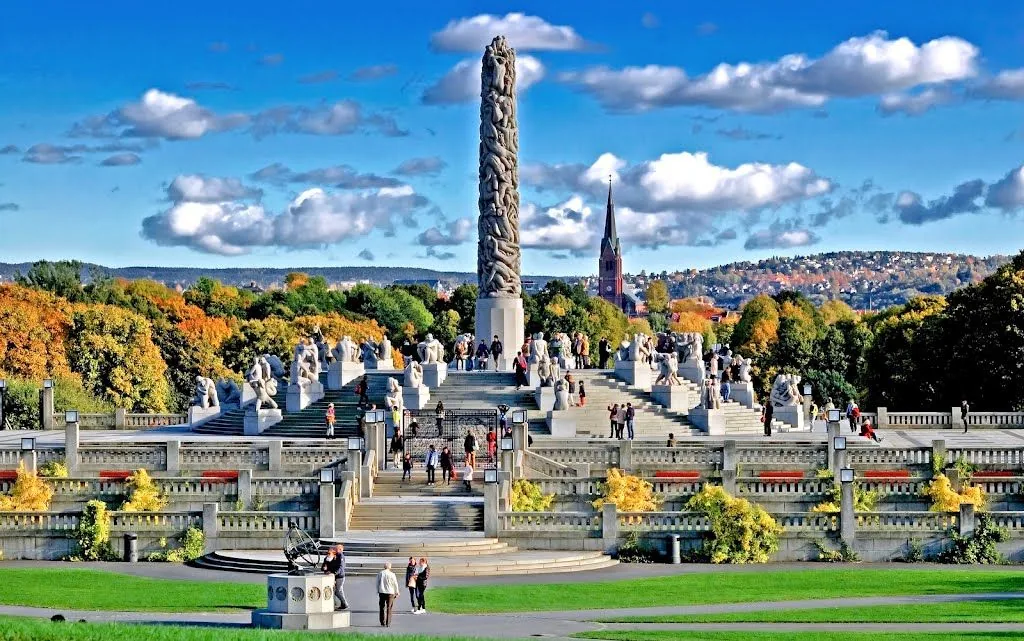
Gustav Vigeland struck a deal in 1921 that most artists would envy, securing a massive studio from the city in exchange for his future output. For the next twenty years, he worked with a singular focus, designing every detail of the 80-acre site. The centerpiece, the Monolith, was carved from a single block of stone over 14 years by three master masons following Vigeland's plaster model. The park survived the German occupation of Norway largely untouched, as the art was deemed culturally significant by all sides. Since its completion in the late 1940s, it has functioned as a free, open-air gallery that belongs to the citizens of Oslo.
About Vigeland Park
Two hundred figures of bronze and granite stand frozen in a theatrical display of the human condition within the gates of Frogner Park. This expansive sculpture garden is the lifelong obsession of Gustav Vigeland, a man who negotiated a singular deal with the city of Oslo: they would provide him with a studio and a livelihood, and in return, he would populate their park with his visions. The result is a surreal, unblinking look at the arc of life, from the womb to the grave.
Two hundred figures of bronze and granite stand frozen in a theatrical display of the human condition within the gates of Frogner Park.
The project began in the early 1900s when
The project began in the early 1900s when Vigeland proposed an elaborate fountain for a city square, but his ambition quickly outgrew the original site. By 1924, the city moved the project to Frogner, allowing the artist to design the entire landscape, including the bridges, gates, and the towering Monolith that is the park's centerpiece. Vigeland spent decades modeling every figure in clay, while a team of stone carvers and bronze founders translated his feverish output into permanent materials. He died in 1943, just before the installation was fully completed, leaving behind a legacy that remains one of the most visited sites in Scandinavia. Unlike many European monuments, these statues do not celebrate kings or generals; they celebrate the mundane and profound struggles of everyday people.
Inside
Walking across the granite bridge, The weight of bronze gazes following your progress. The space often smells of freshly cut grass and the slightly metallic tang of the fountain's spray. First, the famous Sinnataggen, or 'Angry Boy,' whose hand has been rubbed gold by thousands of visitors seeking luck or connection. The scale changes approaching the Monolith, a 14-meter pillar where 121 human figures struggle toward the sky in a dense, writhing mass. There is a strange sense of intimacy while standing among these silent giants, as if you have walked into a private thought. The light in late autumn turns the bronze a deep, chocolate brown, while the granite figures take on a ghostly pallor against the skeletal trees. Families picnic at the feet of wrestling titans, and joggers sprint past scenes of maternal tenderness, blending the monumental with the ordinary.
Access is straightforward via
Access is straightforward via the Oslo tram system; Line 12 stops directly at Vigelandsparken. It sits in the affluent Frogner district, making it a pleasant walk from many central hotels. The gates are open 24 hours a day, allowing for a completely different atmospheric experience during the quiet, moonlit hours when the statues seem to reclaim the park as their own.
Access is straightforward via the Oslo tram system; Line 12 stops directly at Vigelandsparken.
The Experience
The sound of water from the Fountain, supported by six bronze giants, creates a constant white noise that masks the city traffic. The varied textures of the stone, from the smooth, polished skin of the infants to the rough-hewn bases of the larger groups. A sudden surge of empathy looking at the 'Wheel of Life' sculpture, which depicts a circle of humans holding onto one another in a loop of eternity. The light at sunset often catches the Monolith, making the tangled bodies appear to move as the shadows shift. It is a place that invites you to linger, not just to look at art, but to see your own family and fears reflected in metal and rock.
Why It Matters
Vigeland Park is the world's largest sculpture park created by a single artist. Culturally, it represents a departure from the heroic monuments of the 19th century, focusing instead on universal human emotions that transcend nationality or era. It is a foundation of Norwegian identity, emphasizing public access to beauty and the raw honesty of the human form.
Why Visit
Check out this park to see what happens when an artist is given total freedom and a limitless canvas. It is far more than a collection of statues; it is a psychological map of life. You will find scenes here that are uncomfortable, beautiful, and hilarious, often all at once, in a setting that is completely free of the stuffiness of an indoor museum.
✦ Insider Tips
- 1
Enter through the main gate on Kirkeveien but make sure to walk all the way to the far end to see the Wheel of Life, which many tourists miss.
- 2
The Vigeland Museum, located just south of the park in the artist's former studio, houses the original plaster casts and offers a fascinating look at the logistical nightmare of carving the Monolith.
- 3
Go during a light snowfall in winter; the white powder clinging to the bronze figures adds a dramatic, haunting layer to their expressions.
- 4
Avoid the bridge during the midday tour bus rush; the statues feel much more powerful when you aren't jostling for space.
- 5
Check out the sundial between the fountain and the Monolith, it is an intricate work of art in its own right.