A 15th-century king with a foot in two worlds ordered Eastern Orthodox painters to decorate his Roman Catholic chapel, creating a shifting mix of color that survived centuries of burial under white lime.
About Lublin Castle and Chapel of the Holy Trinity
The origins trace to a 12th-century wooden hill-fort, gradually evolving into a royal masonry castle under Casimir the Great. Its most famous hour came in 1569 when European diplomats gathered here to sign the Union of Lublin, forging a multi-ethnic empire. The 19th century brought a dark shift, as the Russian Empire rebuilt the structure into a prison, a role it tragically maintained under Nazi and Soviet occupations. It was only in the mid-1950s that the castle was converted into a museum, allowing the restoration of the Chapel of the Holy Trinity to finally reveal the medieval frescoes that had been hidden since the 1800s.
Overview
High above the active markets of Lublin, a neo-Gothic fortress of creamy stone dominates the horizon, yet its most profound secret is hidden within a modest medieval tower. While the castle's exterior suggests a 19th-century military stronghold, the Chapel of the Holy Trinity tucked inside is a time capsule of an era when East and West did more than just collide; they harmonized. Inside these thick masonry walls, Byzantine-Russian frescoes wrap around Gothic rib vaulting in a display of artistic fusion that shouldn't exist. This site was a royal residence and a grim prison, but today it is the aesthetic soul of Lublin, a city that has always been the gateway between the Latin world and the Orthodox East.
“High above the active markets of Lublin, a neo-Gothic fortress of creamy stone dominates the horizon, yet its most profound secret is hidden within a modest medieval tower.”
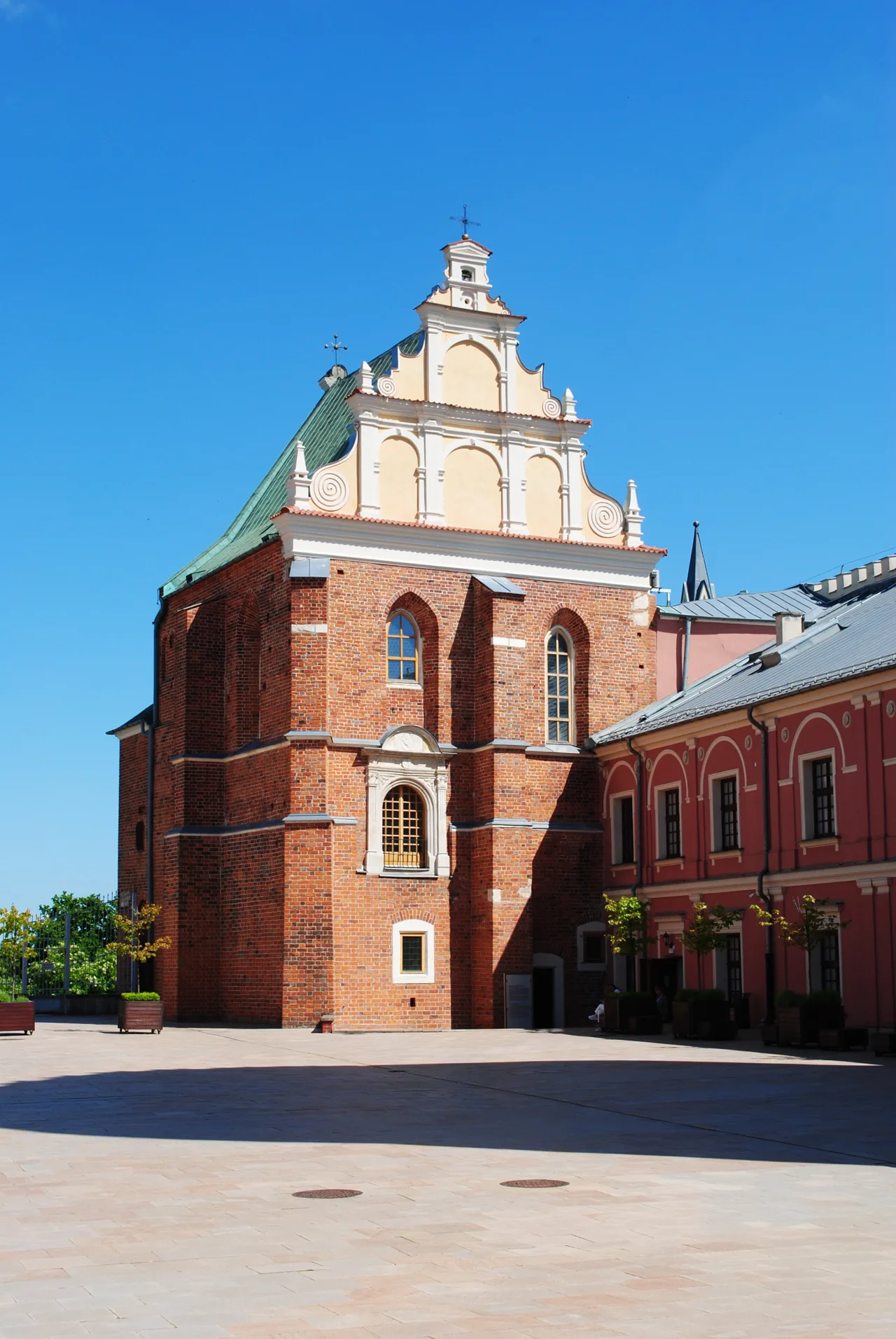
Lublin Castle and Chapel of the Holy Trinity, Poland
King Władysław Jagiełło
King Władysław Jagiełło, the Lithuanian grand duke who became the King of Poland, commissioned the chapel's interior in the early 15th century. He was a man of two worlds, and his choice to hire Russian masters to decorate a Roman Catholic chapel was a radical political and spiritual statement. Completed in 1418, the paintings survived centuries of neglect and even a period where they were covered in thick white lime by the Russian imperial authorities who used the castle as a jail. For decades, these masterpieces were forgotten under layers of plaster, only to be meticulously uncovered by restorers in the 20th century. The castle itself saw the signing of the Union of Lublin in 1569, creating the Polish-Lithuanian Commonwealth, one of the largest and most diverse states in European history.
Walking through the heavy wooden doors of the chapel involves an immediate shift in sensory reality. Here, the air is cool and smells faintly of damp stone and ancient pigment. Every square inch of the interior is alive with deep blues, ochres, and terracottas depicting saints with elongated faces and wide, watchful eyes. The contrast between the sharp, soaring lines of the Polish Gothic architecture and the soft, spiritual curves of the Eastern paintings creates a productive tension. What grabs you is the graffiti scratched into the lower pillars by 16th-century noblemen, a human touch that grounds the divine imagery. The climb up the castle’s Donjon afterwards provides a physical release, offering a panoramic view of the Old Town’s red-tiled roofs and the sprawling modern city beyond.
Reaching the castle requires a scenic walk through
Reaching the castle requires a scenic walk through the Grodzka Gate, the historical passage that once separated the Christian and Jewish quarters of the city. People generally arrive by train at Lublin Główny and take a short bus ride or a twenty-minute walk toward the Old Town. The climb up the castle hill is paved and gentle, leading you directly into the main courtyard where the museum and chapel entrances are situated.
“Reaching the castle requires a scenic walk through the Grodzka Gate, the historical passage that once separated the Christian and Jewish quarters of the city.”
The Experience
The silence inside the chapel is heavy, broken only by the soft creak of floorboards as visitors look upward in a shared state of neck-straining awe. It becomes clear how the faces of the saints seem to change expression as the light shifts through the narrow Gothic windows. Outside, the sprawling cobblestone ramparts provide a stark contrast, where the wind whips across the hill and the distant hum of Lublin’s modern traffic reminds you of the present. The piece that sticks is seeing the King's own portrait among the saints, a rare 600-year-old glimpse of the man who merged two cultures.
Why It Matters
Lublin Castle is the physical manifestation of the 'Union of Lublin' spirit, representing a unique moment of religious and cultural tolerance in Europe. The frescoes are considered the most important medieval wall paintings in Poland, blending Byzantine theological depth with Western architectural form. It is a trace of that the borders between East and West have always been porous and productive.
Why Visit
This castle because you will see something that exists nowhere else: a perfect marriage of Eastern and Western Christianity. While Krakow and Warsaw offer grandeur, Lublin offers this specific, intimate enigma. It is the only place where you can stand in a Gothic church and feel like you’ve been transported to the heart of old Byzantium.
Insider Tips
- 1
Book your chapel entrance time online several days in advance, as they strictly limit the number of people allowed inside to preserve the frescoes.
- 2
The Donjon tower requires a separate ticket, but the view of the sunset over the Old Town is the best in the city.
- 3
Visit the castle pharmacy museum on the ground floor for a fascinating look at 19th-century medical curiosities.
- 4
The walk from the Old Town via the bridge offers the most dramatic angle for photographers during the 'blue hour'.