“Anuradhapura tends the Sri Maha Bodhi, a sacred fig grown from a cutting of the Buddha's own enlightenment tree and planted in the 3rd century BCE - the oldest planted tree with a recorded history.”
About Anuradhapura
Founded around the fourth century BCE, Anuradhapura became the capital of the first great Sinhalese kingdom and the cradle of Sri Lankan Buddhism after the faith arrived in the third century BCE, the moment marked by the planting of the Sri Maha Bodhi. Over a millennium its kings raised enormous stupas and built a sophisticated network of reservoirs. The city was repeatedly attacked and finally abandoned as the capital after the eleventh century. A UNESCO World Heritage Site, it remains both a vast archaeological treasure and a living centre of pilgrimage.
Anuradhapura in Sri Lanka
Anuradhapura was the first capital of Sri Lanka and the heart of Sinhalese civilisation for over a thousand years, from around the fourth century BCE. A sprawling sacred city of monasteries, palaces, reservoirs and colossal brick dagobas, it is the oldest and largest of the island's ancient capitals, and remains a major place of Buddhist pilgrimage.
Anuradhapura was the first capital of Sri Lanka and the heart of Sinhalese civilisation for over a thousand years, from around the fourth century BCE.
The Oldest Planted Tree
Its most sacred object is the Sri Maha Bodhi, a sacred fig grown from a cutting of the very tree under which the Buddha attained enlightenment in India, planted here in the third century BCE. It is said to be the oldest living human-planted tree with a recorded history, tended continuously for more than two thousand years.
Mountains of Brick
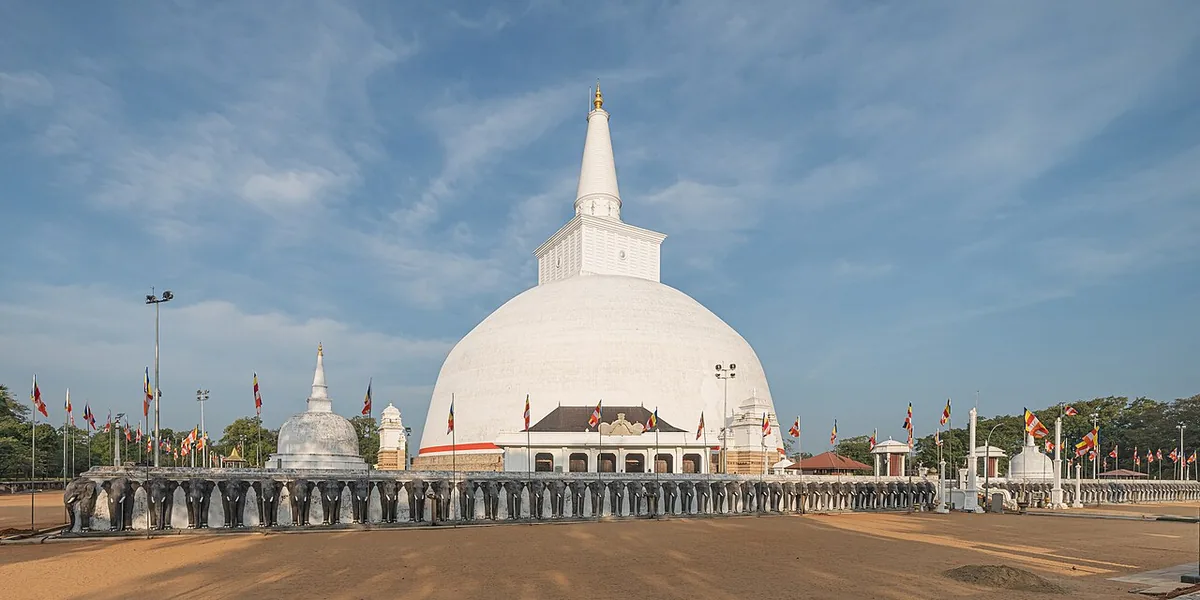
The city's great stupas, including the Ruwanwelisaya and the once-towering Jetavanaramaya, were among the largest brick structures in the ancient world, rivalling the pyramids of Egypt in scale.
A Vast Sacred Landscape
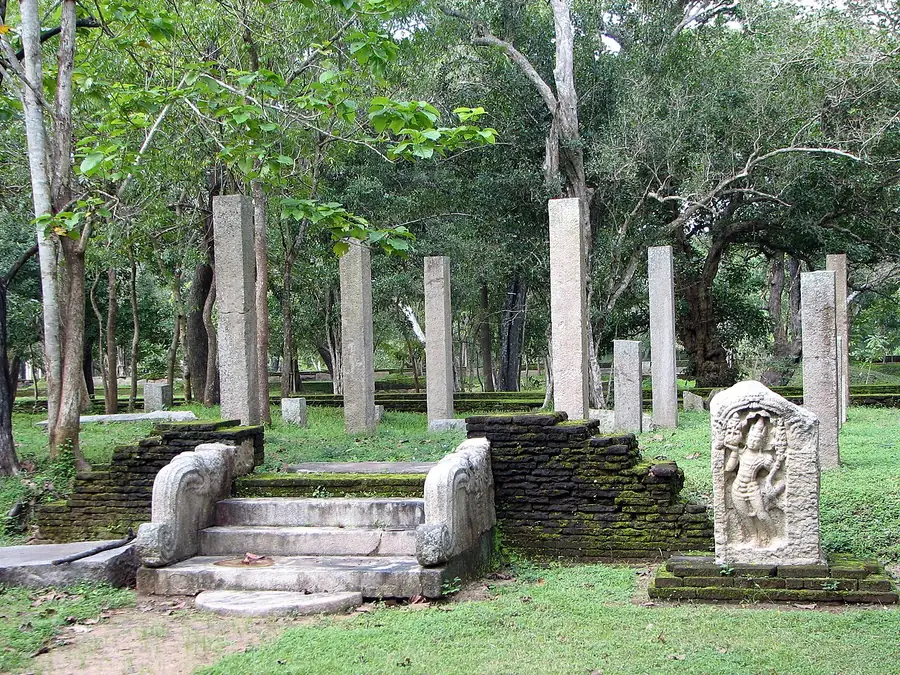
Spread over a huge area among ancient reservoirs, Anuradhapura is best explored by bicycle or vehicle, moving between dagobas, monastic ruins and bathing pools.
The Experience
The scale is what strikes you: brick dagobas rising like hills above the trees, the white dome of the Ruwanwelisaya ringed by worshippers, and the ancient bo tree on its terrace, draped in prayer flags and surrounded by quiet devotion. Cycling between the monuments, across the bunds of ancient tanks, gives a sense of the city's former extent. Because it is a working pilgrimage site as well as ruins, white-clad devotees and the ruins share the landscape, lending it a living atmosphere the older European ruins lack.
Why It Matters
Anuradhapura is the oldest and largest of Sri Lanka's ancient capitals and a UNESCO World Heritage Site, the cradle of Sinhalese Buddhist civilisation, home to the sacred Sri Maha Bodhi and some of the largest brick monuments of the ancient world.
Why Visit
It is the spiritual and historical foundation of Sri Lanka, combining colossal ancient monuments with living pilgrimage. Hire a bicycle or driver for the spread-out site, dress respectfully for the sacred bo tree and stupas, and start early to beat the heat.
✦ Insider Tips
- 1
Cover the large site by bicycle or hired vehicle; the monuments are far apart.
- 2
Dress in modest clothing, ideally white, for the Sri Maha Bodhi and the stupas.
- 3
Remove shoes and hats on the sacred terraces; the ground can be very hot, so bring socks.
- 4
Start early to avoid the heat on the open, shadeless archaeological landscape.
- 5
Expect large, devout crowds on full-moon poya days, an atmospheric but busy time.