“This fort guards one of the deepest natural harbours on Earth, so prized that every colonial power in the region fought to control it.”
About Fort Frederick
Fort Frederick was begun by the Portuguese in 1623 on the strategic peninsula above Trincomalee's great harbour, reportedly using masonry from the Koneswaram temple they had demolished. The Dutch captured it, and the British later took control, valuing the harbour as a key naval base, including during the Second World War. The fort and its rebuilt clifftop temple survive within the still-active military grounds.
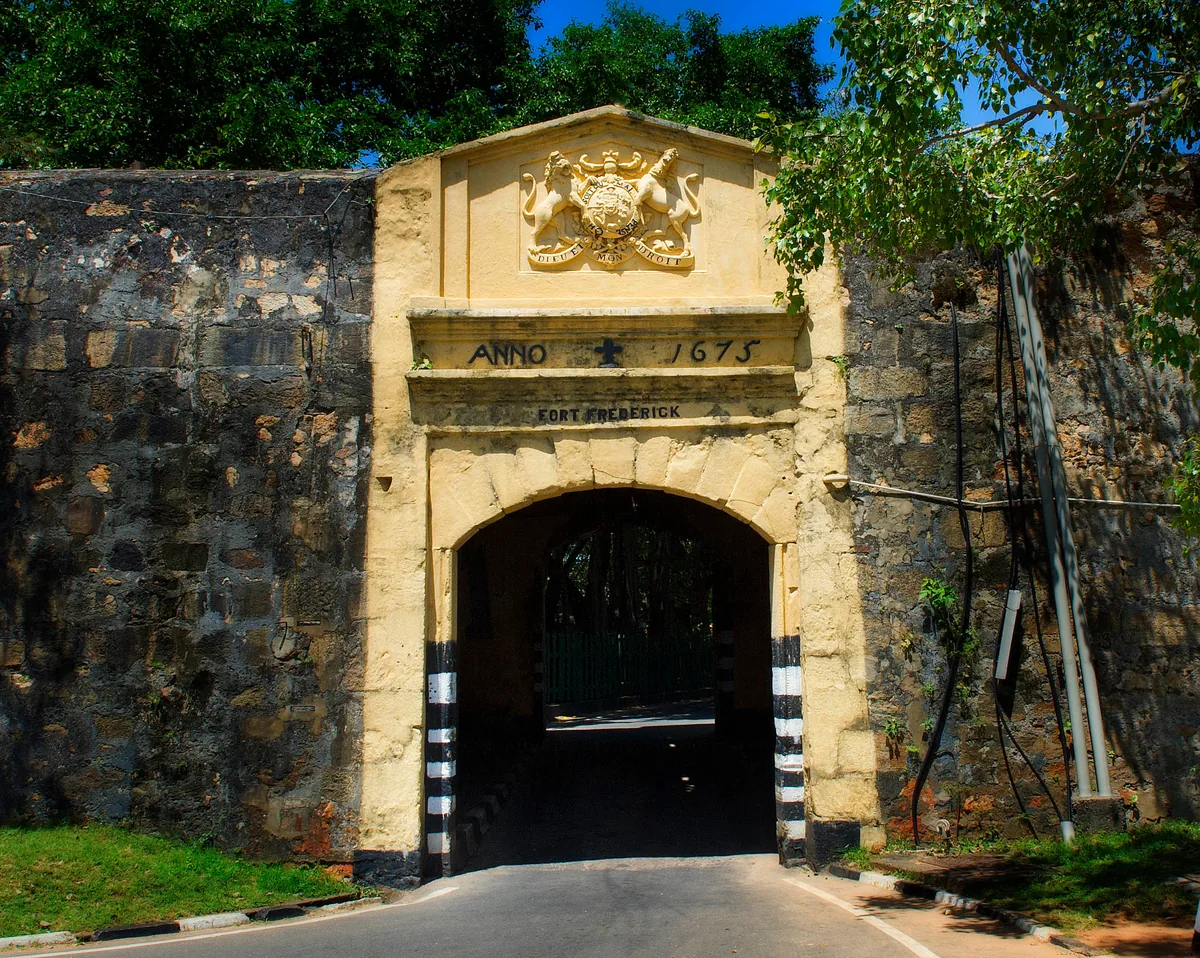
Fort Frederick guards the entrance to Trincomalee on Sri Lanka's east coast, a colonial fortress on a peninsula above one of the largest and deepest natural harbours in the world. Built by the Portuguese and later held by the Dutch and British, its leafy grounds, roamed by tame spotted deer, lead out to the dramatic clifftop Koneswaram Temple.
Fort Frederick guards the entrance to Trincomalee on Sri Lanka's east coast, a colonial fortress on a peninsula above one of the largest and deepest natural harbours in the world.
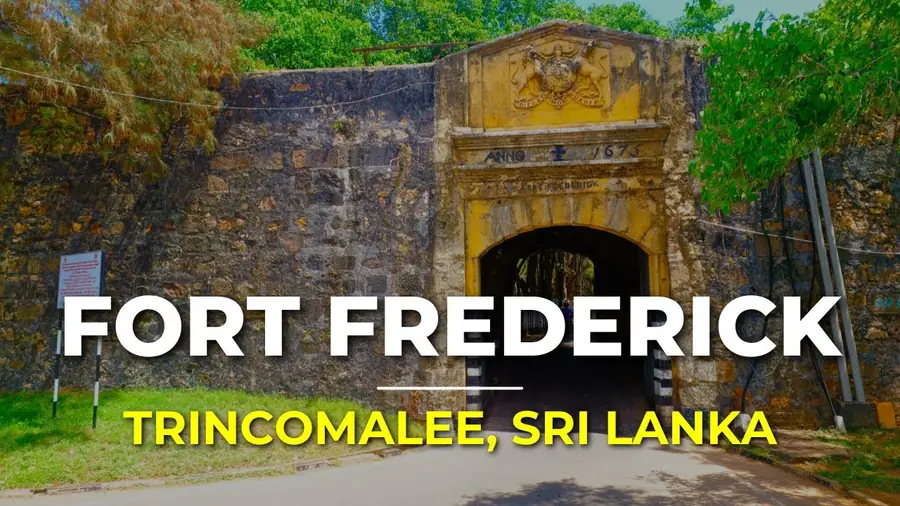
Guarding the World's Finest Harbour
The fort was built to control Trincomalee's magnificent natural harbour, so deep and sheltered that it has been prized by every naval power in the region's history. The Portuguese constructed the first fort here in 1623, partly using stones from the Hindu temple they had destroyed on the cliff, and the Dutch and British later took and strengthened it. The harbour's strategic value made Trincomalee a coveted prize through the colonial and wartime eras.
The Experience
You pass through the old fort gateway, dated 1675, into shaded grounds where wild spotted deer graze beneath banyan trees, then follow the road up to the clifftop and the vividly painted Koneswaram Temple high above the sea. Views over the vast harbour and the ocean unfold from the heights. The mix of colonial fortifications, wandering deer and a dramatic clifftop shrine is unique on the island.
Why It Matters
Fort Frederick embodies the strategic importance of Trincomalee's world-class harbour, fought over by Portuguese, Dutch, British and others for centuries. Together with the Koneswaram Temple it encloses, it ties the colonial and military history of the east coast to one of Sri Lanka's most sacred and spectacular sites.
Fort Frederick embodies the strategic importance of Trincomalee's world-class harbour, fought over by Portuguese, Dutch, British and others for centuries.
Why Visit
A historic fort above one of the world's deepest natural harbours, with tame wild deer in its grounds and the dramatic Koneswaram Temple on the cliff.
✦ Insider Tips
- 1
Look for the wild spotted deer that roam the fort grounds.
- 2
Walk up to the clifftop Koneswaram Temple within the fort.
- 3
Enjoy the views over Trincomalee's vast natural harbour.