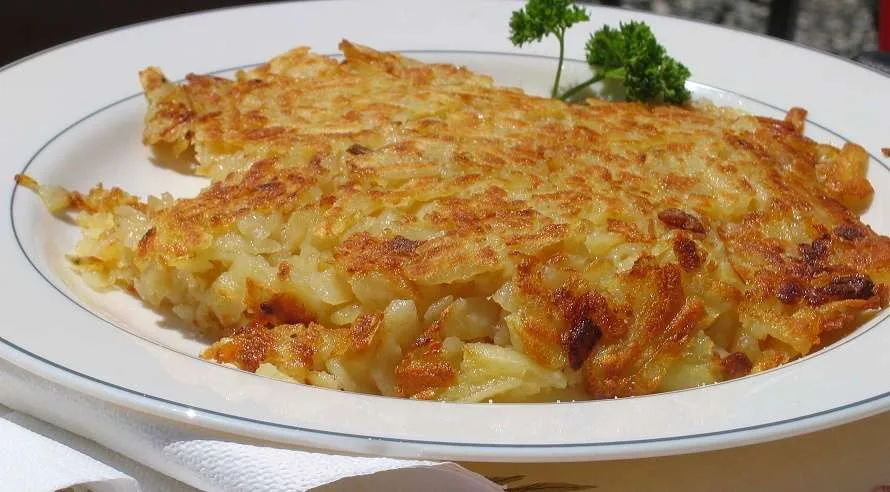
"Switzerland's most universal dish, grated potato pressed into a pan and cooked until both sides form a shattering mahogany crust, gave its name to the country's linguistic and cultural divide."
About Rösti
Switzerland's great potato cake: coarsely grated raw or parboiled potatoes, salted and pressed into a cast-iron pan with butter until the exterior forms a mahogany crust while the interior stays soft and steaming; the Rösti Graben (Rösti ditch) is the linguistic and cultural border between German and French Switzerland, named after the dish.
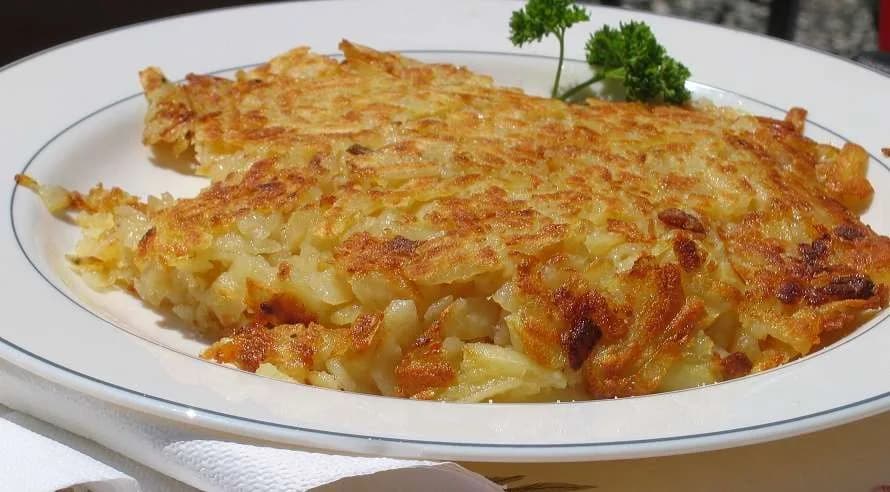
Rösti, a staple of Switzerland's cuisine
The Potato Cake
Switzerland's great potato cake is the product of a specific technique: coarsely grated raw or parboiled potato, salted and rested so the starch releases, then pressed into a cast-iron pan with clarified butter and cooked without moving until the base forms a mahogany crust. A flip builds a second crust, and the rosti arrives with a surface that shatters under the first press of a knife. Whether to start with raw or pre-cooked potato is its own long-running argument.
The Rosti Graben
The Rosti Graben, or Rosti Ditch, is the informal name for the border between German-speaking and French-speaking Switzerland. The phrase implies a cultural divide as much as a culinary one, the German-speaking Swiss eating rosti as a daily staple while the French-speaking Swiss treat it as comfort food. The humble potato cake that inspired the metaphor has outlasted much of the politics it described.
One Ingredient, Done Well
Rosti is Swiss cooking at its most direct: one ingredient, one technique, one result. The quality comes entirely from the potato, a floury variety such as Agria being the Swiss standard, and from the patience not to disturb it in the pan. Traditional Bernese versions use lard, and some cooks fold in onion, bacon or cheese, but the plain crust is the benchmark.
How It Is Served
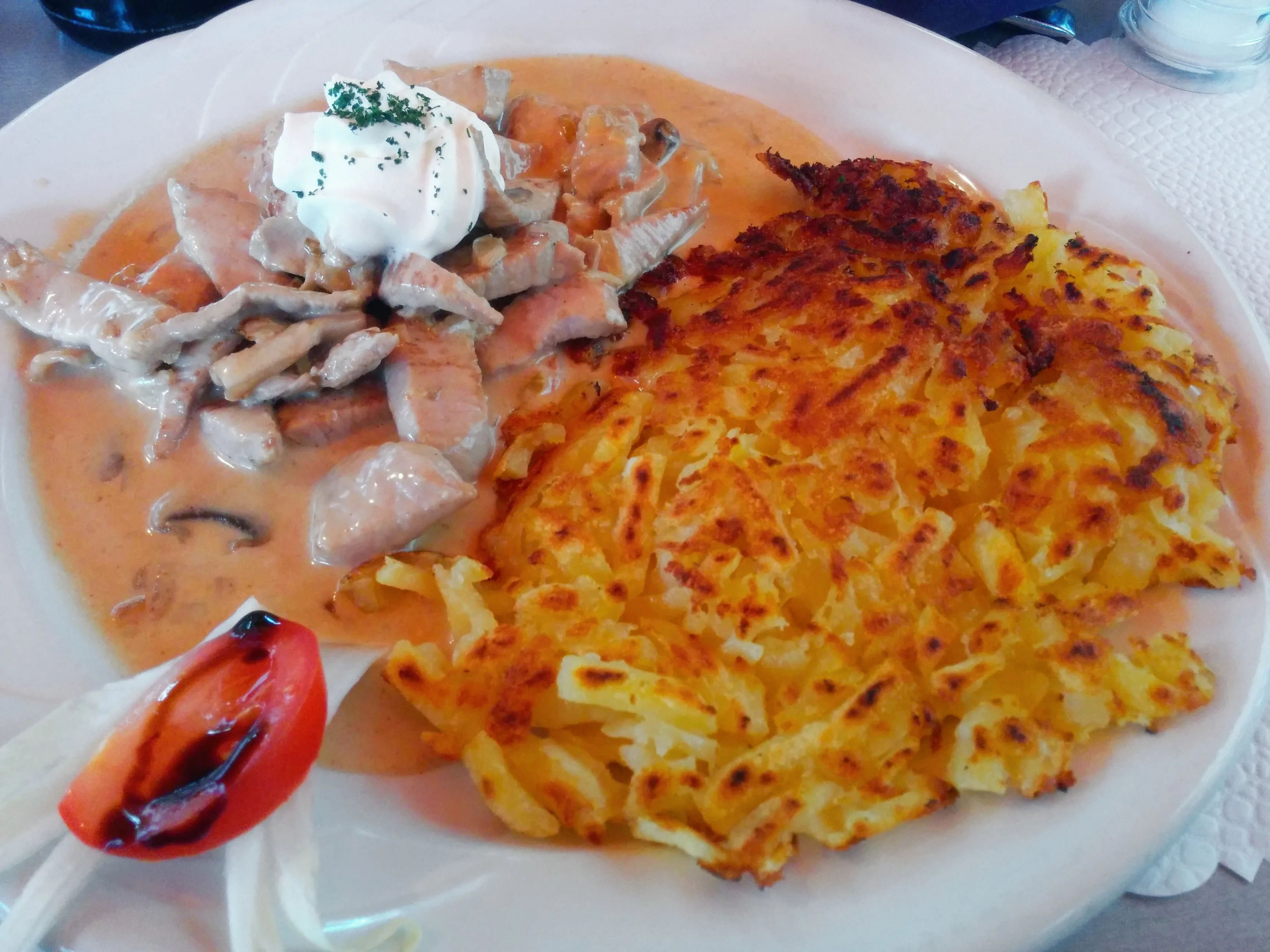
Once a farmer's breakfast, rosti is now eaten at any hour, as a side to sausages and stews or as a meal in itself topped with a fried egg or melted cheese. It pairs most famously with Zurich's creamed veal, the crisp crust dragged through the sauce. Served sizzling from the pan or a wooden board, it is best eaten before the crust has any chance to soften.
What to Expect
The Rösti arrives in a cast-iron pan or on a wood board, still sizzling at the edges. The surface gives with a crack when pressed with a knife. The crust is about half a centimetre thick, the interior soft and yielding. Butter on top melts into every crack. Discipline is required to resist eating it all before the main course arrives.
Why Try It
Rösti is Swiss cooking at its most direct: one ingredient, one technique, one result. The quality comes entirely from the potato (a floury variety like Agria is the Swiss standard) and the patience to not move it in the pan.
✦ Photo Gallery
Insider Tips
Cook it in clarified butter (or lard, which is the traditional Berner version). Olive oil is wrong.
The raw-grated version has a more potato-forward flavour. The pre-cooked version is more forgiving for home cooks.
Eat at Haus Hiltl in Zurich (vegetarian) or any Beizli in Bern, both serve reliable versions.