Shellfish, smoked pork and potato dumplings steamed underground over heated rocks, Chiloé's ancient earth oven tradition is unchanged after thousands of years.
About Curanto
The world's oldest surviving pit-oven feast: shellfish (clams, mussels, barnacles), smoked pork, potato dumplings (milcao) and vegetables layered over white-hot stones in a ground pit, covered with giant nalca leaves and sealed with wet sacking; steamed underground for an hour; a ritual of the Chiloé archipelago for thousands of years.
The Earth Oven
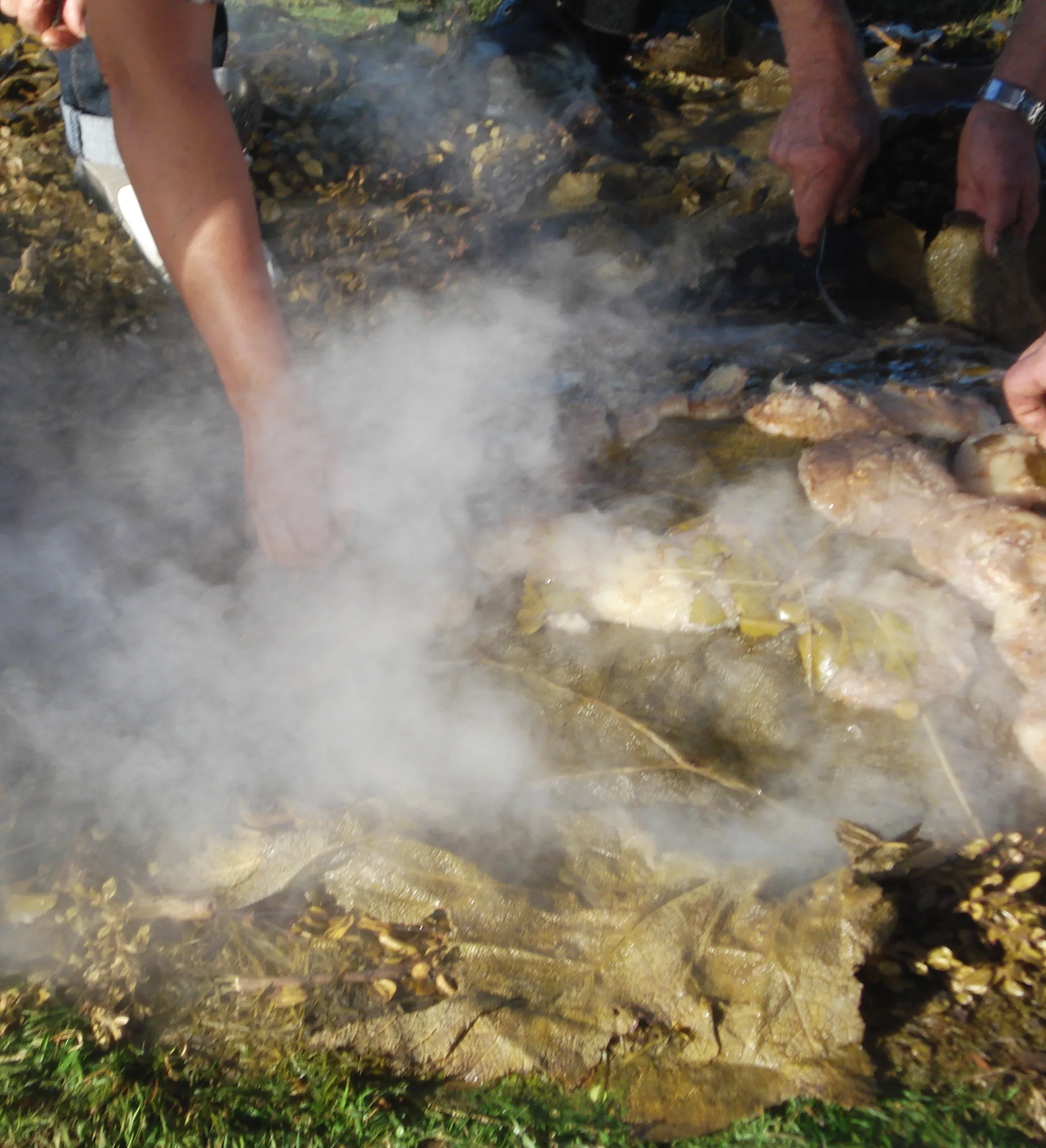
The curanto is one of the world's oldest surviving cooking methods, kept alive for thousands of years on Chile's Chiloe archipelago. A pit is dug and lined with river stones heated in a fire for hours, and the food is layered on top. It is a communal feast cooked entirely by the trapped heat and steam of the buried oven.
“The curanto is one of the world's oldest surviving cooking methods, kept alive for thousands of years on Chile's Chiloe archipelago.”
The Layers
The building of the pit is deliberate. Shellfish go in first, clams, mussels, barnacles and razor clams, followed by smoked pork, sausage, vegetables and milcao, dense potato dumplings made from raw and cooked potato. Giant nalca leaves cover the lot, sealed with wet sacking to trap the steam. Each layer flavours the others as it cooks.
The Result
After three quarters of an hour or so the seal is broken in a rush of steam. The shellfish have opened, the milcao has steamed to a dense, slightly chewy consistency, and the pork has soaked up both the wood smoke and the briny shellfish steam. The broth that gathers at the bottom, the accumulated liquor of shellfish and vegetables, is ladled into cups and drunk on the side.
A Chiloe Tradition
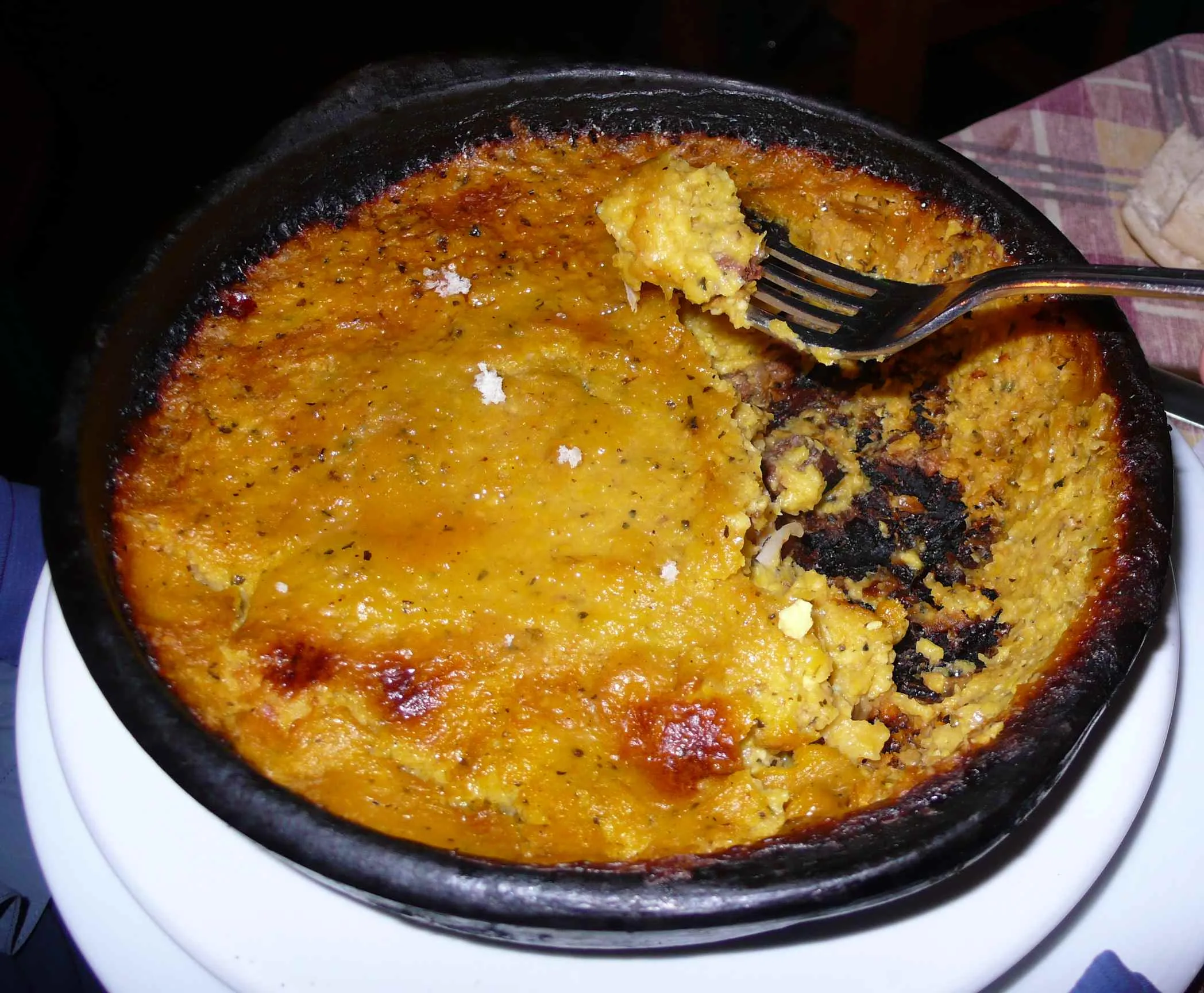
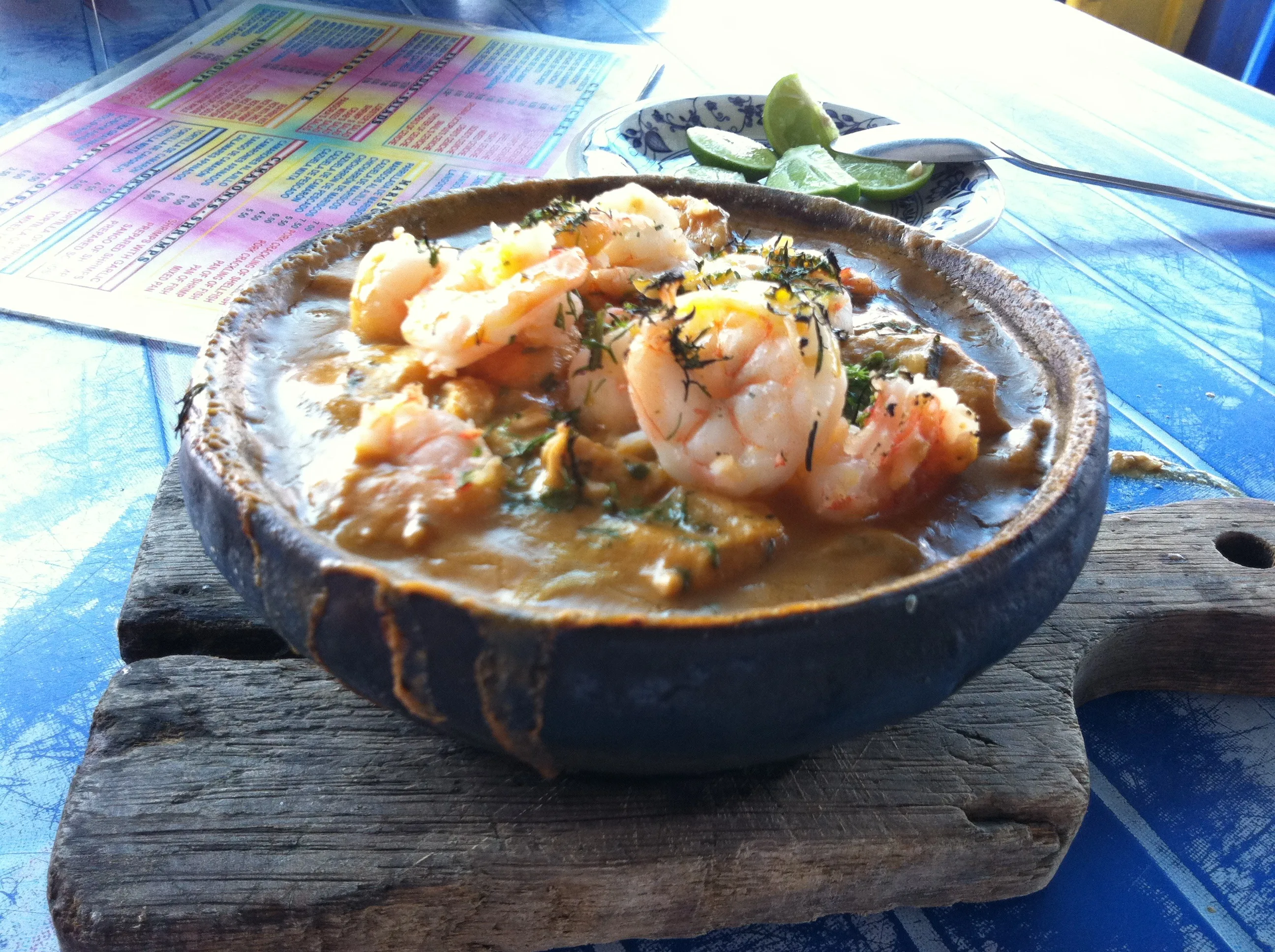
The curanto is the signature of Chiloe and its deep-rooted island culture, a method tied to a specific place and people. Restaurants in Puerto Montt and Castro reproduce it above ground in a large pot, the curanto en olla, which is quicker but not the same. Cooked in the earth, as it has been for millennia, it is a genuine link to the archipelago's past.
What to Expect
The nalca leaves are peeled back and the steam rises in a white cloud over the pit. The shellfish are still hot and open, the milcao dense and steaming, the pork tender. The broth at the bottom is ladled first. Everything tastes of the earth and the sea simultaneously, which is a combination that shouldn't work as well as it does.
Why Try It
Curanto is the most authentic way to eat Chiloé, a technique that predates European contact and remains unchanged because there is no better method for what it does. Experiencing it on the island, rather than a mainland reconstruction, is the complete version.
Insider Tips
- Visit Chiloé during summer (January-March) when curanto is prepared regularly for festivals and markets.
- The nalca leaves (similar to rhubarb leaves) must be fresh. They provide both sealing and flavour.
- Drink the broth from the bottom of the pit. It's the most flavourful element.