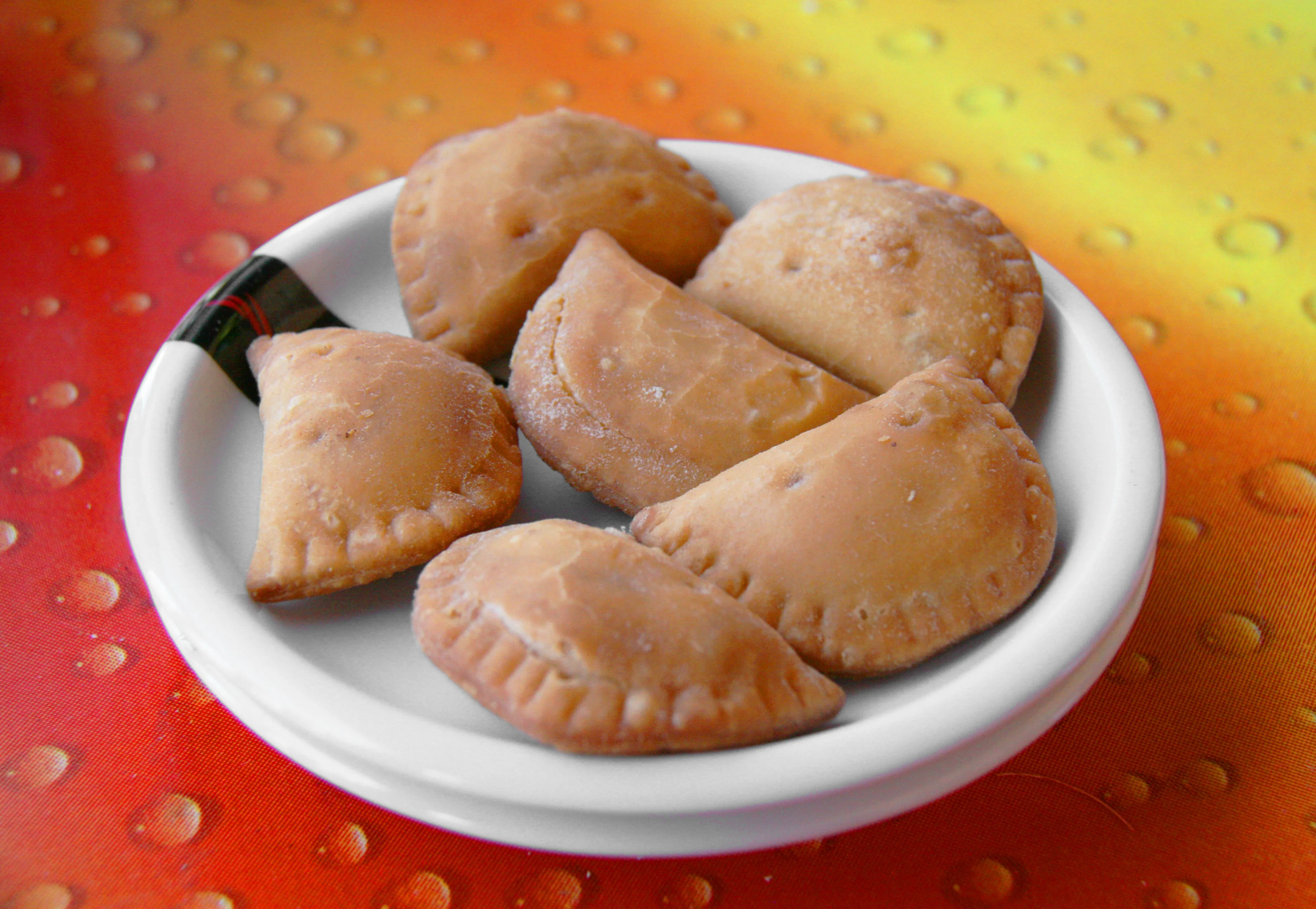
"Chile's baked pastry pocket carries a filling of beef, egg, olive and raisin, the raisin's sweetness against the savoury beef is the defining Chilean flavour."
About Empanadas de Pino
Chile's most celebrated baked good: a hand-sized pastry pocket packed with pino filling: ground beef, onion, hard-boiled egg, black olive and raisin seasoned with cumin and paprika; baked until the crust turns a deep golden; the raisin's sweetness against the savoury beef is the essential Chilean flavour.
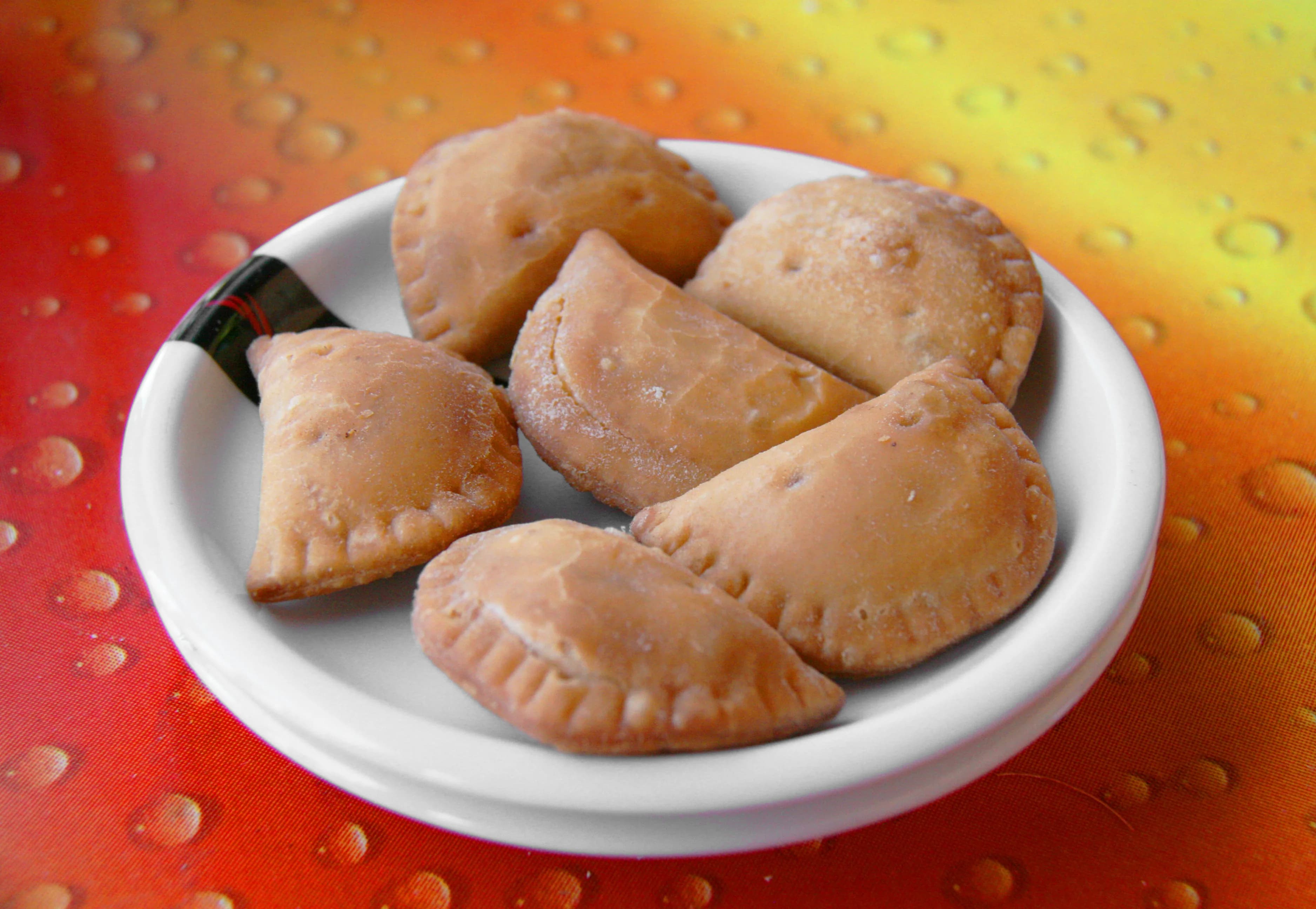
Empanadas de Pino, a staple of Chile's cuisine
Chile's Pastry
Chile's most celebrated baked good is a hand-sized pocket of short-crust pastry filled with pino: ground or knife-cut beef, onion, hard-boiled egg, black olive and raisin, seasoned with cumin and paprika. The raisin is the element that surprises, its sweetness set against the savoury beef, and it is what makes the Chilean empanada distinct from its Argentine cousins. The empanada de pino is the benchmark version.
The Baking
The traditional Chilean empanada is baked rather than fried, the crust taken to a deep, even gold and crimped along its curved edge. Done well, it gives off a little juicy steam when cut, with the egg and olive visible in cross-section. Chileans eat them on national holidays, at family celebrations and on Sundays with red wine, and the baked, oven-firm style is the standard at home.
The Pino Filling
Pino is the soul of the dish, a slow-cooked mixture in which the onion all but dissolves into the beef and the spices, cumin above all, perfume the whole. The egg, olive and raisin are added whole so each appears as a distinct bite rather than blending in. Cooks make the filling a day ahead so the flavours settle, a small step that separates a good empanada from an ordinary one.
A Patriotic Food
The empanada de pino is the taste of Chilean national pride, central to the September 18 independence celebrations when it is sold alongside chicha and red wine. It turns up at every family Sunday and on the table of every Chilean abroad trying to explain the country. Few dishes are so closely bound to a sense of nation.
What to Expect
The empanada comes out of the oven firm and gold, the crust faintly dulled by the egg wash. Cutting it from the sealed end releases a curl of steam fragrant with cumin. The filling is dense and savoury, the olive briny, and then the raisin turns up in the second or third bite, its sweetness jarring for a moment before it settles into the dish.
Why Try It
The empanada de pino is the taste of Chilean patriotism. It appears at every September 18th celebration, at every family Sunday and at the table of every Chilean abroad who is trying to explain the country to someone who hasn't visited.
✦ Photo Gallery
Insider Tips
Eat them on 18 September (Chilean National Day) when street stalls sell them with chicha wine, the authentic context.
The raisin is intentional and correct. Don't pick it out.
Order them at a fuente de soda (Chilean diner) rather than a tourist restaurant for the most authentic version.