China's most ceremonial dish: a lacquered duck air-dried for 24 hours then roasted until the skin shatters. Carved tableside. Skin first, always.
About Peking Duck
China's most ceremonial dish: a specially bred duck air-dried for 24 hours to tighten the skin, then roasted in a fruit-wood oven until the lacquered mahogany skin shatters like glass; carved tableside and eaten in thin pancakes with hoisin sauce, spring onion and cucumber; a dish served to visiting heads of state at Quanjude since 1864.
The Method
Peking duck is China's most ceremonial dish. A specially raised duck is inflated to separate skin from flesh, coated in a sugar glaze and air-dried, then roasted, traditionally over fruit wood, until the lacquered skin turns mahogany and shatters like glass. The aim is crisp, almost glassy skin above tender, fragrant meat.
“The aim is crisp, almost glassy skin above tender, fragrant meat.”
The Carving
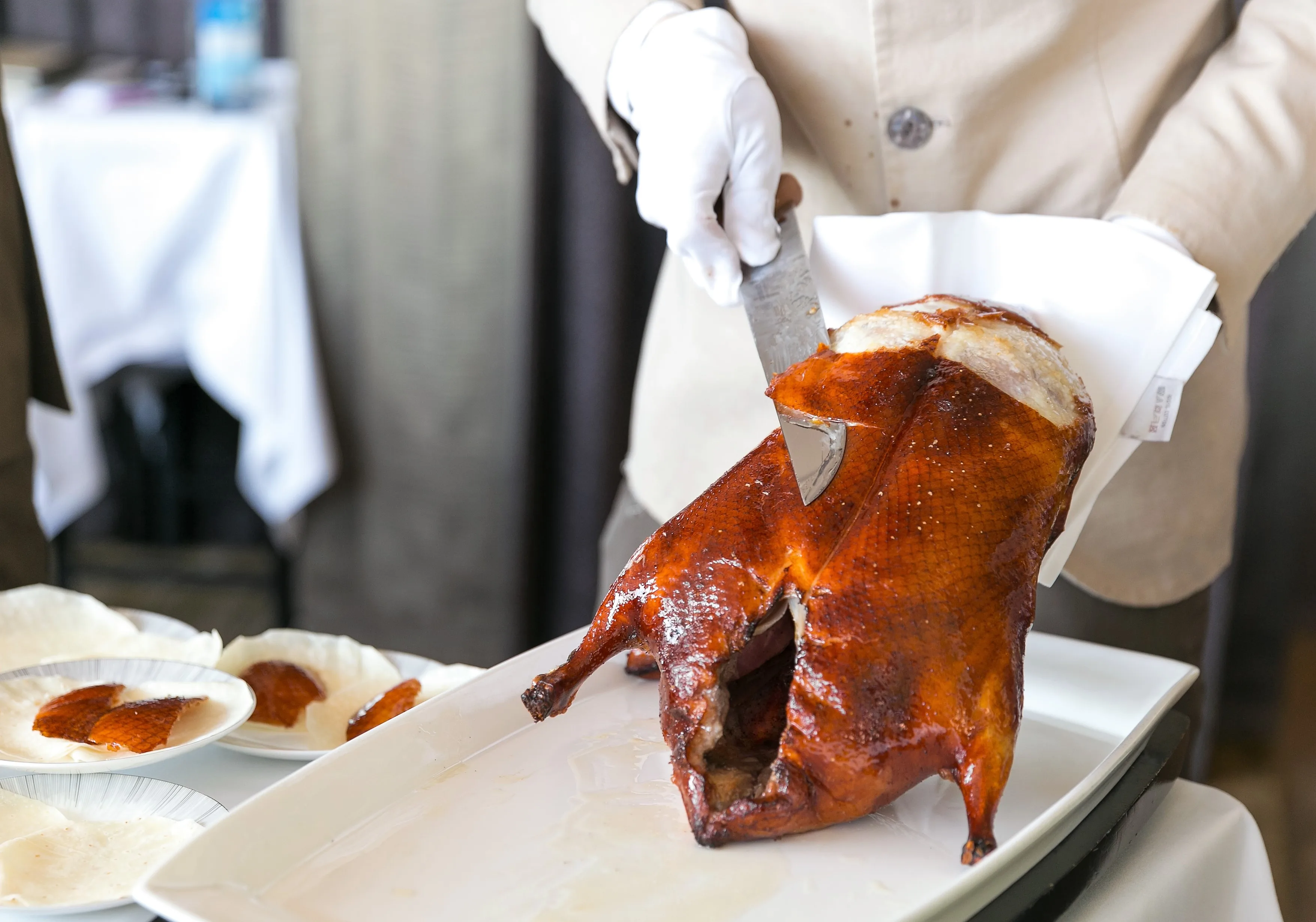
The duck is brought out whole and carved tableside, often into a precise number of slices, with the prized crisp skin separated from the meat. The skin is served first and on its own, sometimes dipped in fine sugar, so its texture is tasted before anything softens it. Speed matters, since the skin loses its crackle as it cools.
The Pancake Course
The meat and skin are wrapped in thin steamed pancakes with sweet bean or hoisin sauce, slivers of spring onion and cucumber. The bundle balances rich duck, sharp onion, cool cucumber and sweet sauce in a single bite. The carcass is often returned to the kitchen to be made into a soup, so little is wasted.
An Imperial Legacy
The dish traces to the imperial kitchens and to centuries-old Beijing restaurants that still roast duck by the older closed-oven and open-oven methods. The most famous houses have served it for generations and remain the reference for what cooks elsewhere attempt to reproduce. Eaten at its source, skin first, it is one of China's great set pieces.
What to Expect
The duck arrives at the table whole. A carver works quickly, separating the skin from the meat in one motion. Locals wrap a piece of skin in a pancake with hoisin and eat before it cools.
Why Try It
Peking duck at Quanjude (since 1864) or Da Dong in Beijing is the reference point for what the rest of the world is attempting to reproduce.
Insider Tips
- Quanjude Qianmen and Da Dong in Beijing are the two canonical addresses.
- Order the skin-only course first before the wrapped meat course. This is the traditional sequence.
- Book ahead; both restaurants require reservations.