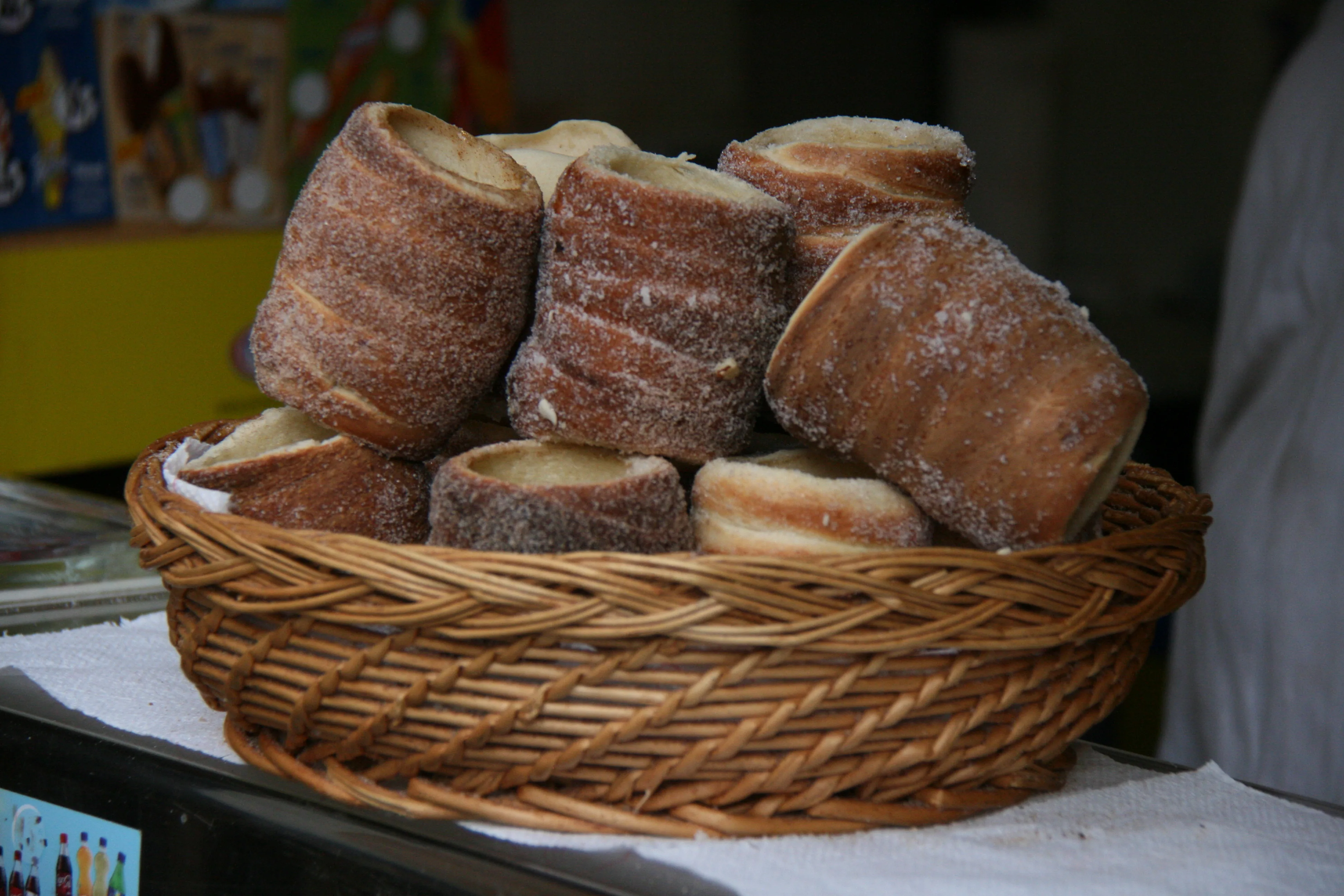
"Prague's spiral pastry, sugar-caramelised on a wooden spit over an open flame, smells better than almost anything in the city and tastes best when it's still too hot to hold."
About Trdelník
Czech street food at its most theatrical: a sweet yeast dough wound around a cylindrical spit, rolled in sugar and walnut, and slowly rotated over an open flame until the sugar caramelises into a crisp, fragrant crust; the spiral comes away from the spit as a hollow tube; Prague's Old Town Square is lined with the wood-fired rotisseries.
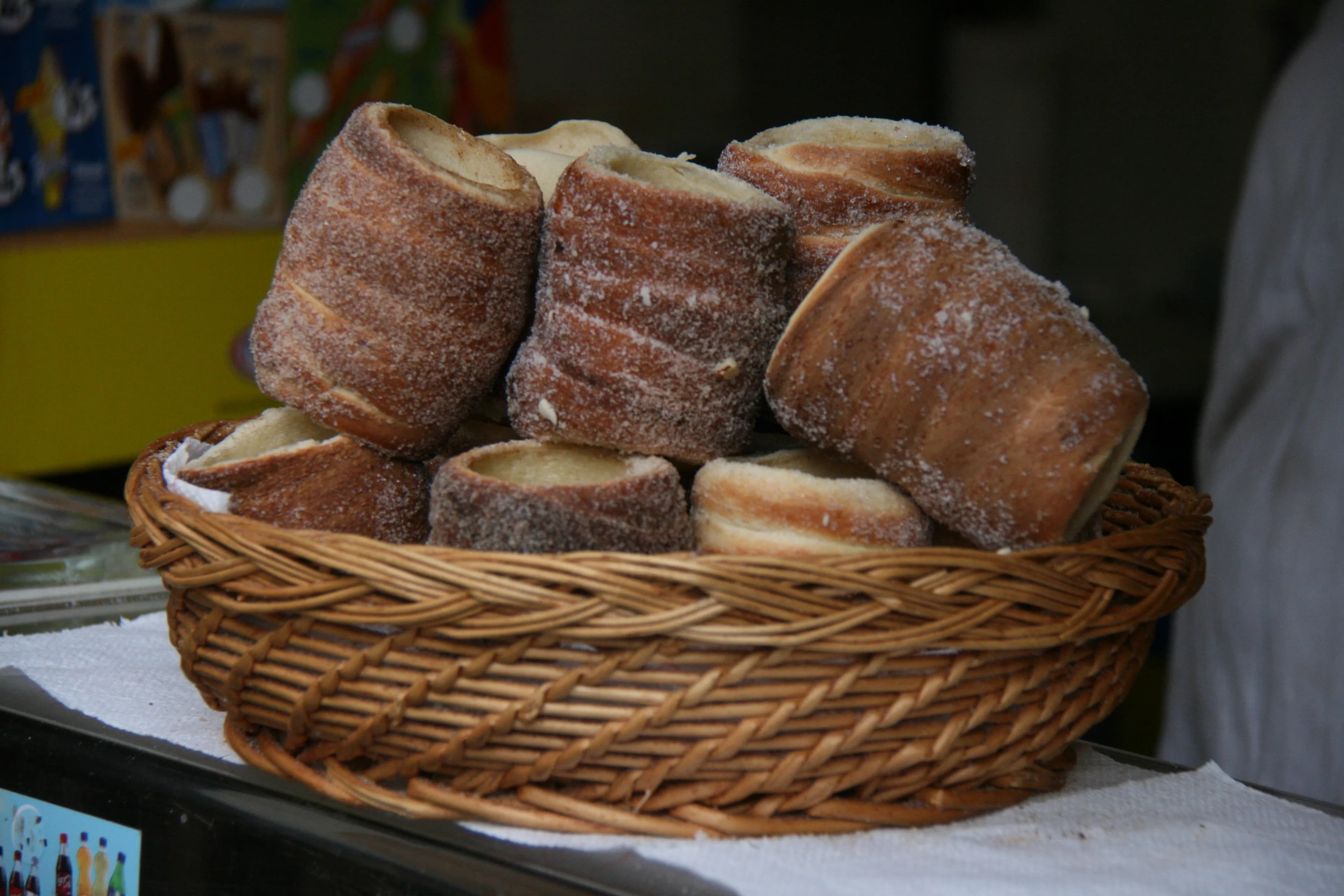
Trdelník, a staple of Czechia's cuisine
The Street Pastry
Prague's most photographed street food is a sweet yeast dough wound in a spiral around a wooden spit, rolled in sugar and crushed walnut and turned over a flame until the sugar caramelises to an amber crust. Lifted from the spit, it forms a hollow cylinder, crisp and dark outside, soft and yeasted within. At its best it smells of cinnamon and burnt sugar from metres away.
Not Quite Czech
Despite its fame in Prague, the trdelnik is not originally a Czech dish. It descends from a Central European spit-cake tradition, closest to the Hungarian and Transylvanian kurtoskalacs, and was popularised in the city largely for tourists in recent decades. It is best enjoyed for what it is, a good caramelised pastry, rather than as ancient Bohemian heritage.
How It Is Made
The dough is wrapped in a strip around a wooden or metal roller, brushed and rolled in sugar, and rotated slowly so the sugar melts and caramelises evenly. A real charcoal or wood flame gives a deeper, more fragrant crust than the electric rotisseries that have largely replaced it on the busiest corners. The caramelisation, not the dough, is the whole point.
How It Is Eaten
A trdelnik is best in its first few minutes, peeled from the outside while the sugar shell still cracks and the inside is warm. Plain is the classic; the versions packed with Nutella or ice cream are a modern add-on that obscures the pastry itself. Found from a flame-fired stand and eaten on the spot, it earns its reputation.
What to Expect
A good trdelník stand features dough spinning slowly, the sugar caramelising and the walnut fragments browning at the edges. The hollow cylinder is served too hot to hold directly, and the first piece is peeled from the outside while it is still crackling. The inside of the trdelník is soft and yeasted, the outside crisp and dark with caramelised sugar.
Why Try It
Trdelník is Prague's most visible street food and, in the best versions, genuinely worthwhile. The key is finding a stand that uses a real charcoal or wood flame rather than an electric element, the caramelisation is entirely different.
✦ Photo Gallery
Insider Tips
Look for stands using open flames rather than electric rotisseries, the caramelisation is deeper.
Eat it immediately. Trdelník is best in the first three minutes; after ten it goes soft.
Avoid the stuffed versions (filled with Nutella or ice cream). They obscure the pastry itself.