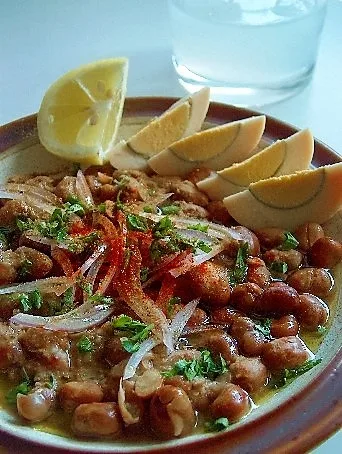
"Fava beans slow-simmered overnight and dressed with olive oil, cumin and lemon, Egypt's breakfast has been unchanged since the Pharaohs."
About Ful Medames
Egypt's ancient breakfast, eaten since the Pharaohs: dried fava beans slow-simmered overnight in large clay pots until they soften into a creamy, protein-dense porridge, then seasoned with lemon juice, cumin, garlic and olive oil; eaten with fresh bread (aish baladi) every morning; the smell of ful carts at dawn is Cairo's alarm clock.
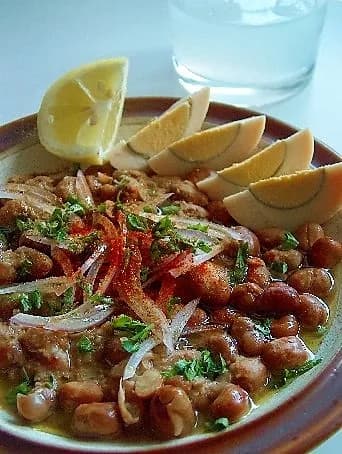
Ful Medames, a staple of Egypt's cuisine
An Ancient Breakfast
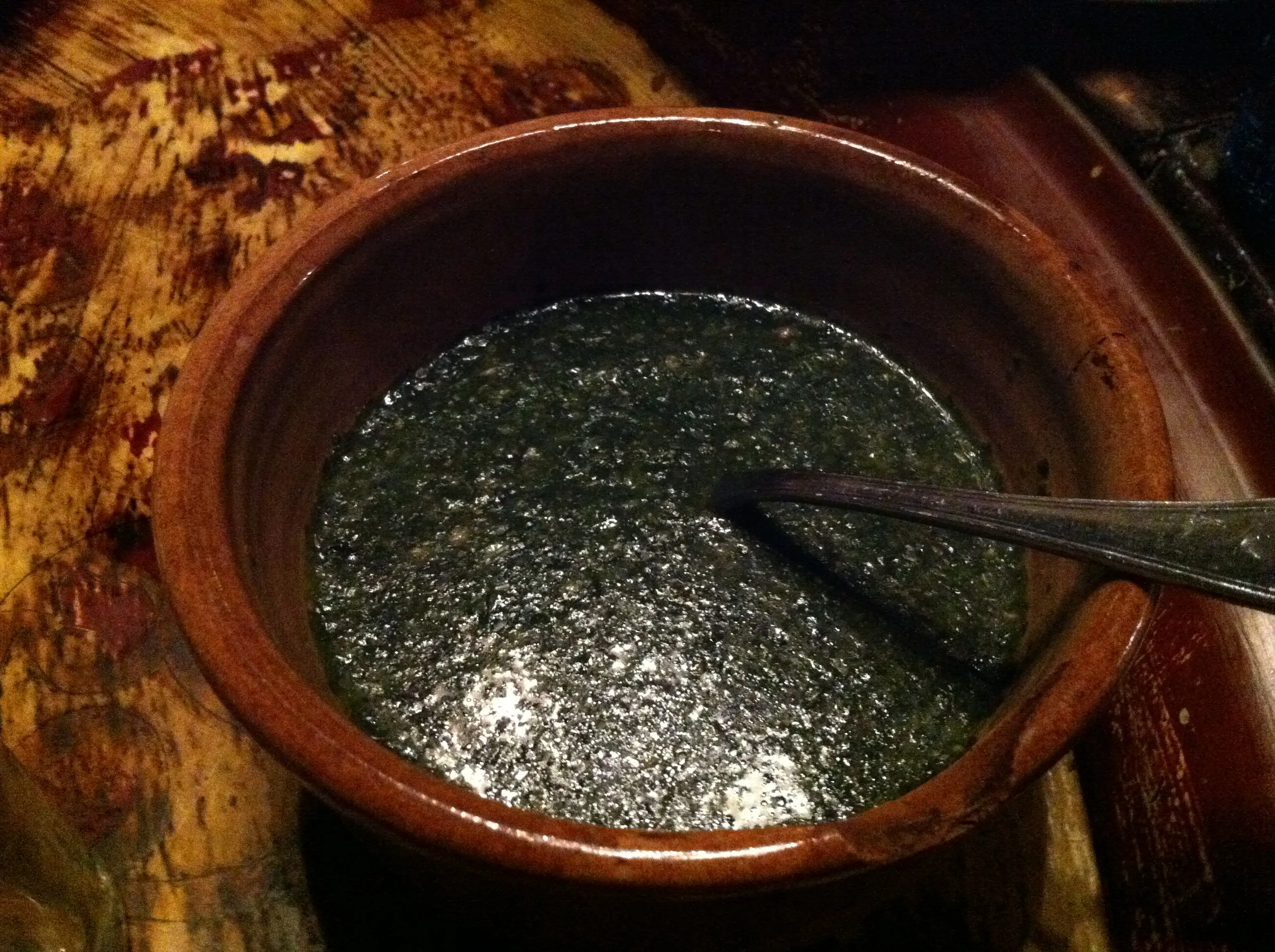
Ful medames is fava beans slow-simmered overnight until they collapse into a dense, savoury porridge, then dressed at the table with olive oil, lemon, cumin and garlic. It is Egypt's everyday breakfast and one of the oldest dishes still eaten, with roots that reach back to antiquity. The smell of a ful cart at dawn is one of Cairo's most dependable signals that the day has begun.
The Bread
Ful is eaten with aish baladi, a dense, slightly sour flatbread baked in hot ovens and puffed with a pocket. Torn into pieces, it is the spoon and the plate at once, used to scoop the beans. Little else is needed, though the bread is what turns the beans into a full meal.
The Dressing
The beans are plain until they are dressed, and the dressing is where the dish comes alive. Good olive oil, a hard squeeze of lemon, ground cumin and crushed garlic are standard, with chilli, tahini or chopped tomato added to taste. Each eater adjusts the bowl, and the dressing is what separates a dull ful from a memorable one.
A Daily Rhythm
Ful medames is the food of the Cairo morning, sold from carts to workers who eat it standing before the day's heat. It is cheap, filling and high in protein, the fuel of the city across centuries and classes. A fried egg on top, ful bil beid, is the common upgrade for a heartier start.
What to Expect
At a Cairo ful cart at 7 a.m., the beans arrive in a small metal bowl, the olive oil pooled on top and the lemon half balanced on the edge. The diner tears the bread and scoops, finding it warm, substantial and deeply savoury.
Why Try It
Ful medames reveals Cairo's daily rhythm, evident in the morning cart, the bread, and the workers eating standing up, which is a characteristic of the real city.
✦ Photo Gallery
Insider Tips
Eat it at 7-9 a.m. The authentic context is breakfast, not lunch.
Ask for extra lemon and cumin. The standard dressing is conservative.
The version with a fried egg on top (ful bil beid) is a reasonable upgrade.