Potato and egg cooked in olive oil, Spain's most perfect dish takes three ingredients and a flip technique that takes weeks to master.
About Tortilla Española
Spain's perfect food: a golden, thick omelette of slowly confit potatoes and onion cooked in a half-litre of olive oil until they soften entirely, then bound with beaten egg and cooked on both sides to a just-set, custardy interior; the debate between 'with onion' and 'without' is one of Spain's defining cultural schisms.
The Omelette
Spain's great omelette is three ingredients: potato, egg and olive oil. The potatoes are not boiled but cooked slowly, almost confited, in plenty of olive oil over low heat until meltingly soft, then drained and folded into beaten egg. The mixture is set in a pan and flipped, and served with a soft, barely set centre.
“Spain's great omelette is three ingredients: potato, egg and olive oil.”
The Flip
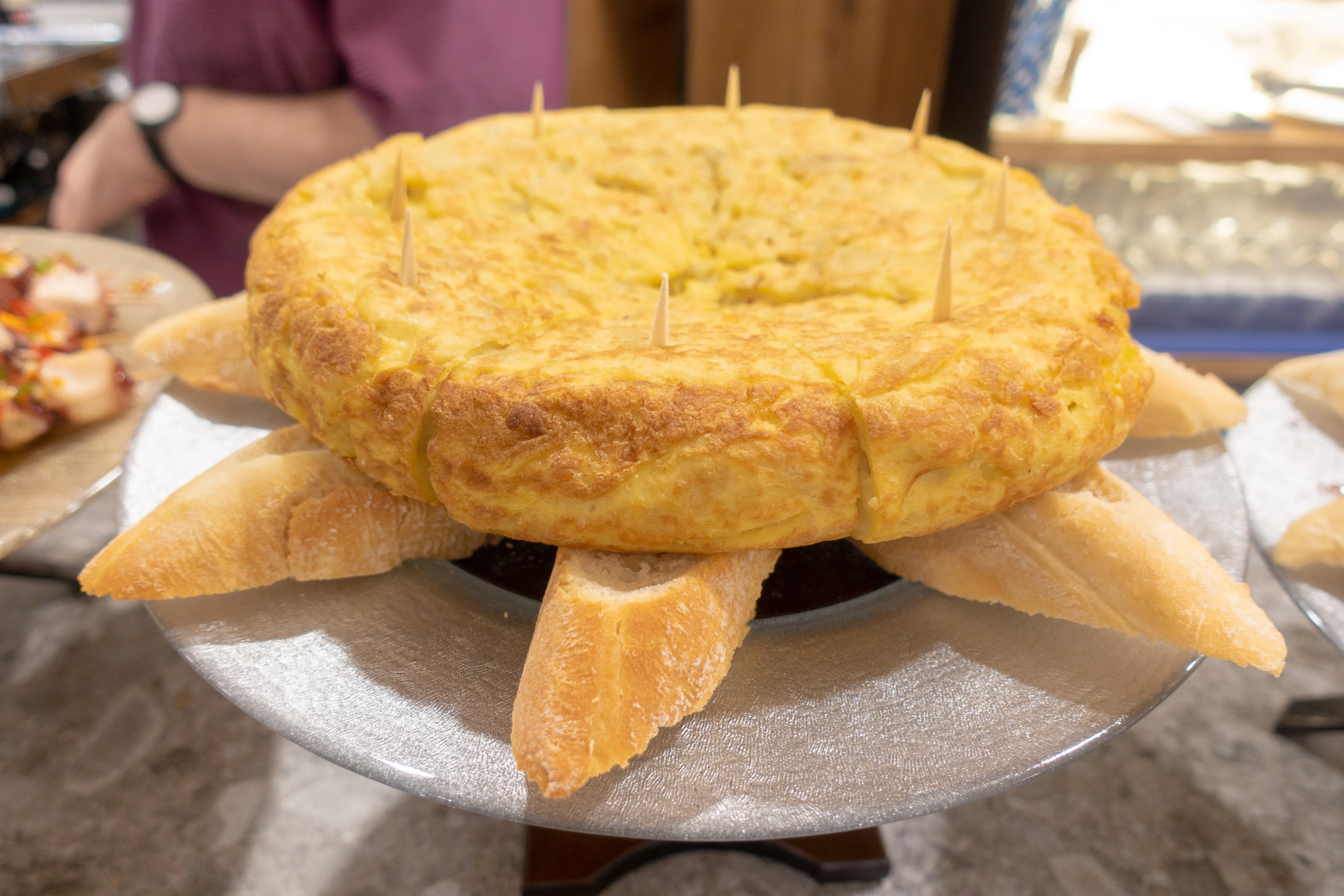
The flip is the skill that takes practice. The half-cooked tortilla is slid onto a plate, inverted and returned to the pan to set the other side, all without breaking it. Done well it produces a neat, round cake, golden outside and custardy within. It is the step that separates a confident cook from a nervous one.
The Great Debate
With onion, con cebolla, or without, sin cebolla, divides Spain in earnest. Onion brings sweetness and a softer, looser set; leaving it out gives a purer potato flavour and a firmer texture. Both have devoted camps, and the argument is conducted with complete seriousness.
At the Bar
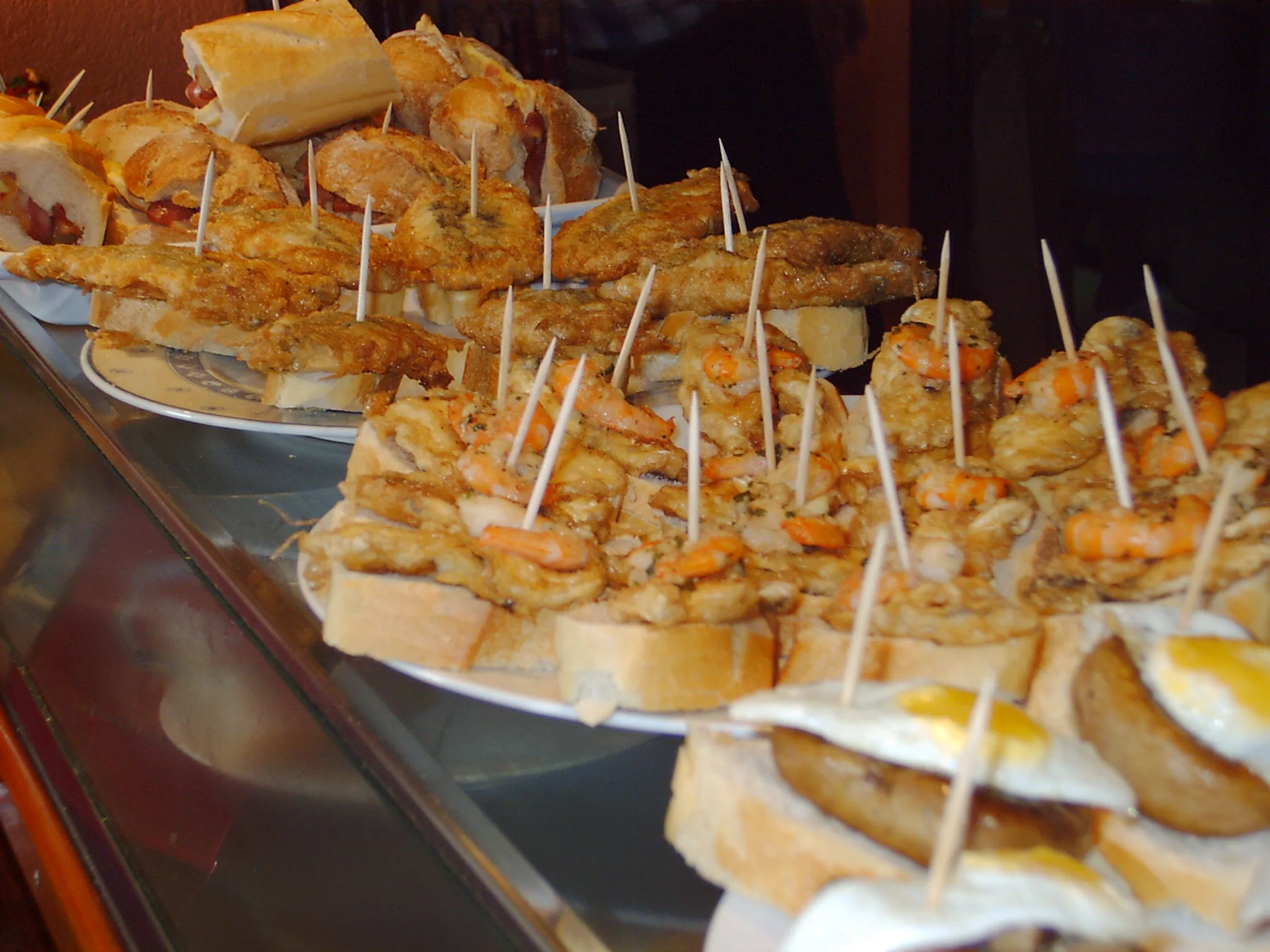
Tortilla is eaten warm rather than hot or cold, often as a pintxo or a wedge with bread, at any time of day. The ideal centre is just barely set, almost runny, a sign of careful cooking rather than a fault. Simple as it is, it is Spanish cooking distilled: few ingredients, real technique and an exacting sense of when it is done.
What to Expect
The tortilla arrives at bar temperature, not hot, not cold, the egg just barely set in the centre. Locals eat it on a slice of bread or directly with a fork. The dish is simultaneously very simple and exactly right.
Why Try It
Tortilla española is Spanish cooking distilled: maximum flavour, minimum ingredients, maximum technique.
Insider Tips
- Bar Nestor in San Sebastián makes tortilla by reservation only. Book weeks ahead.
- The correct internal temperature is warm-soft, not hot-set. A firm tortilla is overcooked.
- The onion debate is real. Try both versions before forming an opinion.