Indonesia's satay varies by island and region, each with its own marinade and sauce. The coconut shell charcoal smoke is the consistent element that ties them all together.
About Satay (Sate)
Southeast Asia's most celebrated street food in its Indonesian incarnation: skewers of marinated chicken, lamb, pork or offal grilled over coconut shell charcoal and served with a sauce of peanuts, palm sugar, kecap manis, shallot and chilli; Madura's satay is the benchmark; each island has its own version; the smoke of satay carts is Indonesia's signature street perfume.
The Skewer
Satay, or sate, is Indonesia's grilled skewer tradition, small pieces of marinated meat threaded onto sticks and cooked over charcoal until charred at the edges. It is among the most diverse street foods in Southeast Asia, with a version for almost every island and region. Coconut-shell charcoal smoke is the thread that ties them together.
“Satay, or sate, is Indonesia's grilled skewer tradition, small pieces of marinated meat threaded onto sticks and cooked over charcoal until charred at the edges.”
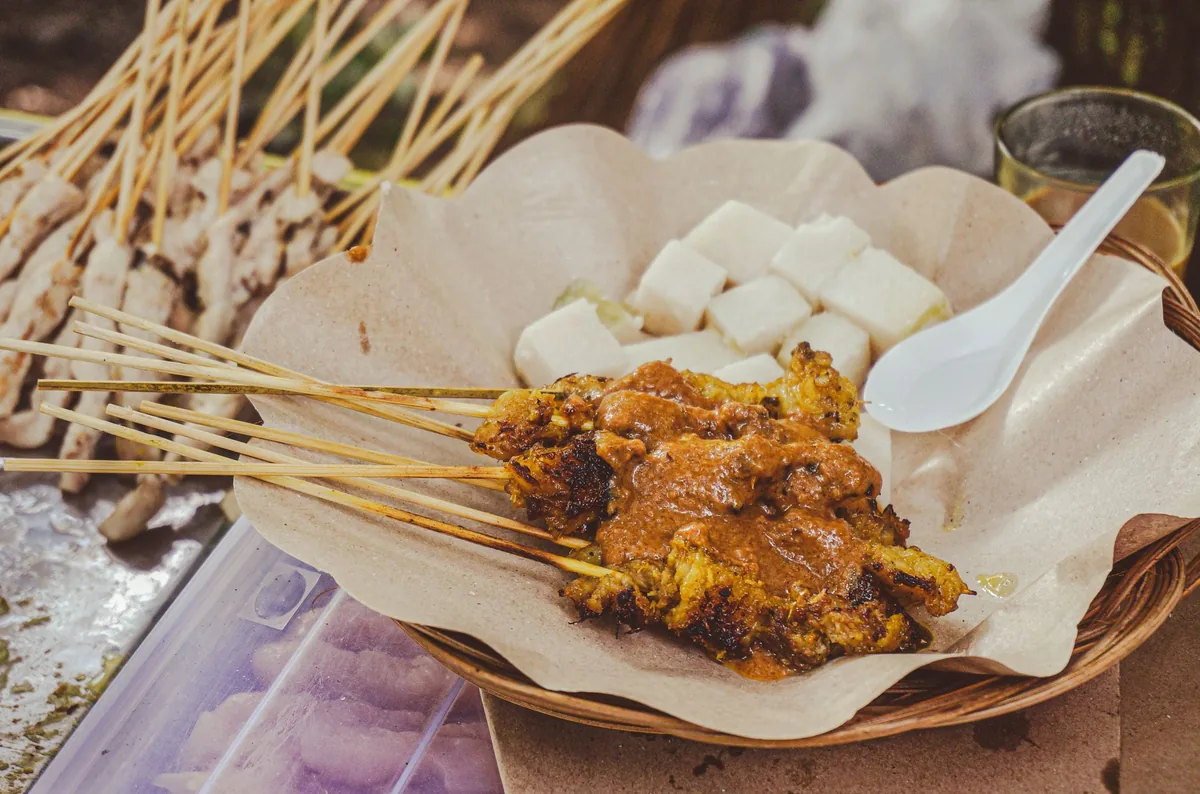
The Peanut Sauce
The best-known version, Madurese chicken satay, comes with bumbu kacang, a thick peanut sauce of ground roasted peanuts, palm sugar, sweet soy, shallot and chilli. It is poured over the skewers to coat rather than used as a dip. The balance of sweet, savoury and spicy in the sauce is half the dish.
A Different Satay Everywhere
Satay changes across the archipelago. Java glazes goat satay with sweet soy; Bali makes sate lilit, minced spiced meat pressed onto lemongrass stalks; other regions use mutton, beef or offal with their own marinades and sauces. The same simple idea, executed in countless ways, mirrors the country's diversity.
Charcoal and Smoke
What unites every version is the live charcoal fire and the small skewer, fanned hard so the fat drips and flares and the edges char. The smoke is part of the flavour, which is why satay tastes best eaten at the grill, fresh off the coals. Served with rice cakes or a squeeze of lime, it is street food at its most sociable.
What to Expect
The satay arrives over the charcoal still in the grill, the smoke rising. Locals pull the meat from the skewer with the peanut sauce as a vehicle, not a dip. The char is audible on the first bite.
Why Try It
Satay is the dish that shows Indonesia's culinary diversity most clearly: the same concept, executed differently across 17,000 islands.
Insider Tips
- Madura chicken satay (sate Madura) is the national standard. Try it first.
- The peanut sauce should be applied, not dipped into, pour it over the skewers.
- Lau Pa Sat in Singapore and any Padang hawker in Jakarta serve reliable versions.