Malaysia's pork rib herbal broth (deeply spiced with star anise, clove and medicinal herbs, eaten with fried dough sticks) has been a Klang institution since the 1940s.
About Bak Kut Teh
Malaysia's Chinese-heritage pork rib soup: meaty spare ribs simmered in a clear herbal broth of garlic, star anise, clove, white pepper and Chinese medicinal herbs for three hours until the meat falls from the bone; Klang's version (the original) is deeply herbed; Singapore's version is peppery and clear; eaten with rice, you tiao (fried dough) and a clay pot of strong Chinese tea.
The Pork Rib Soup
Bak kut teh is Malaysia's Chinese-heritage pork rib soup: meaty spare ribs simmered for hours in a broth of garlic, star anise, clove, white pepper and Chinese medicinal herbs until the meat falls from the bone. The name means meat bone tea, though no tea is in the soup. It is hearty, aromatic and deeply restorative.
“The name means meat bone tea, though no tea is in the soup.”
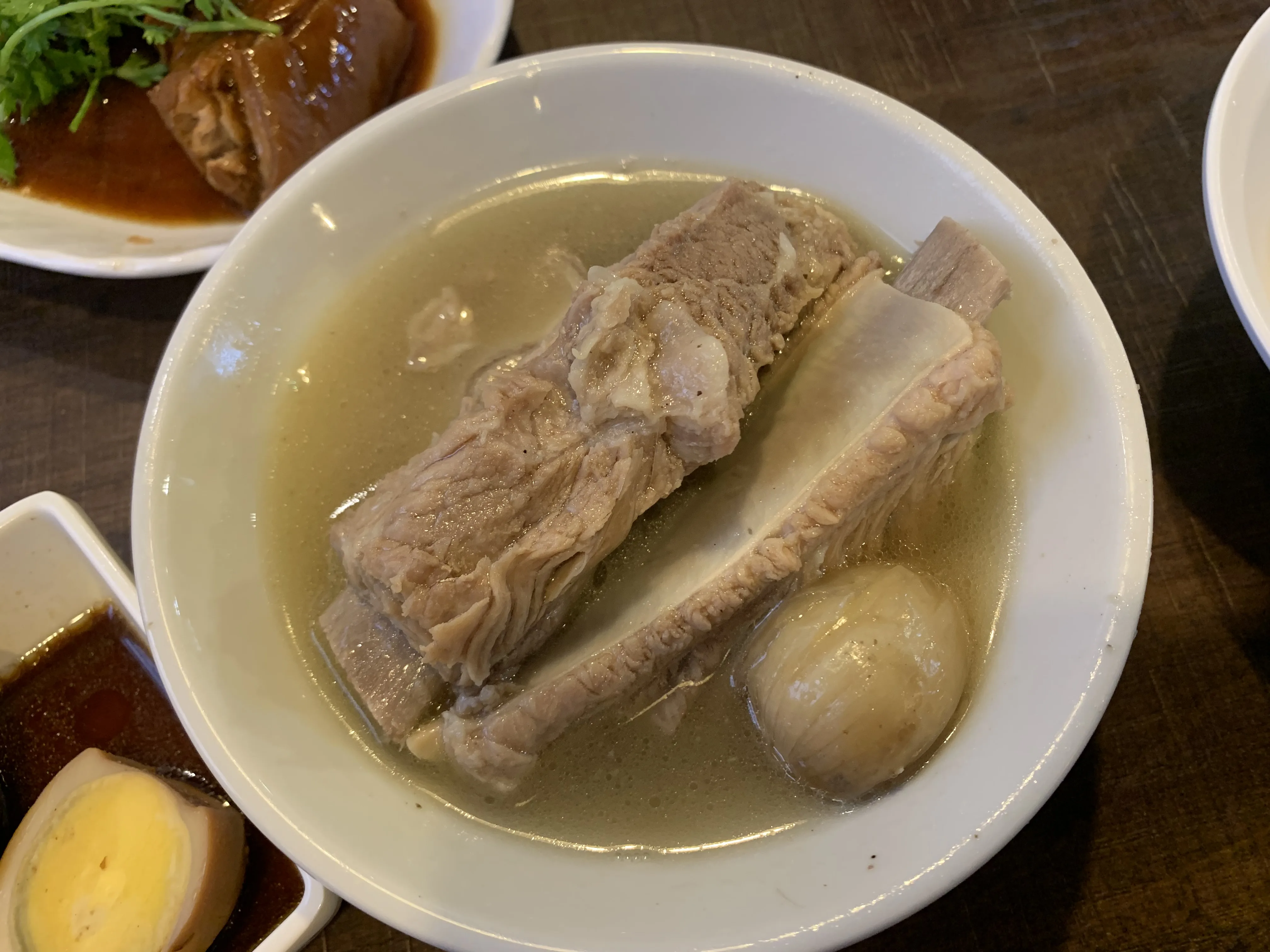
Klang and Beyond
The dish is strongly associated with the port town of Klang, near Kuala Lumpur, long regarded as its home. The Klang style is dark and richly herbed, while the Singaporean version is lighter, clear and sharp with white pepper. The two represent quite different philosophies of the same dish.
The Accompaniments
Bak kut teh is eaten with white rice and youtiao, fried dough sticks dunked into the broth to soak it up, alongside a pot of strong Chinese tea. The tea is said to cut the pork fat and aid digestion, a pairing that works in practice. A dish of dark soy and sliced chilli is provided for dipping the meat.
A Hokkien Heritage
The soup is a clear expression of Malaysia's Hokkien Chinese heritage, adapted over generations to local ingredients while keeping its herbal, ancestral character. A drier, wok-fried version cooked with dark soy and chilli is often ordered alongside the soup. Whether dark and herbal or clear and peppery, it is comfort food with deep roots.
What to Expect
Arriving in a steaming clay pot, the bak kut teh presents ribs that slip from the bone. First, the dark, fragrant broth is ladled, after which the ribs are lifted. A piece of youtiao is dunked into the broth, while tea is poured in a separate vessel.
Why Try It
Bak kut teh is the clearest expression of Malaysia's Hokkien Chinese culinary heritage, a dish that adapted to local ingredients while maintaining its ancestral character.
Insider Tips
- Go to Klang (the origin city) for the definitive version, an hour from Kuala Lumpur.
- Order the dry version (dry bak kut teh, wok-fried with dark soy and chilli) alongside the soup version.
- The tea is essential, drink it between bites to manage the richness.