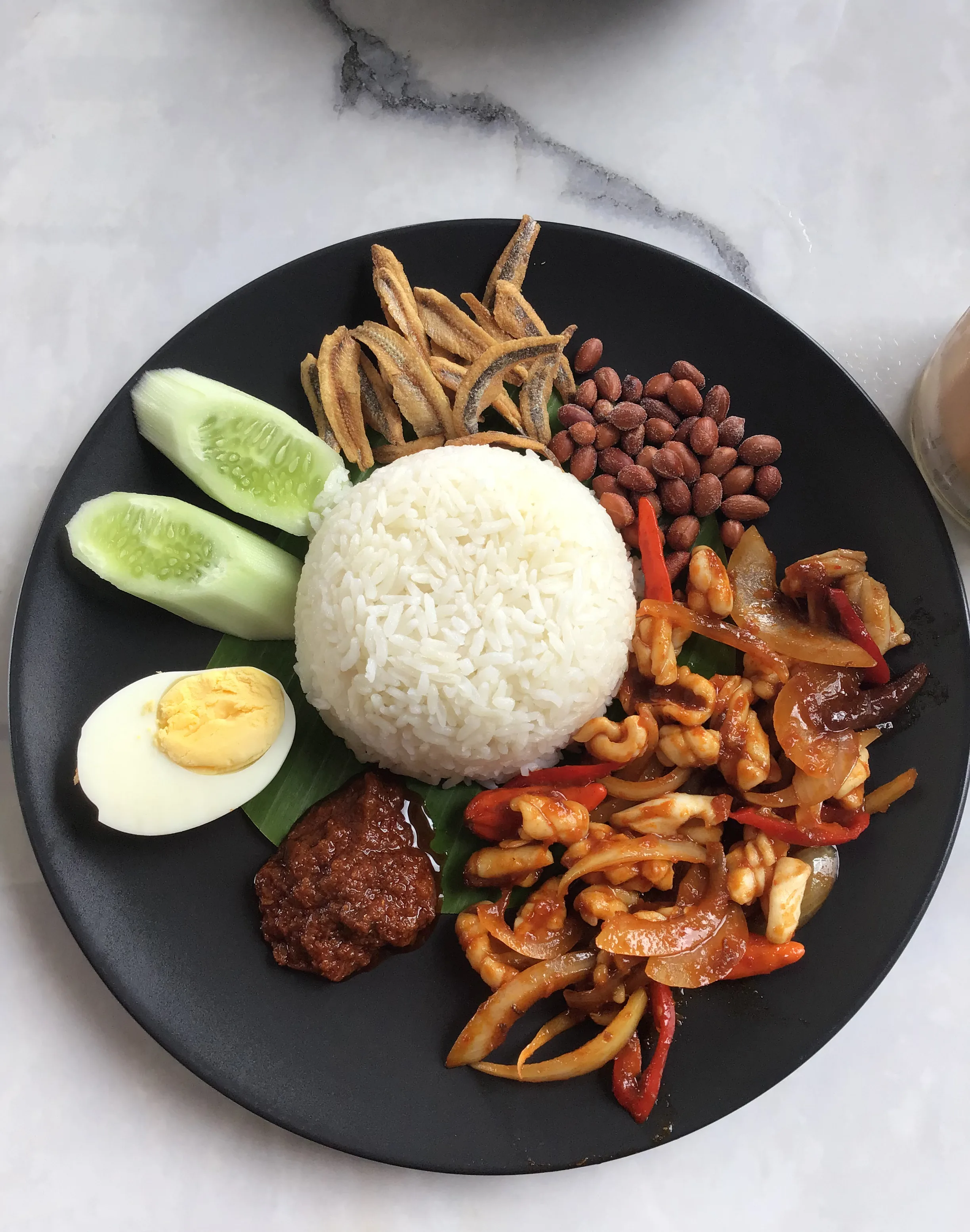
"Malaysia's national dish (pandan coconut rice, slow-cooked sambal, crispy anchovies, peanuts) wrapped in banana leaf. Every Malaysian eats it for breakfast. It's available at every hour."
About Nasi Lemak
Malaysia's national dish: coconut milk-enriched rice steamed with pandan leaves to fragrance, served with sambal (a slow-cooked dried chilli and shrimp paste condiment of enormous complexity), crispy fried anchovies, toasted peanuts, half a hard-boiled egg and cucumber slices; wrapped in banana leaf for the street version, served on a plate in a banana leaf with fried chicken for the restaurant edition.
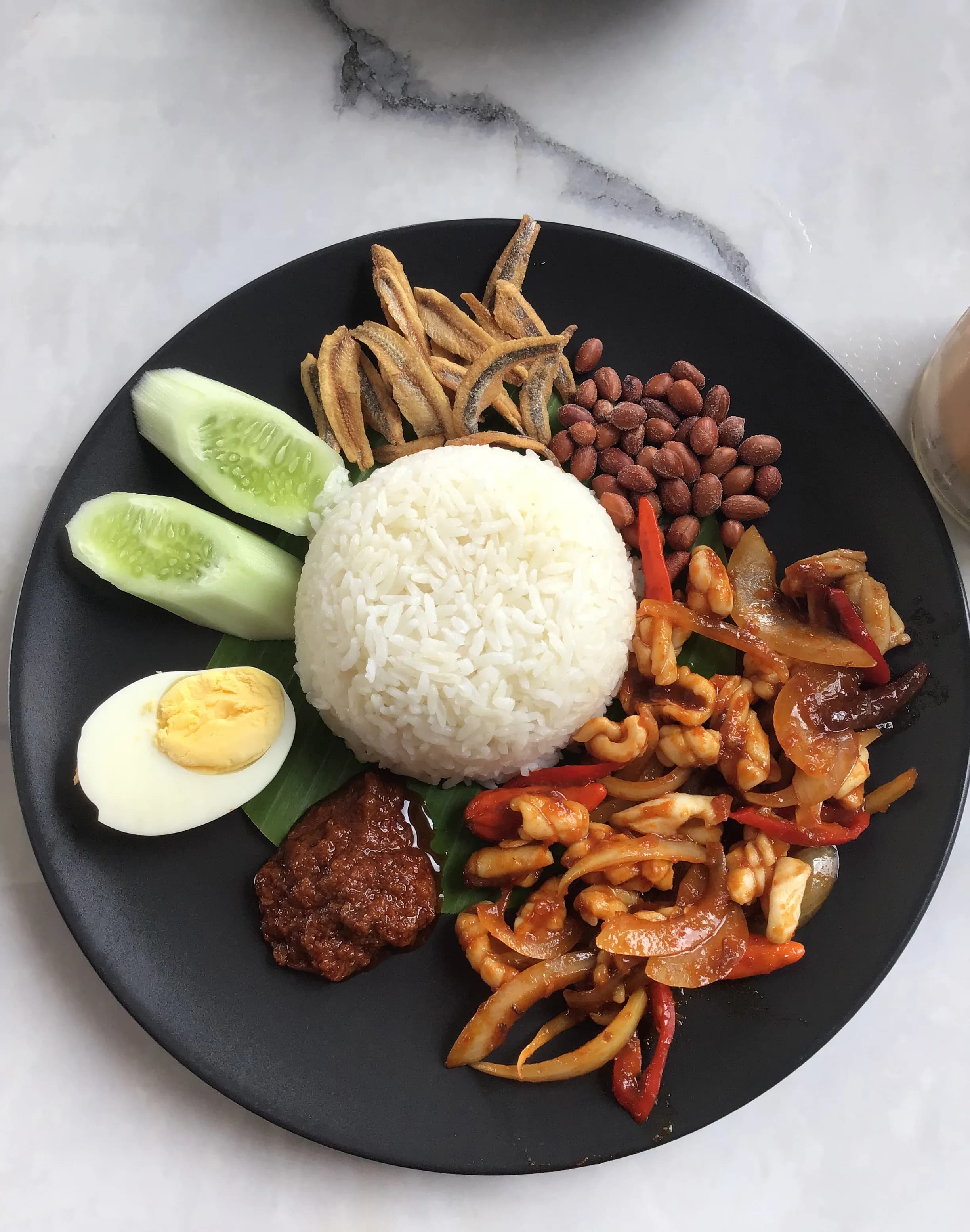
Nasi Lemak, a staple of Malaysia's cuisine
Malaysia's National Dish
Nasi lemak is Malaysia's national dish: rice steamed with coconut milk and pandan, served with sambal, crisp fried anchovies, toasted peanuts, hard-boiled egg and cucumber. In its street form it is wrapped in a neat banana-leaf parcel. Eaten at breakfast above all, it turns up at every hour of the day.
The Sambal
The component that decides quality is the sambal, a relish of dried chilli and shrimp paste cooked down slowly to a deep, complex, sweet-hot condiment. A good one is simmered until it darkens and the oil separates on the surface, a sign of proper, patient cooking. It is the heart of the plate and the thing every cook is judged on.
The Components
Around the fragrant coconut rice, each element plays a role: the anchovies bring crunch and salt, the peanuts body, the egg and cucumber a cooling balance to the sambal's heat. The contrast of textures and temperatures is the point. The banana-leaf wrapping perfumes the rice and is part of the experience.
A Breakfast Culture
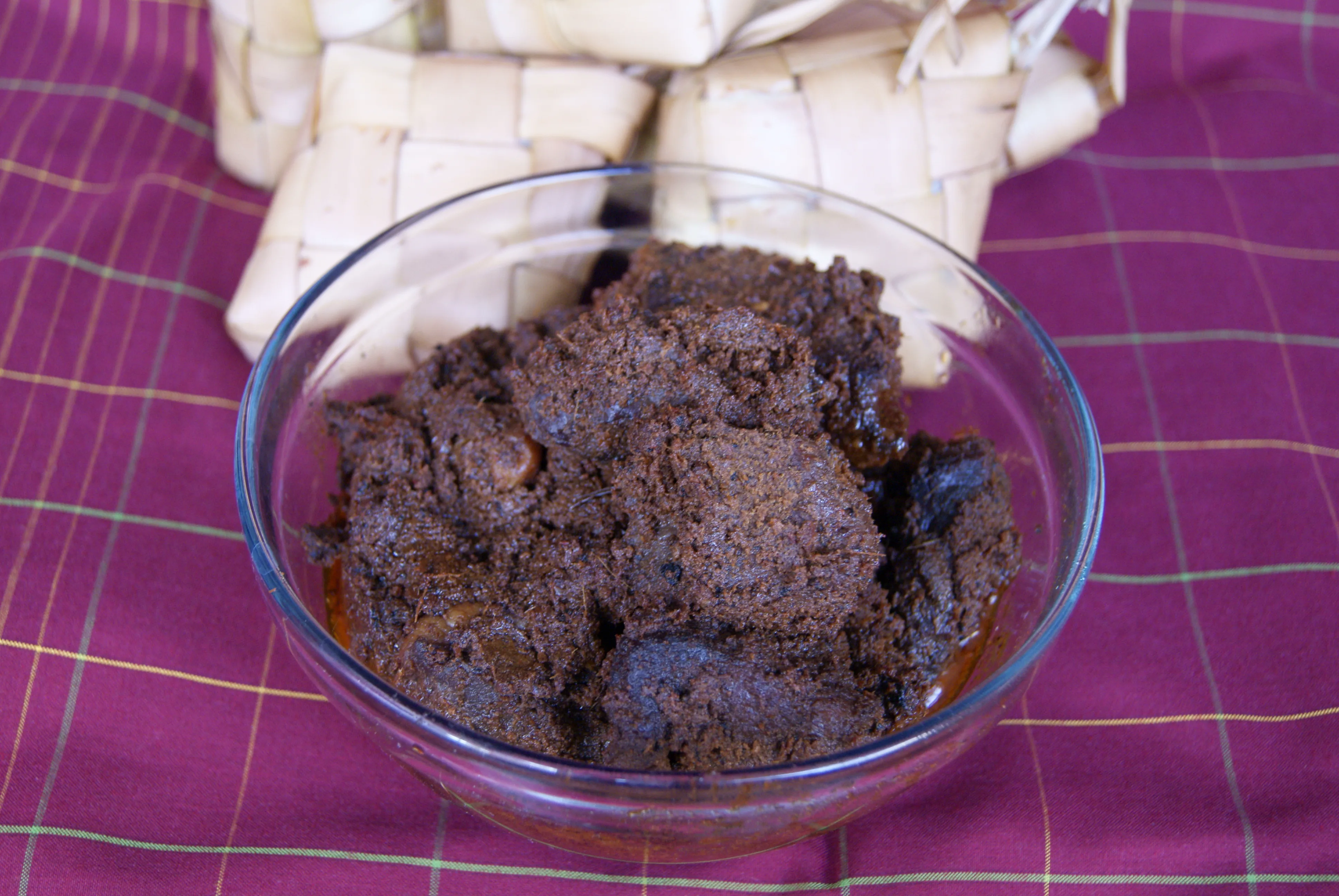
Nasi lemak is the fastest way into Malaysia's complex, multi-ethnic food identity, eaten by everyone and sold everywhere from roadside stalls to restaurants. Add-ons such as fried chicken or rendang turn it into a fuller meal. Sought out at a banana-leaf stall, with a dark, oil-slicked sambal, it is the country on a plate.
What to Expect
The banana leaf parcel unfolds to reveal the rice, fragrant from the pandan and coconut milk, with the sambal dark red in the centre. Locals eat with their right hand. The anchovies add crunch, the peanuts add body, the egg is cooling against the sambal heat.
Why Try It
Nasi lemak is the fastest way into Malaysian food culture, the most national dish of a country with a genuinely complex food identity.
✦ Photo Gallery
Insider Tips
Seek out banana leaf nasi lemak at roadside stalls (gerai) rather than restaurants.
The sambal's colour signals the quality: dark red with surface oil means it has been properly cooked.
Add a fried chicken wing (ayam goreng) for the complete meal.