Malaysia's rendang is drier and more caramelised than the Indonesian original, the meat completely coated in dark spice and coconut oil, no liquid remaining. A Hari Raya essential.
About Rendang
Malaysia's most celebrated meat dish: beef slow-cooked in a paste of shallots, lemongrass, galangal, turmeric, fresh and dried chillies and coconut milk for hours until the liquid fully evaporates and the meat fries in its own rendered coconut oils; drier and more caramelised than Indonesian versions; eaten at every Hari Raya celebration.
Malaysia's Version
Malaysian rendang is beef slow-cooked in a paste of shallots, lemongrass, galangal, turmeric and chillies with coconut milk until the liquid evaporates and the meat caramelises in its own oil. Compared with the Indonesian original it tends to be drier and more deeply caramelised. It is a centrepiece of Hari Raya celebrations across the country.
“Malaysian rendang is beef slow-cooked in a paste of shallots, lemongrass, galangal, turmeric and chillies with coconut milk until the liquid evaporates and the meat caramelises in its own oil.”
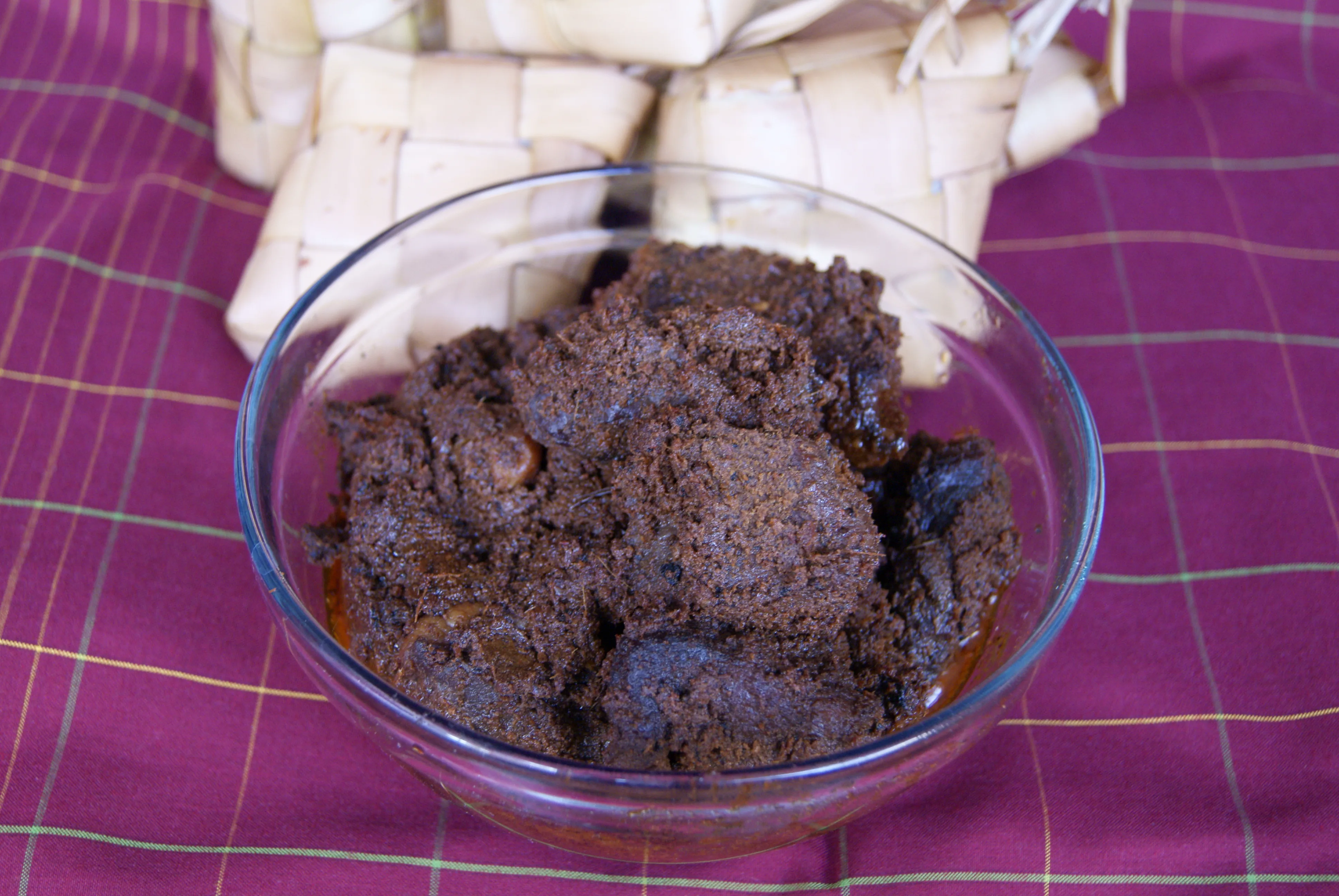
The Dryness
A proper Malaysian rendang has no visible sauce, the beef coated instead in a dark, spice-encrusted layer of rendered coconut oil. That near-total reduction is the goal, and a rendang swimming in liquid is considered underdone. The dryness concentrates the flavour into every cube of meat.
The Spice Paste
The depth comes from a freshly pounded paste, lemongrass, galangal, turmeric, garlic, shallot and chilli, cooked down with the coconut milk and often kerisik, toasted ground coconut, for a nutty richness. As the liquid cooks away, the paste clings to and caramelises onto the meat. The crust of spice is where the flavour lives.
Patience and Hari Raya
Rendang is a lesson in the patience Southeast Asian cooking can demand, the crucial flavour developing in the final stretch as the last liquid evaporates. It is festive food, made for Hari Raya Aidilfitri and served with compressed rice cakes. Freshly cooked, the meat tender beneath its dark crust, it is one of the region's great dishes.
What to Expect
The rendang arrives as dark cubes of beef, each coated in a thick layer of spice and coconut oil. The first bite is intensely flavoured, the lemongrass and galangal in the crust, the tender beef beneath.
Why Try It
Malaysian rendang reflects the patience that Southeast Asian cooking requires, as the flavour development in the final 30 minutes of evaporation is what the first hour of cooking was building toward.
Insider Tips
- Nasi Padang restaurants (Malaysian-Indonesian) serve the most reliable rendang.
- Ask if the rendang is freshly cooked or reheated, fresh rendang has a significantly different texture.
- Serve with nasi impit (compressed rice cakes) for the traditional Hari Raya accompaniment.