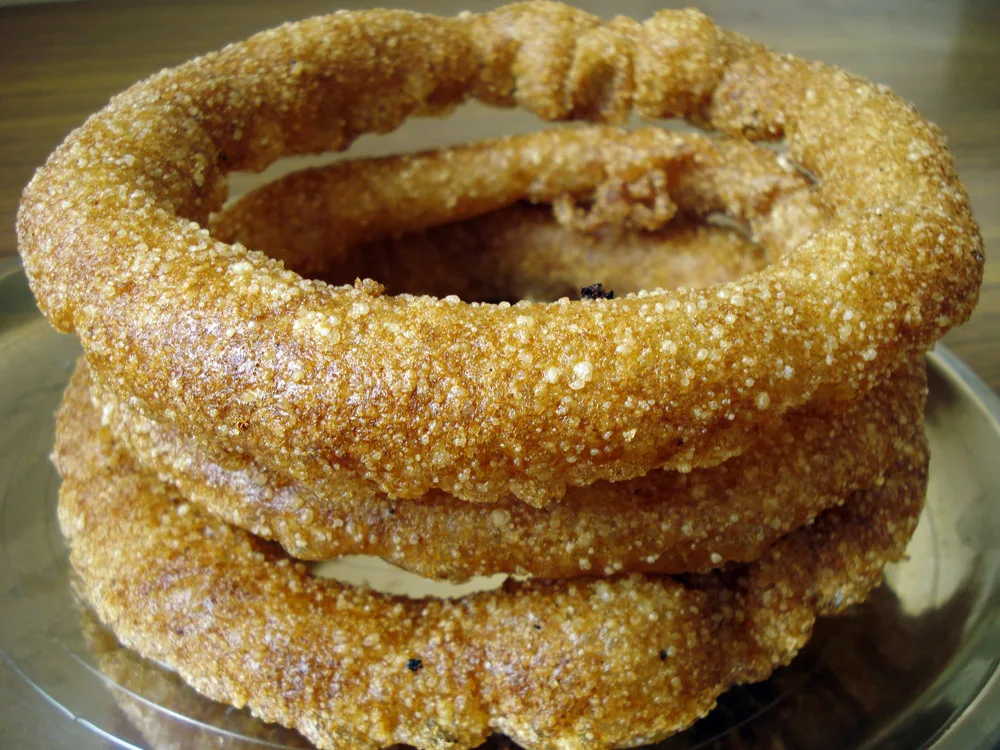
Poured in a single ring straight into hot oil, sel roti is the crisp-edged sweet rice bread that no Nepali Tihar or Dashain is complete without.
About Sel Roti
Sel Roti is one of Nepal's most beloved dishes, representing the rich culinary tradition of the region.
A Bread Like No Other
Sel roti is a ring-shaped fried bread made from a batter of rice flour rather than wheat dough. The batter is sweetened and often loosened with ghee, milk or banana, then poured by hand in a circular stream into hot oil. It fries into a bread that is crisp and deep golden on the outside and soft, faintly chewy within.
“Sel roti is a ring-shaped fried bread made from a batter of rice flour rather than wheat dough.”
Festival Food
The bread is tied to Nepal's biggest Hindu festivals, above all Tihar and Dashain, when households fry it in large batches to share and offer. Making sel roti well is a point of pride, since the cook must pour the ring freehand to an even thickness. It keeps for days, which made it a practical travel and gifting food long before it became a festival icon.
The Fermented Batter
The best sel roti starts with rice that is soaked, ground and left to ferment lightly, which gives the bread its gentle tang and airy crumb. Sugar, cardamom and sometimes cinnamon or coconut flavour the mix. The consistency of the batter is everything: too thin and the ring breaks, too thick and it turns dense.
How It Is Served
Sel roti is eaten on its own as a sweet snack with tea, or alongside savoury sides like aloo achar, yoghurt or a vegetable curry. At festival time it shares the plate with other fried treats. Warm from the pan, when the edges still shatter, is when it is at its best.
What to Expect
The ring arrives deep gold, its outer edge crackling at the first bite. Inside, the crumb is soft and lightly sweet, scented with cardamom and the faint sourness of fermented rice. With a cup of milk tea, it shifts easily from sweet to comforting.
Why Try It
Sel roti is the edible signature of Nepal's festival season, a rice bread found in no other cuisine in quite this form. Its ring shape and ghee-fried crunch make it instantly recognisable across the country.
Insider Tips
- Buy it freshly fried, ideally during Tihar or Dashain, when shops and households make it in quantity.
- Eat it warm while the edges are still crisp, since it softens as it sits.
- Pair it with spicy potato achar or yoghurt for the traditional sweet-and-savoury contrast.