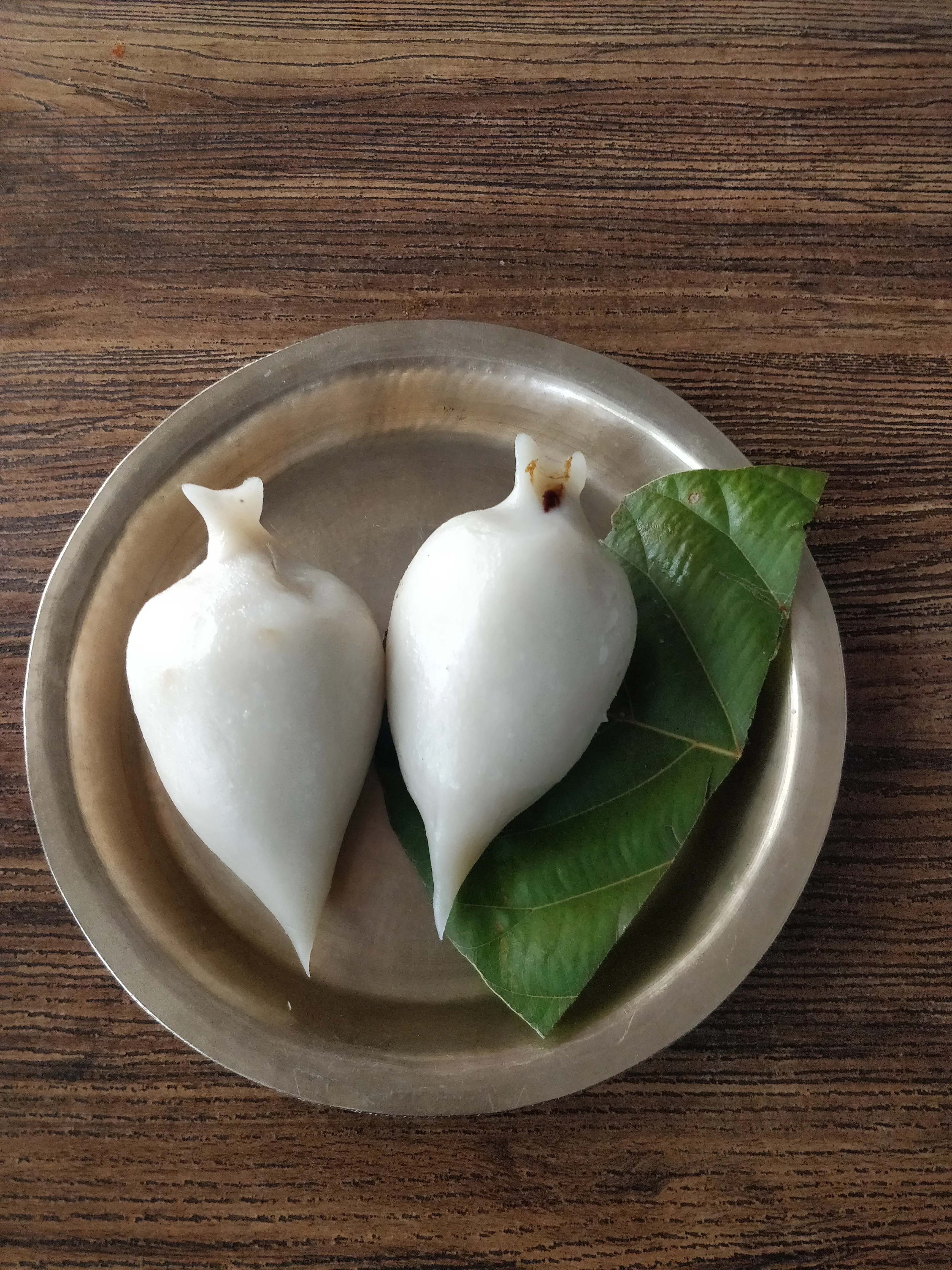
Shaped like a fig and steamed until translucent, yomari is the Newar dumpling made from the first rice of the harvest and eaten to mark the December full moon.
About Yomari
A teardrop-shaped steamed dumpling made of translucent rice flour; traditionally filled with 'chaku' (molasses) and sesame seeds or 'khuwa' (milk solids); eaten during the post-harvest Yomari Punhi festival; it is a high-gravity symbol of prosperity that releases a burst of warm; liquid sweetness when bitten.
A Dumpling With a Shape of Its Own
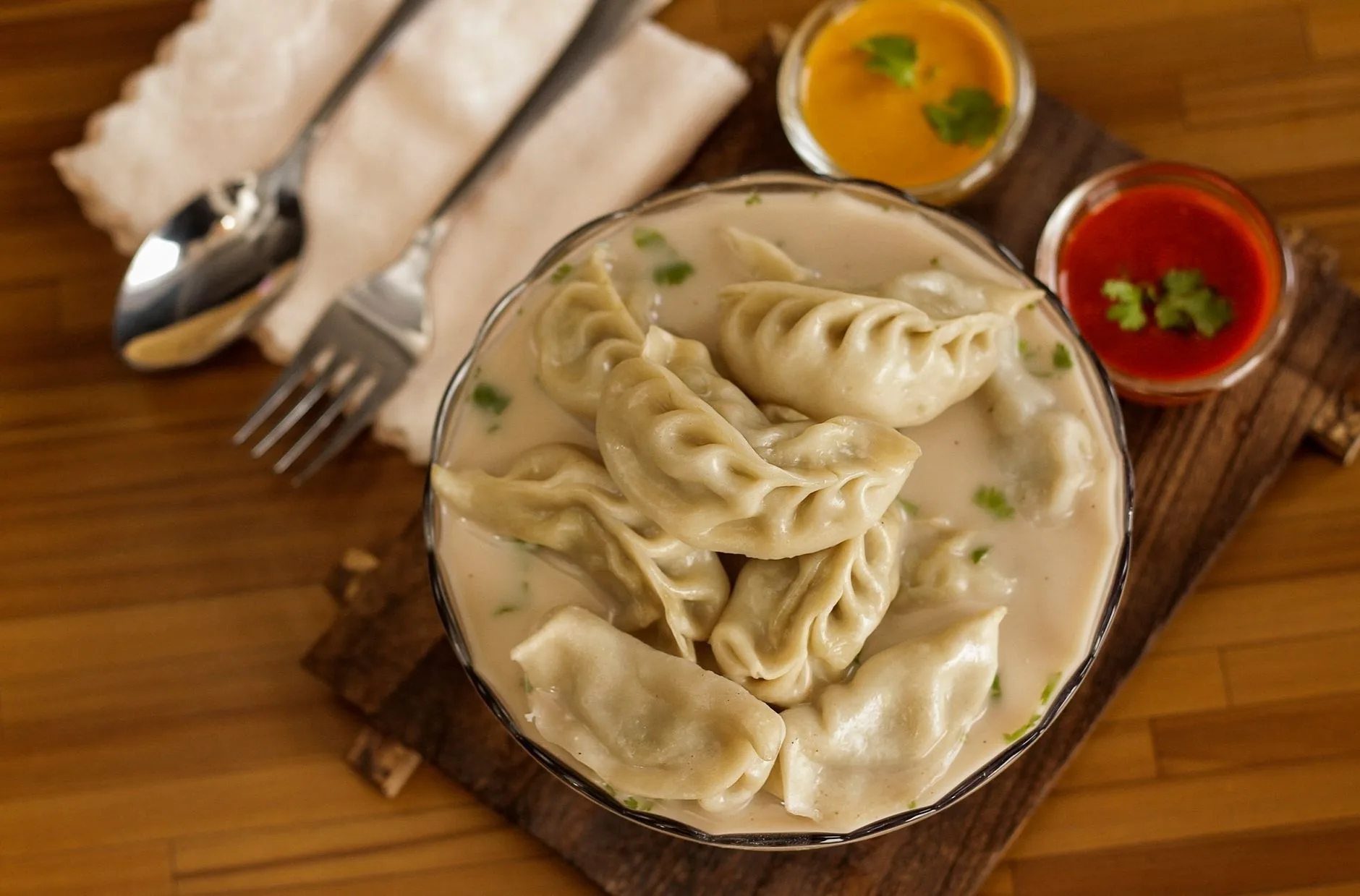
Yomari is a steamed dumpling of rice flour pressed thin and folded into a pointed teardrop. The dough is worked until it turns soft and slightly see-through, then sealed around a sweet filling. The most traditional filling is chaku, a dark cane molasses, mixed with toasted sesame seeds; a richer version uses khuwa, milk reduced to a fudgy solid.
“Yomari is a steamed dumpling of rice flour pressed thin and folded into a pointed teardrop.”
The Festival of Yomari Punhi
The dumpling belongs to the Newar community of the Kathmandu Valley and to Yomari Punhi, the full-moon festival that closes the rice harvest in late autumn. Families make yomari from the season's new rice as a thanksgiving, and the dumplings are offered before they are eaten. The festival takes its name directly from the food.
How It Is Made
Cooks knead warm water into fine rice flour, then shape each piece by hand without any mould, drawing the dough into its signature tail. The filled dumplings are steamed over a clay or metal pot until the wrapper sets and turns glossy. A well-made yomari holds its molasses without leaking, releasing it warm at the first bite.
More Than a Sweet
Beyond the festival, yomari appears at celebrations marking a child's birthday and other milestones, where the pointed shape carries its own symbolism. Savoury versions filled with spiced meat or lentils exist, but the molasses-and-sesame dumpling remains the one that defines the dish.
What to Expect
The dumpling arrives warm, its rice-flour skin smooth and faintly translucent. A bite at the rounded base releases the chaku, dark and molasses-deep, threaded with the crunch of toasted sesame. The wrapper itself is mild and chewy, a quiet base for the sweetness pooling inside.
Why Try It
Yomari is the taste of the Newar harvest, a dish so central that an entire festival is named after it. It shows how closely Kathmandu Valley cooking is tied to the rice calendar.
Insider Tips
- Seek it out around the Yomari Punhi full moon in late autumn, when it is freshly made in Newar households and shops.
- Choose the chaku-and-sesame filling for the traditional version, or khuwa for a milkier, fudgier sweet.
- Eat it warm, since the molasses firms up and the wrapper toughens as the dumpling cools.